Sri Lanka's Foreign Worker Remittances Surge to $847 Million in May 2026
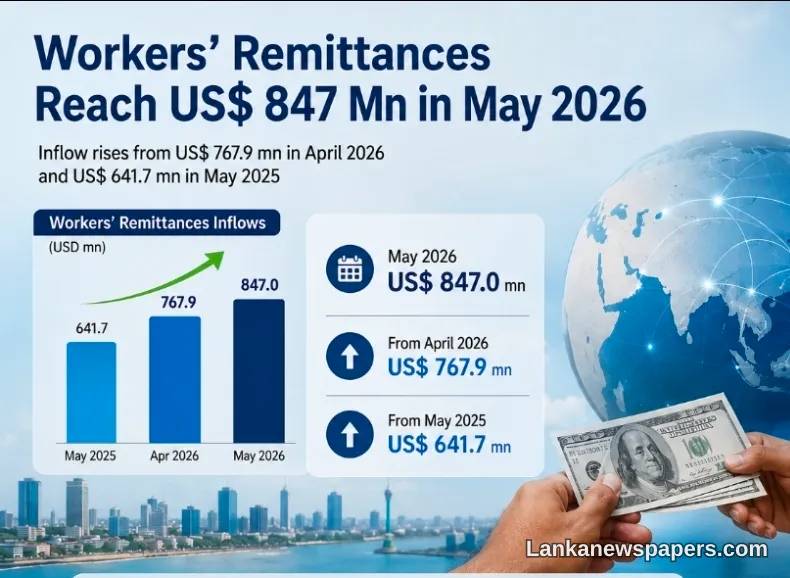
Sri Lanka has recorded a notable rise in earnings sent home by overseas workers, with remittances reaching US$ 847 million in May 2026 — a marked improvement from the US$ 767.9 million received during the same period last year.
A Positive Signal for the Economy
The increase in worker remittances represents an encouraging development for Sri Lanka's economy, which continues its gradual recovery following years of financial turbulence. Money sent home by Sri Lankans employed abroad remains one of the country's most vital sources of foreign exchange, helping to stabilise the rupee and support household incomes across the island.
Why Remittances Matter
Workers' remittances play a critical role in Sri Lanka's balance of payments. Unlike foreign direct investment or export earnings, remittance flows tend to be relatively consistent and are directly channelled into local consumption, savings, and small business activity. This makes them a cornerstone of economic resilience, particularly during periods of uncertainty.
- Remittances help families cover essential costs including food, healthcare, and education.
- Increased inflows strengthen foreign reserve levels at the Central Bank.
- Higher remittance volumes can ease pressure on the Sri Lankan rupee against major currencies.
Looking Ahead
Analysts and policymakers are likely to view the May 2026 figures with cautious optimism. Sustaining this upward trend will depend on continued demand for Sri Lankan labour in key overseas markets, particularly in the Middle East and Southeast Asia, as well as efforts by financial authorities to encourage workers to use formal banking channels for their transfers.
The government has in recent years introduced various incentives aimed at boosting remittances through official pathways, and the latest data suggests those efforts may be bearing fruit.



💬 Join the Discussion 0
Be the first to share your view on this story.