Business
Research Vessel Dr. Fridtjof Nansen Completes Marine Scientific Survey in Sri Lankan Waters and Departs Colombo
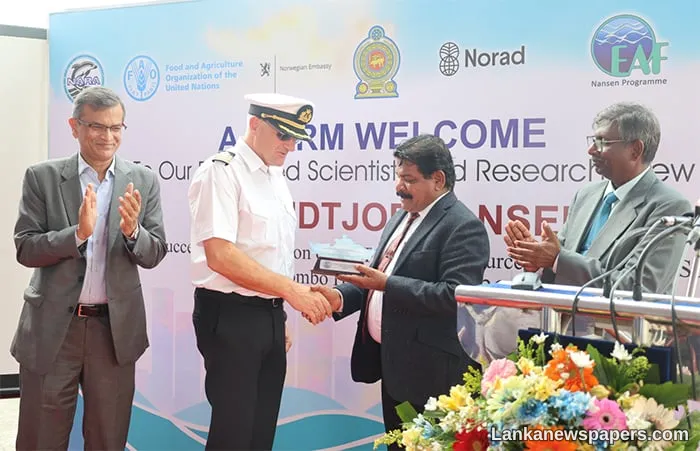
8 May 2026, Colombo – The Research Vessel Dr. Fridtjof Nansen has wrapped up its marine scientific survey in Sri Lankan waters and has now left Colombo. This survey was crucial for enhancing the country's understanding of its oceans. Operated under the EAF-Nansen Programme by the Food and Agriculture Organization of the United Nations (FAO) and Norway, the vessel spent weeks gathering important scientific information on fish populations, marine ecosystems, and ocean conditions, which will help in understanding Sri Lanka’s marine resources better. “Completing this survey is a major achievement for our fisheries sector,” stated Hon. Ramalingam Chandrasekar, Minister of Fisheries, Aquatic and Ocean Resources. “The scientific data collected will aid in making informed decisions to manage our marine resources sustainably and protect those who rely on them for their livelihoods.” The Dr. Fridtjof Nansen is the only research vessel with the UN flag, acting as a special platform for global cooperation. It unites researchers and fisheries management bodies from partner nations and is outfitted with advanced technology to create essential knowledge about marine resources and ecosystems, helping countries like Sri Lanka make science-based decisions. It also offered hands-on training for Sri Lankan researchers, enhancing the nation's skills in fisheries science and ocean research. H.E. May-Elin Stener, Ambassador of Norway to India, Sri Lanka, Bhutan, and the Maldives, expressed pride in supporting Sri Lanka and FAO through the EAF-Nansen Programme. “This initiative promotes sustainable ocean planning based on scientific evidence,” she noted. “The Research Vessel Dr. Fridtjof Nansen shows a long-term dedication to international collaboration, knowledge sharing, and capacity building. The information and skills gained from this mission will help protect marine ecosystems and support the livelihoods and food security of ocean-dependent communities.” The survey evaluated both pelagic and demersal fish species while also gathering vital oceanographic data like water temperature, currents, nutrient levels, and dissolved oxygen. It examined the potential of underused marine resources, such as cephalopods and mesopelagic species, and looked into marine pollution, including microplastics, as well as the nutritional value and contaminants in seafood. This mission is the fifth scientific survey conducted in Sri Lankan waters as part of the Nansen Programme, following previous missions from 1978 to 1980 and the latest one in 2018. Updated data is crucial due to the changing marine ecosystems and fish stock trends. The survey was carried out in close partnership with Sri Lankan organizations, with scientists from the National Aquatic Resources Research and Development Agency (NARA) leading the research, supported by experts and crew from Norway’s Institute of Marine Research (IMR), which operates the vessel and manages the scientific tasks and training. “The departure o...



💬 Join the Discussion 0
Be the first to share your view on this story.