Cabinet Green-Lights Two New Expressways Worth Rs. 451 Billion — With No Loans Attached
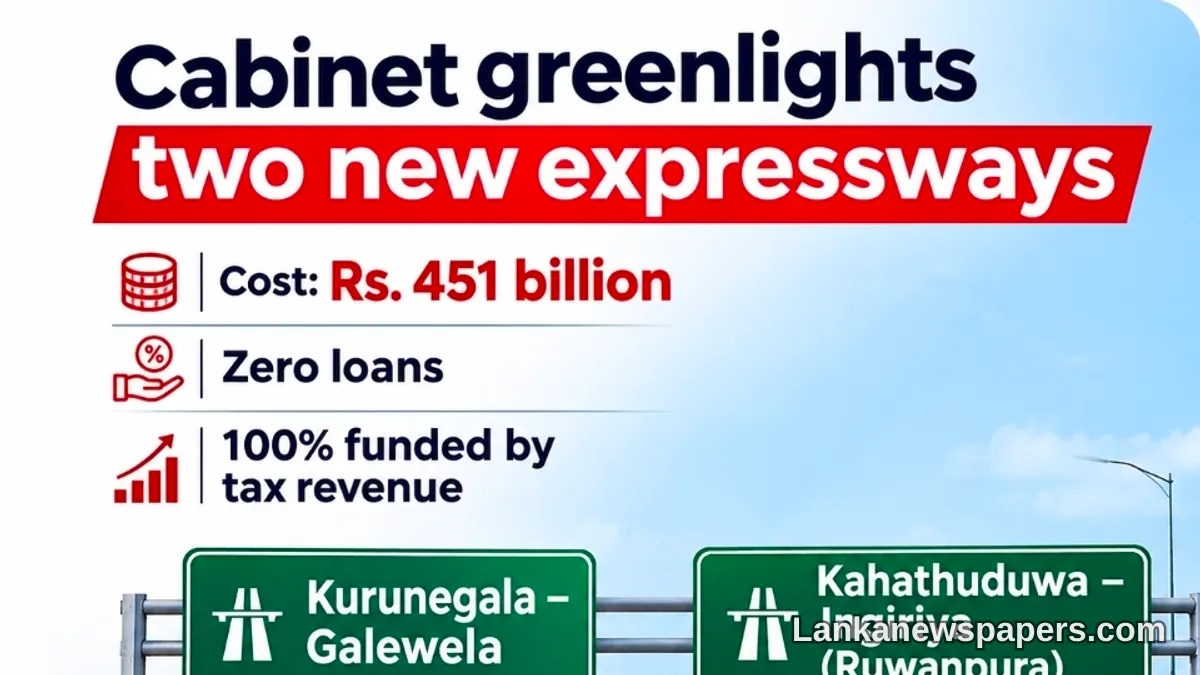
Sri Lanka's Cabinet of Ministers has approved the development of two major new expressways at a combined cost of Rs. 451 billion, in what the government is describing as a landmark step toward modernising the country's transport infrastructure — and notably, without taking on any new loans to fund the projects.
A New Approach to Infrastructure Financing
Transport, Highways and Urban Development Minister Bimal Rathnayake announced the Cabinet approval, emphasising that the projects represent a significant departure from the loan-dependent model that has historically driven large-scale infrastructure development in Sri Lanka.
The decision has been welcomed by those who have long raised concerns about the country's mounting debt burden, particularly following the economic crisis that pushed Sri Lanka to seek an International Monetary Fund bailout in recent years.
Scale of the Projects
The two expressway projects together carry a price tag of Rs. 451 billion, making them among the most substantial road infrastructure investments the country has seen in recent memory. While full technical and route details are yet to be formally released, the Cabinet approval marks the official green light for the initiatives to move forward.
- Total combined investment: Rs. 451 billion
- Approval granted by the Cabinet of Ministers
- No new loans to be incurred for the projects
- Projects fall under the purview of the Transport, Highways and Urban Development Ministry
Significance for Sri Lanka's Road Network
Sri Lanka's existing expressway network, though expanded over the past two decades, has struggled to keep pace with growing demand. Congestion on major arterial roads and the need to connect emerging economic zones have made the case for new expressways increasingly urgent.
The government is undertaking major expressway development projects that will transform connectivity across the island, while ensuring fiscal responsibility remains at the heart of decision-making.
Minister Rathnayake's statement signals that the administration under President Anura Kumara Dissanayake intends to pursue infrastructure growth without compounding the nation's debt profile — a politically and economically significant commitment given the ongoing IMF programme.
Broader Economic Context
Sri Lanka is currently navigating a delicate economic recovery, with fiscal discipline being a core requirement of its IMF extended fund facility arrangement. Large capital projects funded through external borrowing have in the past drawn criticism for adding to the country's debt distress.
By structuring these expressway projects outside of a loan framework, the government appears to be signalling an alternative financing approach, though further details on the exact funding mechanism are expected to be disclosed as the projects progress through planning and procurement stages.
Infrastructure analysts and opposition politicians are likely to scrutinise the financing model closely, with questions around sustainability, timelines, and contractor selection expected to dominate public discourse in the weeks ahead.

💬 Join the Discussion 0
Be the first to share your view on this story.