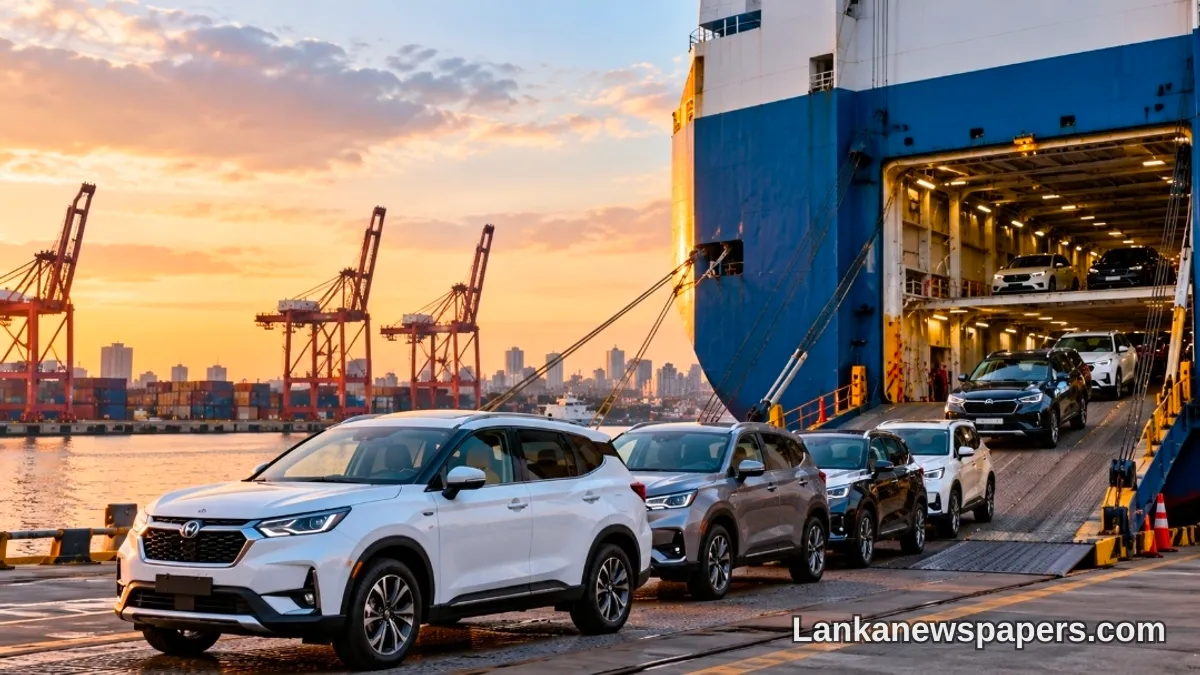
Sri Lanka recorded a significant drop in spending on motor vehicle imports in September 2026, with expenditure falling by 34.4% compared to the corresponding month of the previous year, marking one of the more notable shifts in the country's import expenditure pattern in recent months.
A Sharp Decline in Import Spending
The substantial reduction in the vehicle import bill signals a meaningful change in the country's external trade dynamics. The more than one-third drop in expenditure reflects either a contraction in the volume of vehicles entering the country, a shift in the types of vehicles being imported, or a combination of both factors influencing overall spending figures.
Motor vehicle imports have long been a closely watched component of Sri Lanka's import expenditure, given their considerable impact on the country's trade balance and foreign exchange reserves. Any significant movement in this category tends to draw attention from policymakers, economists, and the general public alike.
Context and Significance
Sri Lanka has been navigating a carefully managed import regime in the aftermath of its historic economic crisis, during which strict controls were placed on non-essential imports, including motor vehicles, to conserve dwindling foreign exchange reserves.
The easing of import restrictions in subsequent periods led to a gradual reopening of the vehicle market, making month-on-month and year-on-year comparisons particularly significant as analysts assess whether demand is stabilising or cooling once again.
A decline of this magnitude in September could indicate that the initial surge in pent-up demand following the lifting of import curbs has begun to taper off, or that higher vehicle prices and borrowing costs are dampening consumer appetite for new purchases.
Broader Trade Implications
Reduced vehicle import spending, if sustained, could contribute positively to narrowing Sri Lanka's trade deficit, providing some relief on the external accounts front. Economists have consistently highlighted the importance of managing import expenditure as the country works to maintain stability in its balance of payments position.
The Central Bank of Sri Lanka and the Finance Ministry are expected to factor such trends into their ongoing assessments of the country's economic recovery trajectory, particularly as Sri Lanka continues to implement reforms tied to its International Monetary Fund programme.
Further data covering the broader import and export landscape for September 2026 is anticipated to provide a more complete picture of where the economy stands as the final quarter of the year gets underway.

💬 Join the Discussion 2
See what readers are saying — and add your view.
still cant afford a car so what difference does it make for normal ppl
exactly men, rich guys importing less luxury cars thats all