One Agency to Rule Them All? The Case for Sri Lanka's Integrated Development Authority
Beyond Stabilisation: The Next Economic Frontier
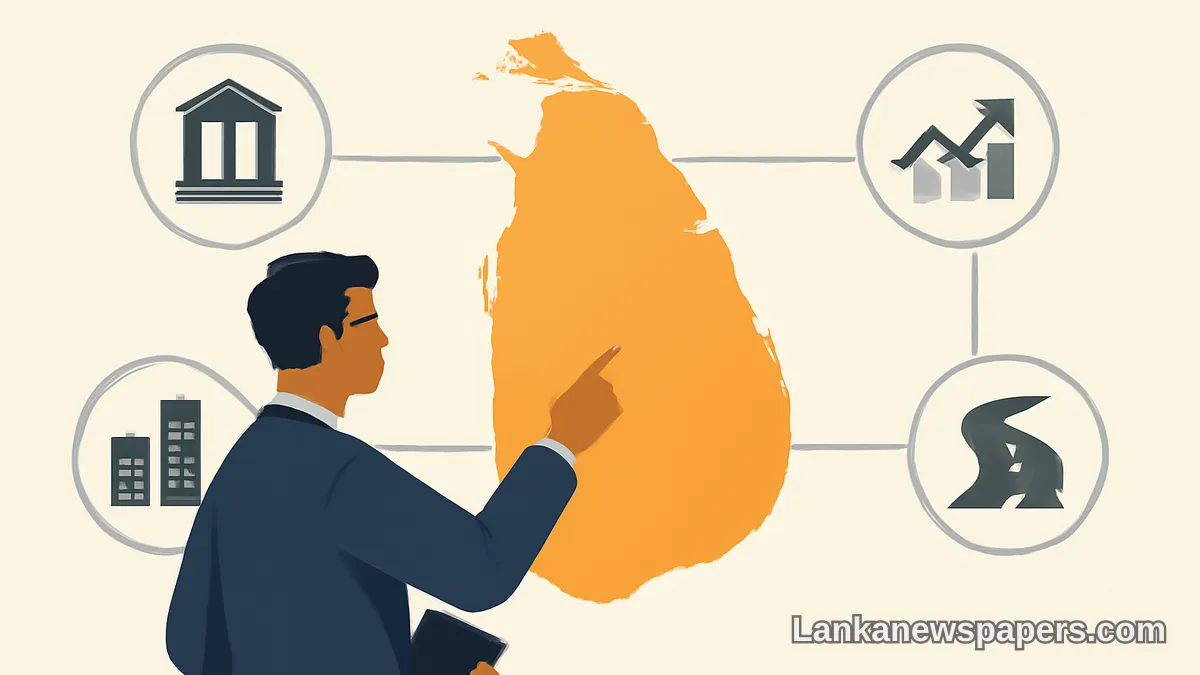
Sri Lanka has fought hard to restore macroeconomic stability following one of the most devastating economic crises in its modern history. But stability, as economists and policymakers increasingly agree, is merely the starting line — not the finish. The country's next and arguably greater challenge is transforming that hard-won stability into sustained, long-term economic growth.
That is the central argument advanced by Professor Asoka S. Seneviratne, who raises a provocative but timely question: does Sri Lanka need a single, unified development agency to drive the investment and transformation agenda forward?
A Fragmented System Holding Back Progress
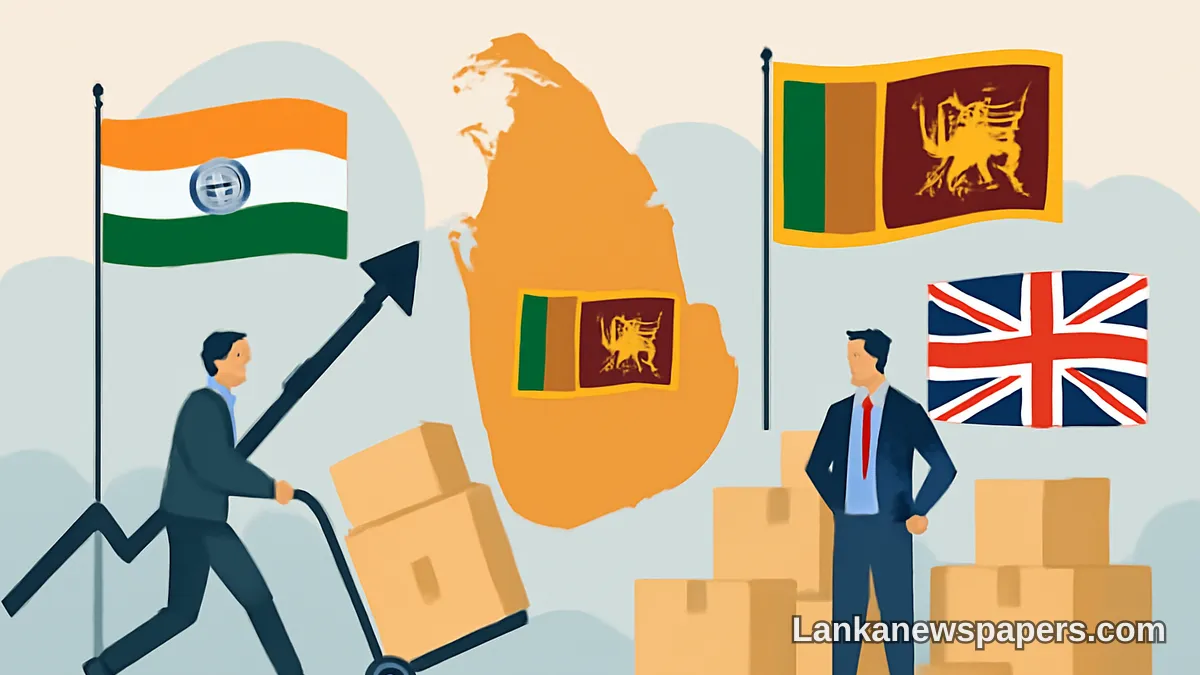
At present, Sri Lanka's investment and development promotion landscape is spread across multiple institutions, each operating within its own mandate, budget, and bureaucratic culture. While individual agencies may perform their specific functions adequately, the absence of a coordinated, overarching body means that investors — both foreign and domestic — often navigate a complex and sometimes contradictory web of approvals, incentives, and regulatory requirements.
This fragmentation carries a real cost. In a globally competitive environment where countries actively court investment, delays and inefficiencies can mean the difference between securing a major project and losing it to a regional rival such as Vietnam, Bangladesh, or India.
As management thinker Peter Drucker famously observed, "Efficiency is doing things right; effectiveness is doing the right things." Sri Lanka's current structure may have pockets of efficiency, but the question being posed is whether the country is being effective enough at the strategic level.
The Case for Integration
The proposal for a single integrated development agency is rooted in the idea that economic transformation requires more than attracting investment — it demands a coherent national strategy that aligns trade policy, industrial development, export promotion, skills development, and regulatory reform under one roof.
Several countries have adopted this model with notable success. Singapore's Economic Development Board, for instance, has long been cited as a benchmark for how a small island nation can punch well above its weight by centralising its investment promotion and economic planning functions within a single, empowered institution.
Proponents of the integrated agency model argue that Sri Lanka could benefit in several key ways:
- Eliminating duplication of effort and reducing bureaucratic overlap between existing agencies
- Providing investors with a single point of contact, streamlining approvals and reducing transaction costs
- Enabling a unified national narrative around Sri Lanka's investment proposition
- Aligning short-term investment targets with long-term industrial and export strategy
- Improving accountability by consolidating performance metrics under one institutional framework
Challenges Cannot Be Ignored
Consolidating multiple agencies is, of course, far easier proposed than executed. Institutional mergers are politically sensitive, often resisted by entrenched interests, and carry the risk of short-term disruption to services that investors and businesses depend upon. There is also the danger that a large, centralised agency could itself become unwieldy — trading one set of inefficiencies for another.
Critics of such proposals caution that the problem in Sri Lanka may not be structural alone. Weak implementation capacity, political interference in agency decision-making, and inconsistent policy signals to investors are challenges that no amount of reorganisation will resolve on their own. Culture, governance, and leadership matter as much as organisational design.
A Moment of Opportunity
Despite these concerns, there is a growing consensus that Sri Lanka cannot afford business as usual. The IMF-backed recovery programme has created a window of credibility that the country must capitalise upon. Foreign investors are watching, and several sectors — including technology, renewable energy, port logistics, and tourism — present genuine opportunities for Sri Lanka to position itself as a serious destination for quality investment.
Whether the answer lies in a fully integrated agency, a strengthened coordination mechanism among existing bodies, or some hybrid model, the underlying imperative is clear: Sri Lanka needs its institutions to work smarter, faster, and in greater harmony if economic transformation is to move from aspiration to reality.
The debate Professor Seneviratne has reopened is not merely academic. With the country at a genuine inflection point, the decisions made about institutional architecture in the months ahead could shape Sri Lanka's economic trajectory for a generation.

💬 Join the Discussion 4
See what readers are saying — and add your view.
someone ask prof whether this worked anywhere else in south asia first
good idea on paper but implementation is the problem in sri lanka always
another new authority means another set of salaries and perks for politicians friends
exactly, who is going to run it, same old faces no