Democracy on the Line: How Sri Lanka's 22nd Amendment Is Being Undermined by Parliamentary Absenteeism
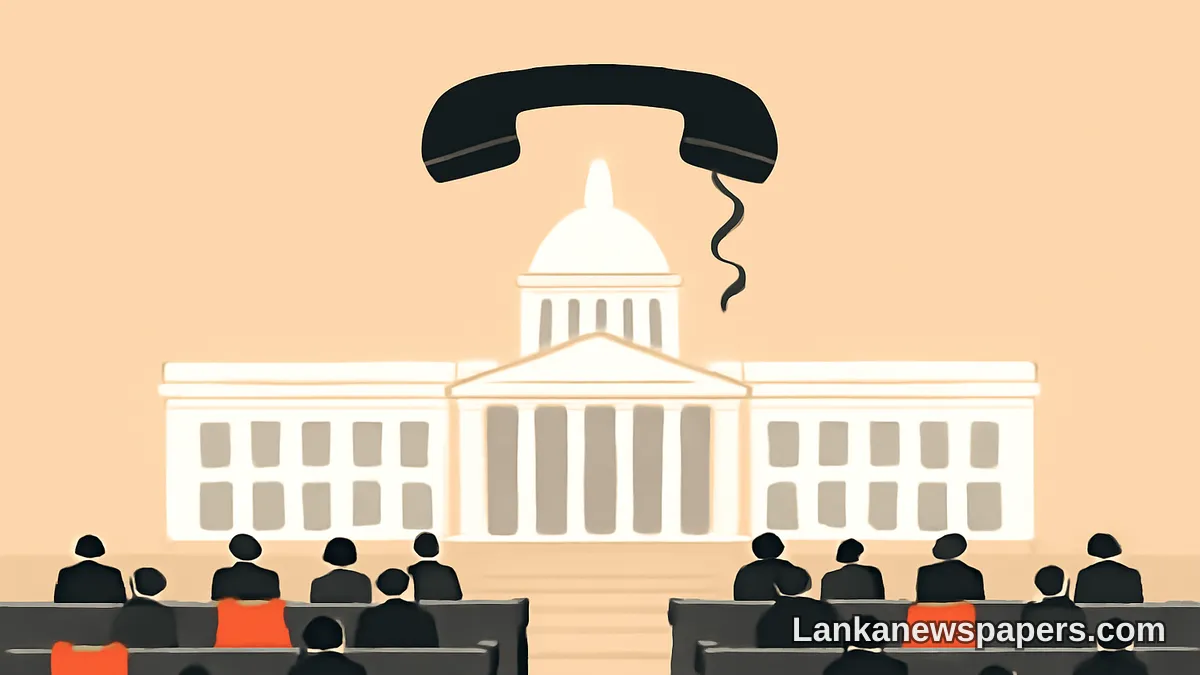
Sri Lanka's 22nd Amendment to the Constitution, hailed as a landmark reform aimed at strengthening democratic governance and parliamentary accountability, is facing a quiet but serious threat — the persistent absence of Members of Parliament from crucial sittings.
A Reform Built on High Expectations
When the 22nd Amendment was passed, it was welcomed across Sri Lanka's political spectrum as a meaningful step toward restoring checks and balances that had been eroded under previous constitutional arrangements. The amendment placed renewed emphasis on the role of Parliament as an active and present oversight body, making the physical and functional engagement of elected representatives more critical than ever.
However, observers and constitutional experts have begun raising alarm bells over a troubling pattern that threatens to hollow out the amendment's intentions — MPs simply not turning up when it matters most.
Empty Seats, Broken Promises
Parliamentary absenteeism is not a new phenomenon in Sri Lanka, but its implications have taken on greater significance in the context of the 22nd Amendment. Key votes, committee deliberations, and legislative debates that require quorum have repeatedly been disrupted or delayed due to insufficient attendance from elected members.
This raises fundamental questions about democratic responsibility. Citizens who elected these representatives expect them to be present, engaged, and actively participating in the business of governance — particularly at a time when Sri Lanka continues to navigate an unprecedented economic and social recovery.
The 22nd Amendment was designed to make Parliament work better for the people. But a law, however well-crafted, cannot compel commitment — that must come from the politicians themselves.
Constitutional Intent vs. Political Reality
Legal analysts point out that while the 22nd Amendment introduced important structural reforms, it contains limited mechanisms to penalise or effectively deter habitual absenteeism. This gap between constitutional intent and political reality has left reformers frustrated.
Among the concerns being raised are the following:
- Critical legislative business is being stalled due to lack of quorum in Parliament.
- Parliamentary oversight committees are unable to function at full capacity when members are absent without valid reason.
- Public trust in elected representatives continues to erode as voters see their MPs failing to fulfil basic duties.
- The reform agenda underpinning the 22nd Amendment risks being undermined before it can take meaningful root.
Accountability Begins With Presence
Political commentators argue that the solution lies not only in stronger enforcement mechanisms but also in a cultural shift within Sri Lanka's political class. Attendance records of MPs, they suggest, should be made fully transparent and regularly published so that voters can make informed decisions at the ballot box.
There is also growing sentiment among civil society groups that Parliament should introduce stricter penalties for unjustified absenteeism — including the possible docking of parliamentary allowances for members who fail to meet minimum attendance thresholds.
The Broader Democratic Cost
Sri Lanka's democracy has endured significant stress over recent years — from economic collapse and public protests to constitutional crises and calls for sweeping governance reform. The 22nd Amendment was meant to signal a new chapter. But that promise rings hollow when the very individuals tasked with upholding it choose not to be in the room.
For a nation still rebuilding public faith in its institutions, the message sent by absent MPs is a damaging one. Democratic reform cannot be reduced to legislation alone — it demands the daily, visible commitment of those who have been entrusted with the people's mandate.
As Sri Lanka moves forward, the question being asked with increasing urgency is a simple but pointed one: if elected members will not show up to do the work, who exactly is running the country's democracy?
💬 Join the Discussion 0
Be the first to share your view on this story.