Lessons From Decades of Industrial Policy: What Sri Lanka Must Learn to Build a Stronger Economy
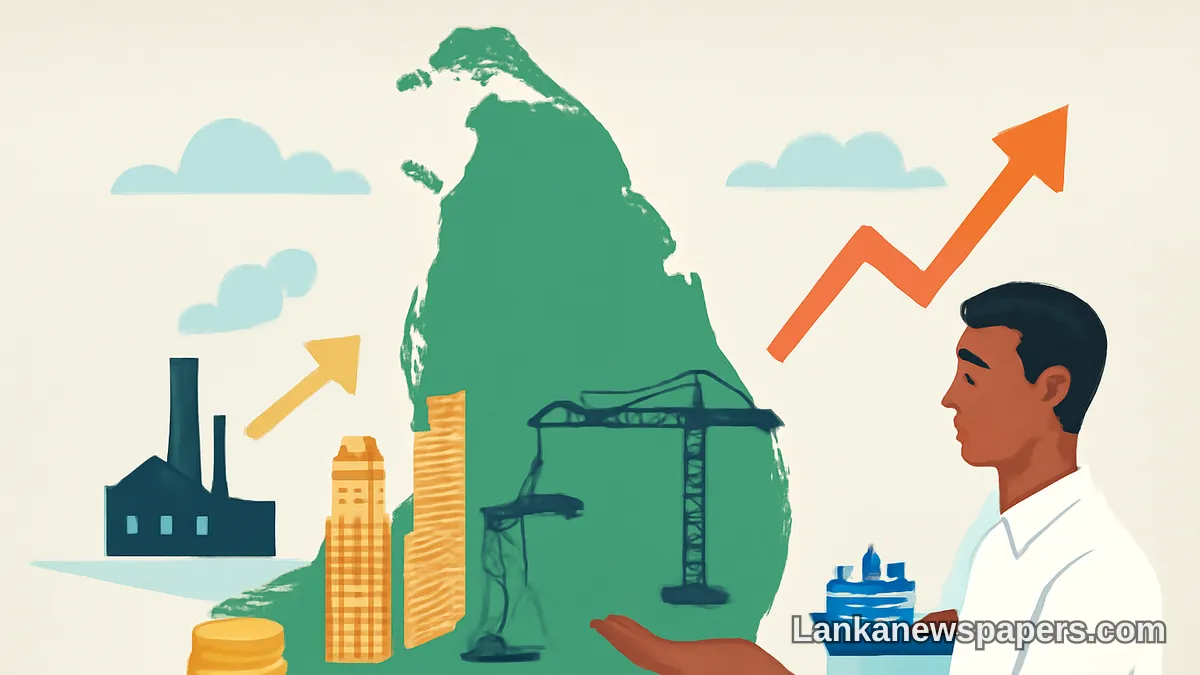
Sri Lanka has never truly been without an industrial policy. Across decades and through countless changes of government, successive administrations have attempted — in varying forms and with varying degrees of commitment — to promote manufacturing, shield domestic industries from foreign competition, and steer the national economy toward sustainable growth. Yet despite these persistent efforts, the country continues to grapple with structural economic vulnerabilities that suggest something fundamental has gone wrong along the way.
A History of Good Intentions, Mixed Results
The story of Sri Lanka's industrial policy is not one of absence, but of inconsistency. Governments have launched ambitious programmes, established state enterprises, offered tax incentives to investors, and drawn up national development blueprints — only for many of these initiatives to stall, reverse, or collapse as political winds shifted. The result has been a cycle of short-term measures that rarely evolved into the kind of deep, systemic transformation that drives lasting industrial progress.
Economists and policy analysts have long argued that the core weakness lies not in the policies themselves, but in the institutional capacity and political will required to implement them over the long term. A change of government has too often meant a change of direction, leaving investors uncertain and industries unable to plan ahead with confidence.
Stability as the Foundation for Transformation
One of the clearest lessons that Sri Lanka's industrial experience offers is the critical importance of policy stability. Countries that have successfully industrialised — whether in East Asia or elsewhere — have typically done so on the back of consistent, coordinated strategies that were sustained across political administrations. Industrial transformation does not happen overnight; it requires patient investment, skill development, infrastructure building, and regulatory coherence over years and even decades.
Sri Lanka, by contrast, has at times treated industrial policy as a political instrument rather than a national development tool. Protectionist measures have been introduced hastily and removed just as quickly. State-owned enterprises have been expanded under one government and privatised under the next. This lack of continuity has made it exceptionally difficult for any single policy framework to take root and deliver meaningful results.
The Role of the Private Sector and Foreign Investment
Another critical insight concerns the relationship between the state and the private sector. Effective industrial policy does not mean government micromanaging the economy — it means government creating the conditions under which private enterprise can thrive and innovate. This includes:
- Providing reliable infrastructure such as ports, roads, and energy supply
- Ensuring a transparent and efficient regulatory environment
- Offering targeted incentives aligned with national development priorities
- Investing in education and vocational training to build a skilled workforce
- Actively courting quality foreign direct investment in high-value sectors
Sri Lanka's export economy has historically been heavily concentrated in garments and tea — sectors that, while vital, leave the country exposed to global commodity price swings and low-margin competition. Diversifying into higher-value manufacturing, technology, and services requires deliberate policy choices backed by credible institutions.
What Transformation Actually Requires
Moving from economic stability to genuine transformation demands more than policy announcements. It requires a fundamental rethinking of how Sri Lanka positions itself in regional and global value chains. The country possesses genuine advantages — a strategic location in the Indian Ocean, a relatively educated population, and an established export base — but these assets have not been fully leveraged.
As management thinker Peter Drucker once observed, the best way to predict the future is to create it. For Sri Lanka, that means making deliberate, strategic choices today that will shape the industrial landscape of tomorrow.
Analysts point to the need for a national industrial strategy that commands broad political consensus — one that is insulated, as far as possible, from the volatility of electoral cycles. Such a strategy would identify priority sectors, set clear targets, establish accountability mechanisms, and ensure that public investment complements rather than crowds out private initiative.
A Moment of Opportunity
Sri Lanka finds itself at a pivotal juncture. Having navigated the worst economic crisis in its post-independence history, the country is now engaged in a difficult but necessary process of structural reform under an IMF-supported programme. This period of reconstruction offers a rare opportunity to lay new foundations — to build industrial policy frameworks that are not merely reactive, but genuinely forward-looking.
The lessons of the past are clear: piecemeal interventions and politically driven reversals have cost the country dearly. What Sri Lanka needs now is the discipline to stay the course, the institutional strength to implement policy effectively, and the vision to transform short-term stability into long-term prosperity. The path from stabilisation to transformation is neither short nor simple — but the groundwork must begin now.


💬 Join the Discussion 1
See what readers are saying — and add your view.
same policies same failures, when will they actually learn machang