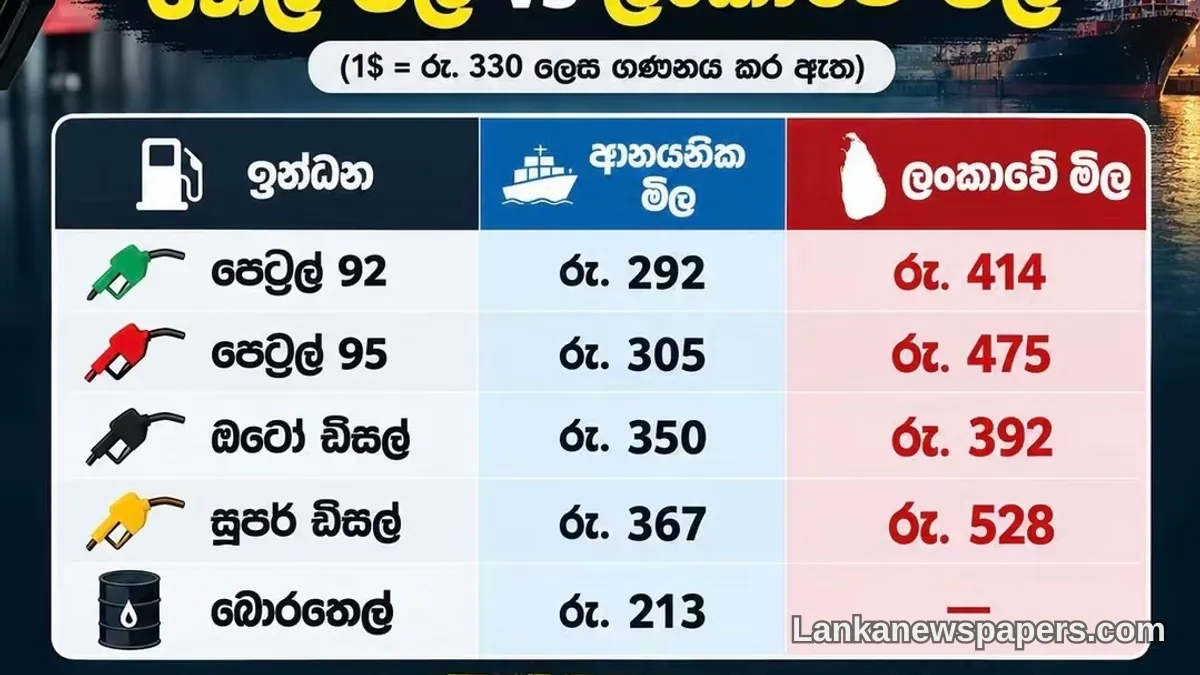
Former Minister Patali Champika Ranawaka has called on the government to urgently make public the formula used to determine fuel prices in Sri Lanka, raising serious questions about why consumers continue to bear high costs at the pump.
Ranawaka, a prominent opposition figure and former minister with extensive experience in the energy sector, challenged the current administration to be transparent about how fuel prices are calculated and justified to the public.
A Call for Accountability
The former minister's demand comes amid growing frustration among Sri Lankan consumers, many of whom are struggling with the cost of living following the country's severe economic crisis in recent years. Fuel prices remain a particularly sensitive issue, as they directly affect transport costs, food prices, and the broader economy.
Ranawaka argued that the public has a right to understand the pricing mechanism being applied, and that a lack of disclosure only deepens suspicion that consumers are being overcharged.
The government must come clean on how fuel prices are being set. Sri Lankans deserve to know whether they are paying a fair price or being made to carry an unnecessary burden.
Why Fuel Pricing Matters
Fuel pricing in Sri Lanka has long been a contentious issue. The Ceylon Petroleum Corporation and Lanka IOC are the two main suppliers in the country, and their pricing decisions ripple through virtually every sector of the economy. Key concerns raised by critics include:
- Whether global oil price reductions are being passed on to consumers in a timely manner
- The role of taxes and levies in inflating the final price paid at the pump
- A lack of a clearly published, regularly updated pricing formula accessible to the public
- The financial obligations of state energy entities and how these affect consumer prices
Pressure Mounts on the Government
Ranawaka's intervention adds to a growing chorus of voices urging the government to adopt greater openness in managing the country's energy sector. Economists and civil society groups have similarly called for a standardised and publicly available fuel pricing framework that ties retail prices directly to international market rates.
As Sri Lanka continues its path toward economic recovery, decisions around fuel pricing carry significant weight. Any perception that consumers are being unfairly burdened risks eroding public confidence in the government's economic stewardship at a critical time.
The government is yet to formally respond to Ranawaka's demands for disclosure.



💬 Join the Discussion 1
See what readers are saying — and add your view.
finally someone asking the right questions. fuel prices are killing us