Sri Lanka Makes History as World's First Snake Congress Draws Global Experts to the Island
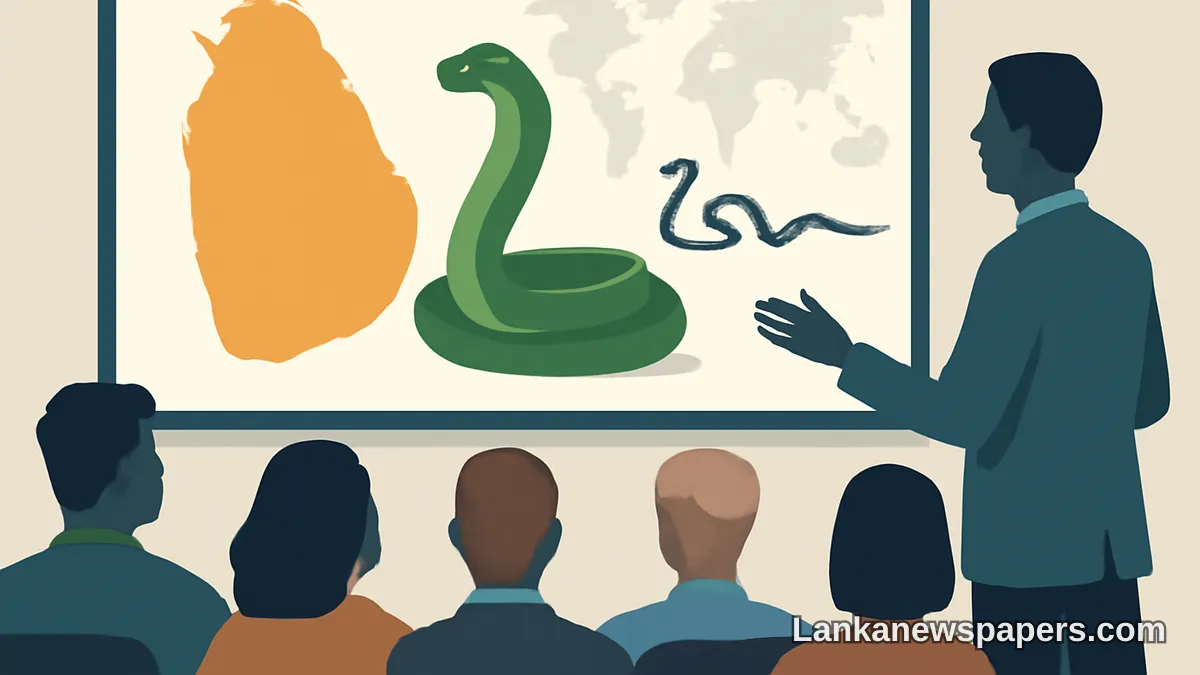
Sri Lanka has stepped into the global spotlight as the host nation of a landmark scientific gathering — the first-ever World Congress on Snakes — bringing together leading herpetologists, conservationists, and wildlife researchers from across the globe to share knowledge and shape the future of snake research and conservation.
A Historic First for Herpetology
The inaugural World Congress on Snakes marks a significant milestone in the field of reptile science, representing the first time an international congress of this scale has been dedicated exclusively to snakes. Sri Lanka, long celebrated for its remarkable biodiversity and rich herpetofauna, was chosen as the fitting backdrop for this historic event.
The island nation is home to a diverse array of snake species, including numerous endemics found nowhere else on Earth, making it a highly appropriate setting for a congress of this nature. Researchers and conservationists attending the event are expected to address pressing topics ranging from snake ecology and venom research to human-snake conflict and habitat loss.
Why Sri Lanka?
Sri Lanka's extraordinary concentration of biodiversity within a relatively small landmass has long attracted the attention of the global scientific community. The country harbours a significant number of endemic snake species, and local researchers have contributed meaningfully to herpetological studies in the South Asian region.
Hosting the World Congress on Snakes places Sri Lanka firmly on the map as a centre of excellence for wildlife science, and offers a valuable opportunity for local researchers and institutions to engage directly with their international counterparts.
Key Areas of Focus
- Snake biodiversity and taxonomy, including newly discovered species
- Venom research and its applications in medicine and antivenom development
- Conservation strategies for threatened snake populations worldwide
- Reducing human-snake conflict in agricultural and rural communities
- The role of snakes within broader ecosystem health and balance
A Platform for Conservation Action
Beyond the exchange of scientific knowledge, the congress is expected to serve as a platform for developing concrete conservation frameworks. Snakes remain among the most misunderstood and persecuted animals on the planet, often facing widespread fear and deliberate killing despite their critical ecological role as both predators and prey within food chains.
Snakes play an irreplaceable role in maintaining the balance of ecosystems, controlling rodent populations, and serving as indicators of environmental health — yet they remain one of the least protected groups of wildlife globally.
Experts attending the congress are hopeful that the discussions and resolutions emerging from this gathering will help shift public perception and drive policy changes that better protect snake species across Asia and beyond.
A Proud Moment for Sri Lankan Science
For Sri Lanka's scientific community, the congress represents a proud acknowledgement of the country's contributions to biodiversity research and conservation. Local universities, wildlife agencies, and environmental organisations are expected to play an active role in the proceedings, showcasing the depth of expertise that exists within the island.
As the world turns its attention to Sri Lanka for this historic event, the hope is that the knowledge exchanged here will translate into lasting benefits — not only for snake conservation globally, but for the ecosystems and communities that depend on a healthy natural world.



💬 Join the Discussion 2
See what readers are saying — and add your view.
finally something good happening in this country, proud moment
yes but did goverment actually support this or NGOs did everything again