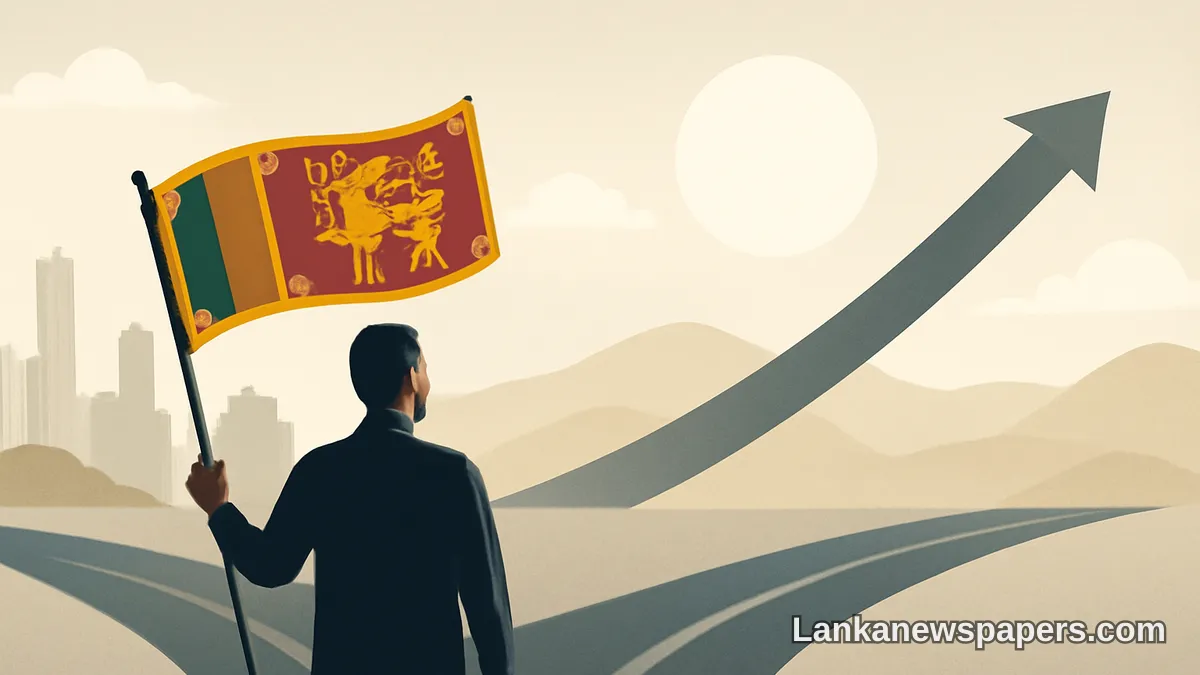
From Crisis Recovery to Long-Term Discipline — The Road After the IMF
Sri Lanka has come a remarkable distance since the devastating economic collapse of 2022. Growth has resumed, inflation has been tamed, and a degree of fiscal stability has been restored — achievements that would have seemed distant dreams during the darkest days of empty fuel queues and medicine shortages. Yet, as the country's IMF programme moves closer to its conclusion, a far more consequential question is beginning to take shape: can Sri Lanka sustain economic discipline on its own terms, without an international safety net holding it accountable?
Stabilisation Was Only the First Step
The IMF arrangement provided Sri Lanka with more than financial support. It imposed a framework of accountability — a set of conditions and benchmarks that compelled successive governments to make difficult but necessary decisions on taxation, public expenditure, and debt restructuring. That external pressure, while often painful for ordinary citizens, helped arrest what had become a freefall.
But stabilisation and transformation are fundamentally different challenges. Stopping a bleeding wound is not the same as restoring full health. The structural weaknesses that made Sri Lanka vulnerable to catastrophic collapse in the first place — chronic revenue shortfalls, bloated state enterprises, heavy dependence on borrowing, and a culture of fiscal populism — have not disappeared simply because the immediate crisis has passed.
The Dangers of Premature Comfort
History offers ample warning. Across the developing world, countries have completed IMF programmes, declared victory, and then gradually reversed hard-won reforms as political pressures mounted and economic conditions eased. The temptation to loosen the fiscal belt when foreign reserves improve and growth figures climb is powerful — and in Sri Lanka's deeply competitive electoral environment, that temptation is especially acute.
Tax policy offers one telling example. Sri Lanka has made significant strides in broadening its revenue base, but tax compliance remains inconsistent and the informal economy continues to operate largely beyond the government's reach. Without sustained effort to strengthen the Inland Revenue Department and modernise collection mechanisms, revenue gains could prove fragile.
State-Owned Enterprises Remain a Critical Vulnerability
Among the most pressing concerns facing Sri Lanka's post-IMF economic outlook is the condition of its state-owned enterprises. Institutions such as Ceylon Electricity Board and Ceylon Petroleum Corporation have historically operated as financial black holes, accumulating losses that ultimately fall on the public purse. While some pricing reforms have been introduced under IMF conditionality, the deeper structural and governance issues within these entities remain largely unresolved.
- Transparent, independent management structures are needed to reduce political interference
- Regular independent audits should be made publicly accessible
- Loss-making entities must face credible reform or consolidation rather than indefinite subsidisation
- Performance-linked accountability frameworks must replace patronage-driven appointments
Without meaningful reform in this sector, the fiscal gains achieved during the programme period remain at risk of being quietly eroded in the years that follow.
Building Institutions That Outlast Any Programme
The most enduring legacy of Sri Lanka's engagement with the IMF should not be a set of numbers on a spreadsheet — it should be stronger institutions. An independent and empowered central bank, a transparent public financial management system, and a rules-based fiscal framework are the kinds of structures that can anchor economic discipline long after external monitors have departed.
Parliament's role in this regard is indispensable. Meaningful legislative oversight of public finances, including robust scrutiny of annual budgets and debt obligations, would provide a form of domestic accountability that does not rely on foreign institutions to enforce good behaviour.
The Social Dimension Cannot Be Ignored
Economic discipline, if pursued without sensitivity to its human cost, risks generating a political backlash that unravels everything achieved. The citizens who bore the greatest burden of the 2022 crisis — those who lost livelihoods, could not afford medicines, or watched their savings diminish — deserve to see tangible improvements in their daily lives. Reforms that appear to benefit creditors and investors while leaving working families behind are unlikely to sustain public support over time.
Social spending, particularly on health, education, and targeted welfare, must therefore be protected and made more efficient rather than treated as a residual item in a budget managed primarily for debt service. This balance — between fiscal prudence and social investment — will define whether Sri Lanka's recovery is genuinely sustainable or merely cosmetic.
A Moment of Historic Opportunity
Sri Lanka stands at a genuine inflection point. The pain of 2022 has created a window — narrow but real — for structural change that ordinary times rarely permit. Citizens and policymakers alike understand, with fresh and vivid memory, what economic mismanagement ultimately costs. That shared understanding is a rare political resource.
The question is whether Sri Lanka's leadership will use this moment to embed lasting reform into the country's economic DNA, or whether the old habits of populist promises, opaque governance, and short-term thinking will gradually reassert themselves once the IMF's watchful eye has moved on.
Transformation, unlike stabilisation, cannot be borrowed from abroad. It must be built from within — through institutions, through political will, and through a genuine commitment by all stakeholders to a different kind of economic future. That is the real test Sri Lanka now faces, and it is one that no external programme can pass on the country's behalf.
💬 Join the Discussion 1
See what readers are saying — and add your view.
stabilization is one thing but transformation? thats the hard part no