Supreme Court Exposes How Political Agenda Drove Investigation Against Ravi Karunanayake and Shani Abeysekara
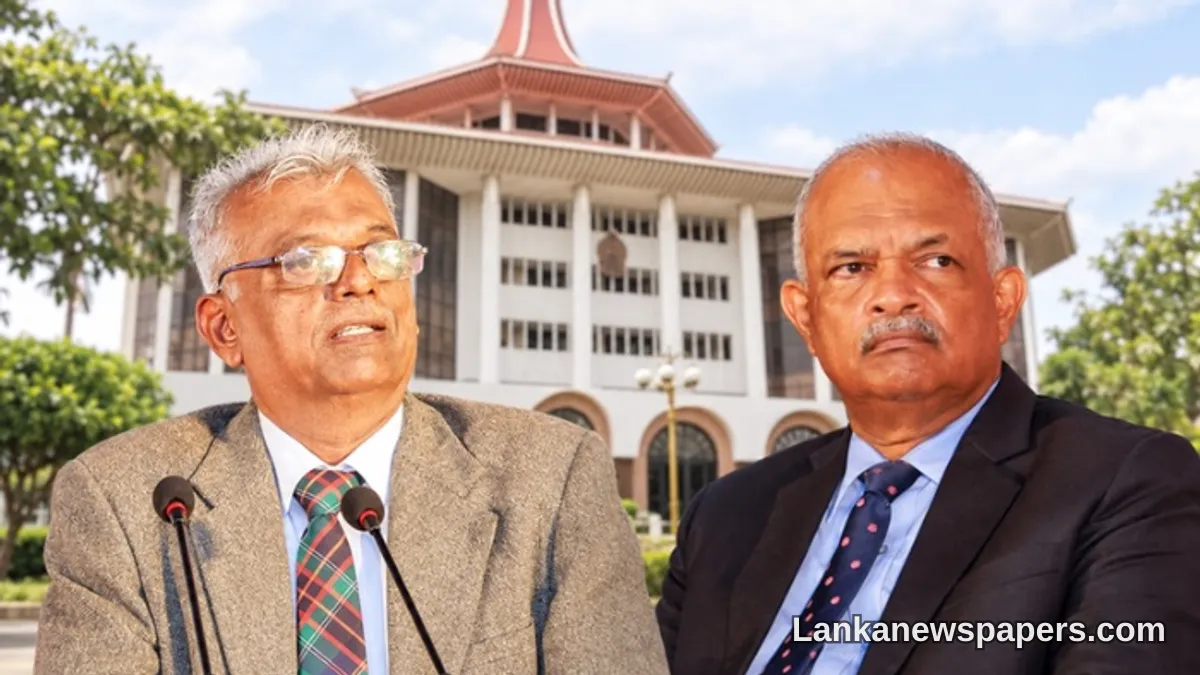
The Supreme Court of Sri Lanka has laid bare the troubling sequence of events that led to a politically driven investigation targeting former Finance Minister Ravi Karunanayake and former Criminal Investigation Department (CID) Director Shani Abeysekara, revealing serious irregularities in how the probe was initiated and conducted.
A Complaint With Political Fingerprints
In its detailed ruling, the Supreme Court highlighted that the complaint which triggered the investigation bore clear hallmarks of political motivation rather than a genuine pursuit of justice. The court noted that the origins of the case raised significant questions about the true intentions behind those who set the legal machinery in motion against the two prominent figures.
Unusually Swift Police Response
Among the most striking observations made by the court was the extraordinary speed with which law enforcement responded to the initial complaint. The Supreme Court pointed out that this unusually rapid police reaction stood in sharp contrast to the manner in which complaints are ordinarily processed, suggesting that external pressures or influences may have played a role in expediting action against the accused.
Conduct of Investigators Under Scrutiny
The court also turned a critical eye toward the behaviour and conduct of those responsible for carrying out the investigation. The manner in which investigators proceeded was found to be deeply problematic, reinforcing the court's broader finding that the entire process had been compromised from its very inception.
Wider Implications for Rule of Law
The Supreme Court's findings carry significant implications for Sri Lanka's justice system and the independence of its investigative institutions. The ruling serves as a stark reminder of the dangers posed when law enforcement mechanisms are allegedly weaponised for political purposes, undermining public trust in institutions that are meant to operate free from partisan interference.
The case has drawn considerable public attention, particularly given the high-profile nature of the individuals involved and the broader context of political tensions that have periodically engulfed Sri Lanka's governance landscape in recent years.
Legal observers and civil society representatives are expected to closely examine the full text of the Supreme Court's judgment as further details continue to emerge regarding the extent of the alleged political interference in this case.


💬 Join the Discussion 2
See what readers are saying — and add your view.
Finally court is saying what we all already knew. Political tool only.
But how many years it took to come out? Damage already done no.