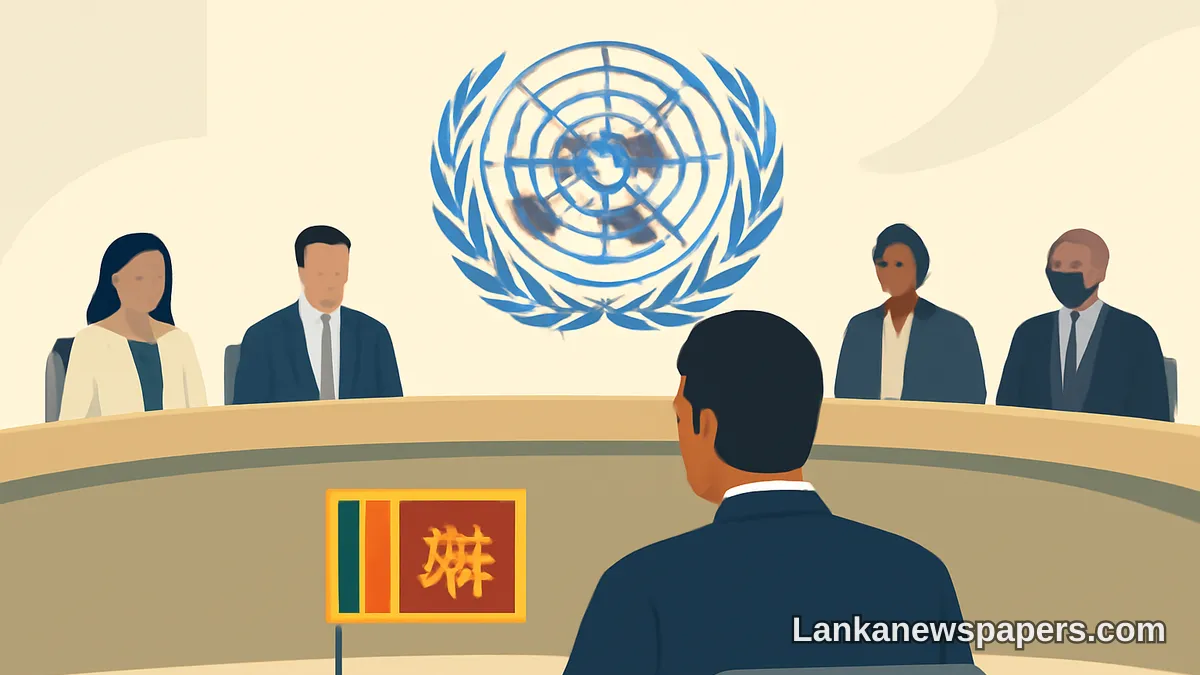
Sri Lanka has delivered a firm and pointed message to the United Nations Human Rights Council (UNHRC), declaring that development assistance extended to nations should not be misconstrued as an act of charity, but rather recognised as a fundamental right of developing countries.
A Strong Stand on the World Stage
In a bold assertion of national sovereignty and dignity, Sri Lanka's representatives took to the floor of the UNHRC to push back against what the island nation perceives as a condescending international narrative surrounding aid and development support. The statement, encapsulated in the phrase "Development is not charity," signals Colombo's growing resolve to reframe the terms of its engagement with the international community.
The declaration underscores Sri Lanka's position that access to development resources and international cooperation is not a privilege granted at the discretion of wealthier nations, but an entitlement rooted in global equity and the principles of the United Nations itself.
Broader Context
Sri Lanka has long been subject to scrutiny at the UNHRC, particularly regarding accountability for events during the final stages of its civil war. The country has faced repeated calls for independent investigations and transitional justice mechanisms, often tied to discussions around international assistance and engagement.
By invoking the language of development rights, Sri Lanka appears to be drawing a clear distinction between legitimate human rights discourse and what it views as politically motivated pressure cloaked in humanitarian language.
Significance for Sri Lanka
For a country still navigating the aftermath of a severe economic crisis, the statement carries particular weight. Sri Lanka has been actively seeking debt restructuring agreements, financial assistance from the International Monetary Fund, and broader investment from the global community to stabilise and rebuild its economy.
- Sri Lanka has maintained that its development trajectory must be determined by its own people and government.
- The country argues that international partnerships should be built on mutual respect rather than conditionality.
- Officials have consistently called for a non-interventionist approach to Sri Lanka's internal affairs.
The message from Colombo is unambiguous — Sri Lanka will engage with the international community on its own terms, and it expects that engagement to be grounded in equality, not patronage.
The statement is expected to resonate strongly among Sri Lankan citizens and policymakers who have grown increasingly vocal about what they see as double standards applied to developing nations within global human rights forums.
As the UNHRC session continues, all eyes will be on how member states respond to Sri Lanka's assertive diplomatic posture and whether it signals a broader shift in how the country intends to navigate its international relationships going forward.


💬 Join the Discussion 0
Be the first to share your view on this story.