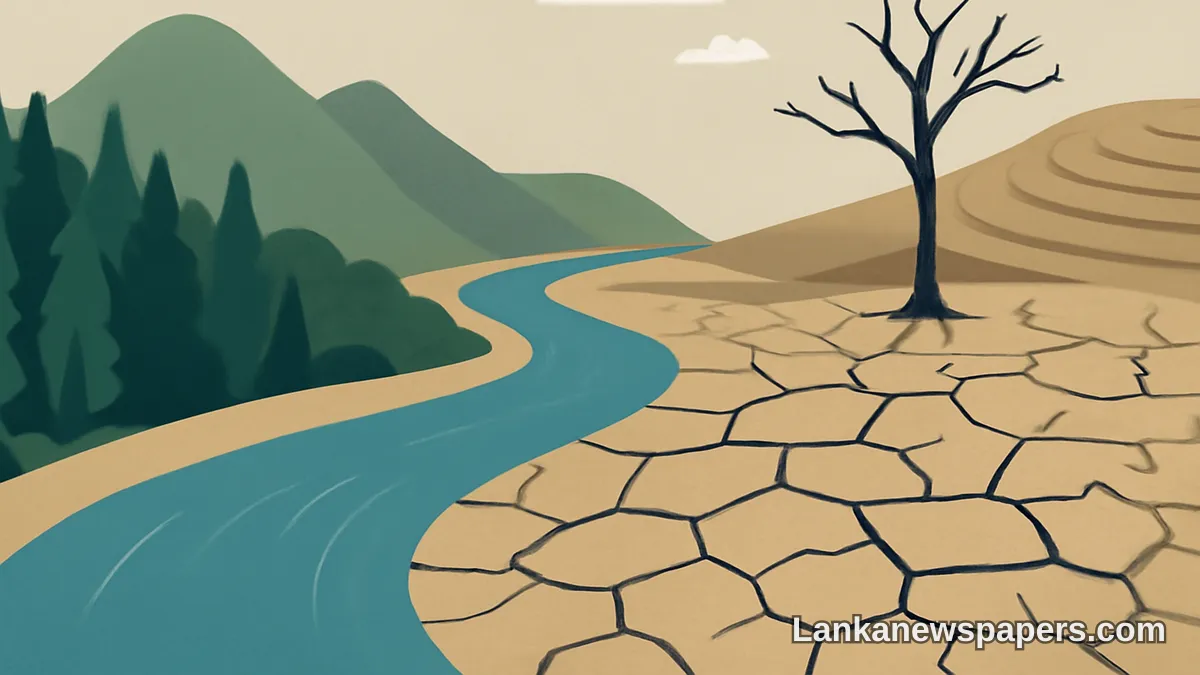
A Fragile Foundation: The State of Sri Lanka's Watersheds
Long before the island nation began grappling with the devastating effects of drought, Sri Lanka's critical watershed systems had already been pushed to the brink — weakened by years of deforestation, unregulated land use, and environmental neglect that left communities dangerously exposed to natural disasters.
Landslides Signal Deeper Environmental Decay
The recurring landslides that have struck Sri Lanka's hill country in recent years are not isolated tragedies. Environmental experts and land management specialists argue they are unmistakable warning signs of a watershed system that has been fundamentally compromised. When the soil can no longer absorb and regulate water flow effectively, the consequences cascade — first as destructive landslides during heavy rains, and later as acute water shortages when the rains stop.
This cyclical pattern of flood and drought, growing more extreme with each passing year, points to a structural failure in how Sri Lanka manages its upland forests, river catchment areas, and natural water retention landscapes.
Decades of Degradation
The deterioration of Sri Lanka's watersheds did not happen overnight. Decades of encroachment into forest reserves, conversion of natural vegetation to monoculture plantations, and poorly planned infrastructure development have stripped away the natural buffers that once kept water systems stable and resilient.
- Widespread deforestation in upper catchment areas has reduced the land's capacity to retain rainwater
- Soil erosion has accelerated dramatically in highland districts, including Kandy, Nuwara Eliya, and Badulla
- River sedimentation caused by eroded topsoil is reducing the storage capacity of reservoirs downstream
- Encroachment into legally protected forest buffers has continued despite existing legislation
Communities Bearing the Burden
It is ordinary Sri Lankans — particularly those living in rural highland communities and those dependent on agriculture in the dry zone — who bear the heaviest burden of this environmental breakdown. Farmers struggle with increasingly unpredictable water availability, while families in landslide-prone areas live under constant threat during the monsoon seasons.
The twin crises of landslide and drought are not separate problems. They are two faces of the same broken system — a watershed that can no longer perform its most basic function of regulating the water cycle.
The Need for Urgent, Coordinated Action
Environmental advocates stress that addressing Sri Lanka's water security challenges requires going far beyond emergency drought relief or post-disaster landslide response. A comprehensive, long-term national strategy is urgently needed — one that prioritises the restoration of degraded watersheds, the enforcement of forest protection laws, and the integration of climate resilience into all land use planning decisions.
With climate change intensifying both rainfall variability and prolonged dry spells across the region, the window for meaningful intervention is narrowing. Sri Lanka's policymakers face a critical choice: invest now in restoring the natural systems that sustain the nation's water supply, or continue paying an ever-rising price in lives, livelihoods, and economic losses.
The warning signs have been visible for years. The question now is whether the political will exists to act before the next crisis arrives.

💬 Join the Discussion 4
See what readers are saying — and add your view.
ppl only care after the damage is done, too late now no?
can someone explain what watershed actually means? genuine question
goverment knew this for years, still did nothing as usual
exactly, now they crying about drought like it came from nowhere