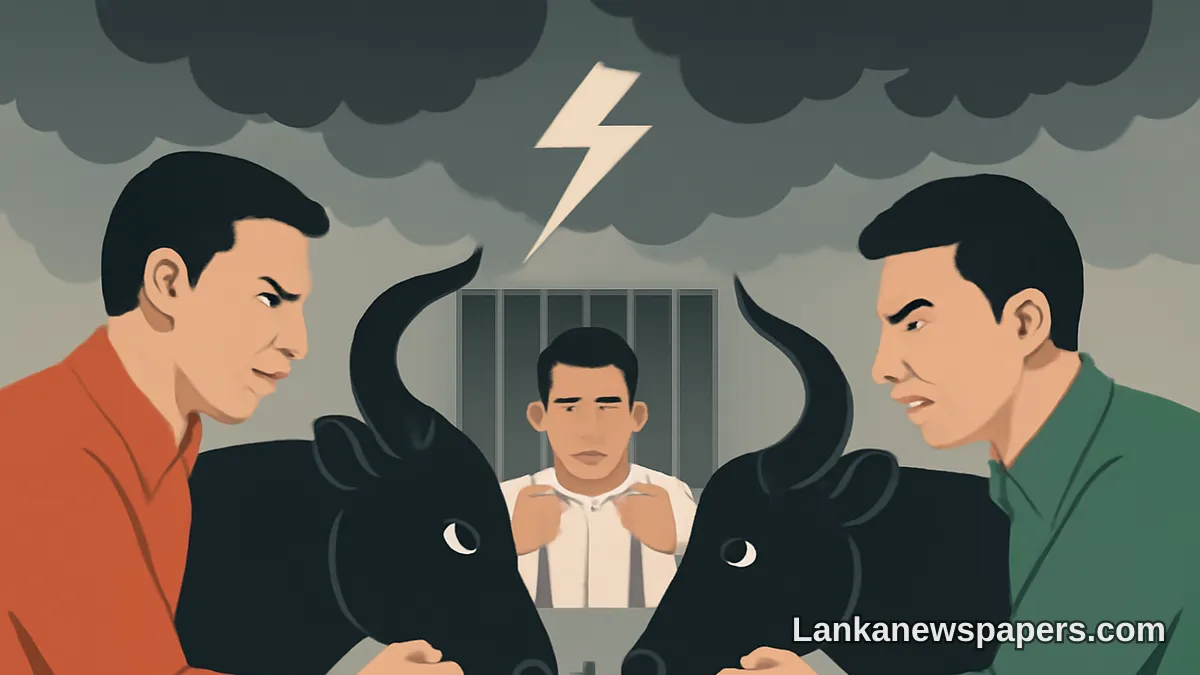
A sharp political confrontation has erupted between the Janatha Vimukthi Peramuna and the United National Party following the arrest and remand of Sri Lanka Podujana Peramuna National Organiser and Member of Parliament Namal Rajapaksa, who stands accused of accepting a bribe amounting to Rs. 100 million allegedly connected to an Airbus procurement deal.
An Unlikely Rivalry Over a High-Profile Arrest
The spectacle of the JVP and the UNP squaring off over the Rajapaksa remand has raised more than a few eyebrows among seasoned political observers in Colombo. The two parties, which occupy vastly different corners of Sri Lanka's political landscape, have found themselves on opposing sides of a controversy that cuts to the heart of accountability, legal process, and political motivation.
For many watching closely, the irony of the situation is difficult to overlook. Both parties carry their own complicated histories when it comes to governance, transparency, and the exercise of state power — histories that lend a certain theatrical quality to the current dispute.
The Allegations Against Namal Rajapaksa
Namal Rajapaksa, one of the most prominent younger figures within the SLPP and son of former President Mahinda Rajapaksa, was arrested and subsequently remanded by court in connection with allegations that he received a bribe of Rs. 100 million linked to an Airbus transaction. The case has drawn significant public attention given both the seniority of the accused and the scale of the alleged corruption.
The arrest marks one of the more consequential moves against the Rajapaksa political family in recent times and has sent ripples through Sri Lanka's already turbulent political establishment.
Political Temperatures Rise
Rather than allowing legal proceedings to unfold without interference, the arrest has become a fresh battleground for partisan point-scoring. Critics of the government have questioned the timing and motivations behind the remand, while others argue that no individual — regardless of political pedigree — should be considered above the law.
The clash between the JVP and the UNP over this matter underscores a broader tension in Sri Lankan politics, where legal actions against opposition figures are frequently scrutinised through the lens of political vendetta rather than judicial independence.
Observers Urge Focus on Justice, Not Political Theatre
Many analysts are urging the public and political parties alike to allow the judicial process to proceed without turning the case into a platform for political grandstanding. Sri Lanka's institutions, they argue, must be permitted to function free from the noise of partisan warfare if public trust in the rule of law is to be meaningfully restored.
As the legal proceedings against Namal Rajapaksa continue, all eyes will remain on both the courts and the political parties jostling for advantage — a reminder that in Sri Lanka, the line between justice and politics is rarely drawn cleanly.

💬 Join the Discussion 0
Be the first to share your view on this story.