Sri Lanka's Falling Birth Rate: How Education Delays Are Ticking Against the Biological Clock
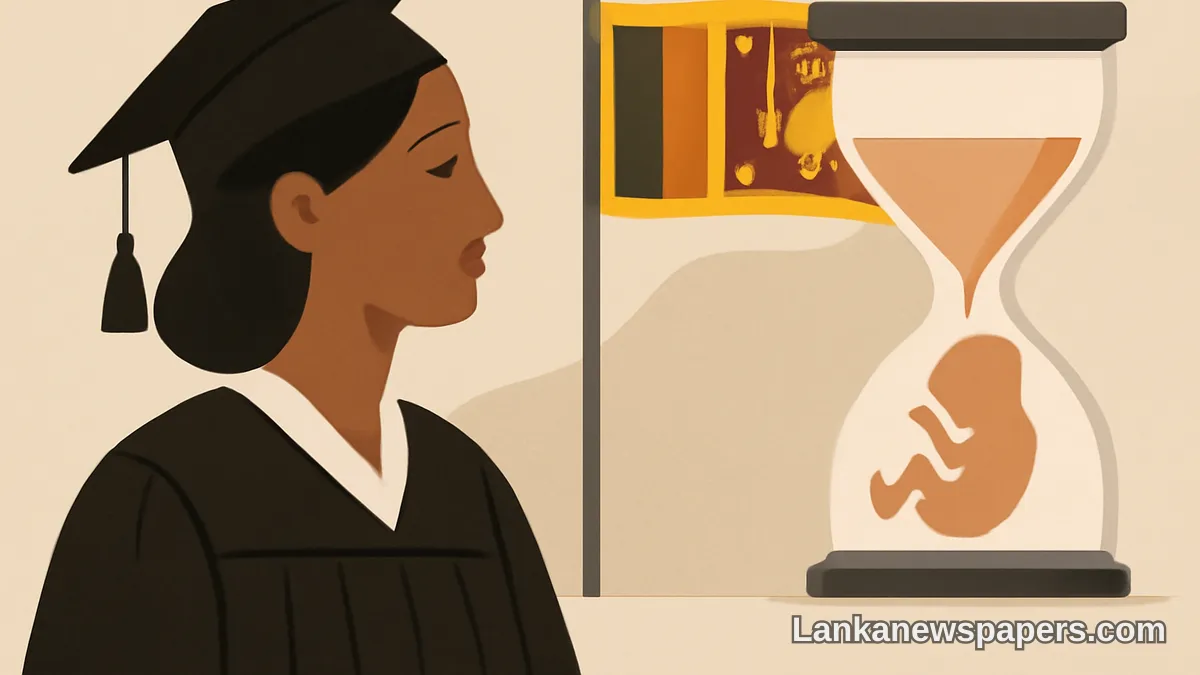
Sri Lanka is facing a quietly unfolding demographic crisis — one that does not announce itself with the urgency of a natural disaster or an economic shock, yet carries consequences just as profound. The country's fertility rate is declining at a pace that is drawing serious concern from demographers, public health experts, and policymakers alike.
A Nation Choosing Education Over Early Parenthood
At the heart of the issue lies a pattern that is becoming increasingly familiar across South and East Asia: young Sri Lankans are spending more years in education than any previous generation, and by the time they enter the workforce and feel financially stable enough to start a family, the biological window for childbearing has narrowed considerably.
Women who pursue undergraduate and postgraduate qualifications often find themselves in their late twenties or early thirties before marriage becomes a realistic consideration. By that point, fertility — which peaks in the early to mid-twenties — has already begun its natural decline. The result is fewer children per couple, and in many cases, no children at all.
The Biological Clock Cannot Be Paused
Medical science is unambiguous on this point. Female fertility declines gradually after the age of 25 and drops more sharply after 35. While advances in reproductive medicine have offered some solutions, procedures such as IVF remain expensive and inaccessible to the majority of Sri Lankan families. Delaying childbirth, therefore, is not a consequence-free choice — it is a trade-off that many couples only fully appreciate once it is too late.
Male fertility, while less dramatically affected by age, also declines over time. Lifestyle factors associated with prolonged student life and early career stress — poor diet, sedentary habits, and financial anxiety — compound the biological challenges facing young Sri Lankan couples.
Structural Pressures Discouraging Parenthood
Beyond biology, the economic environment plays a significant role. Sri Lanka's cost of living has risen sharply in the wake of the 2022 economic crisis. Housing costs, school fees, healthcare expenses, and the general burden of raising a child in an urban setting have made many couples hesitant to have more than one child — or any at all.
- Rising housing costs in Colombo and other urban centres make family formation financially daunting
- Inadequate maternity and paternity leave policies discourage working parents
- Limited affordable childcare options force many mothers to choose between career and family
- Economic emigration has removed a significant portion of the young adult population from the country's demographic equation
What the Numbers Are Telling Us
Sri Lanka's total fertility rate — the average number of children a woman is expected to bear during her lifetime — has fallen well below the replacement level of 2.1. A population that cannot replace itself faces a future of an ageing workforce, increased pressure on pension and healthcare systems, and a shrinking pool of economically active citizens to support those systems.
A society that invests heavily in educating its youth but fails to create conditions in which those same young people can afford to build families is essentially borrowing against its own future.
Lessons From Elsewhere and the Road Ahead
Countries such as Japan, South Korea, and Singapore have grappled with near-identical crises, spending billions on pro-natalist policies with limited success. The lesson from their experience is that financial incentives alone are insufficient. What young couples need is a comprehensive ecosystem — affordable housing, flexible workplaces, reliable childcare, and a cultural shift that values parenthood alongside professional achievement.
For Sri Lanka, the urgency is compounded by the country's ongoing economic recovery. Policymakers must recognise that demographic decline is not a distant theoretical concern but a present and accelerating reality. Addressing it will require coordinated action across the education, health, labour, and housing sectors.
The biological clock, unlike government policy, does not wait for consensus to be reached or budgets to be approved. Sri Lanka would do well to start taking it seriously before the window closes further.



💬 Join the Discussion 4
See what readers are saying — and add your view.
goverment should give housing loans for young couples no? that would help more.
my sister is 34, two degrees, still waiting. sad reality.
cant afford a house, cant afford kids, and they blame education. ok.
exactly. its not education, its the cost of living men.