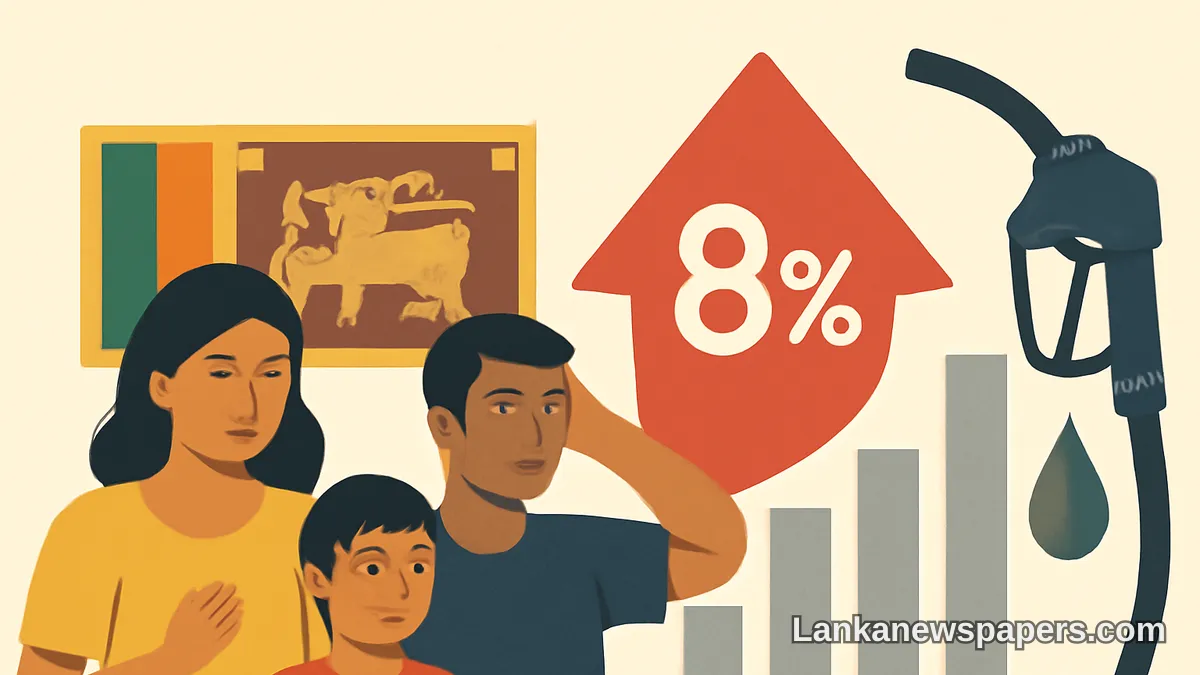
Energy Prices Drive Consumer Costs Higher
Sri Lanka's inflation rate has risen to 8%, with mounting energy costs identified as a key driver behind the increase, placing renewed pressure on households and businesses already navigating a fragile economic recovery.
The uptick in the inflation figure signals a challenging period for consumers across the island, as the cost of essentials continues to climb in tandem with higher energy expenditure. Fuel and electricity pricing have long been sensitive pressure points for Sri Lanka's economy, and the latest data suggests those pressures remain very much alive.
A Familiar Strain on Everyday Life
For ordinary Sri Lankans, an 8% inflation rate translates directly into tighter household budgets. The cost of transportation, food production, and basic goods all carry an energy component, meaning that when power and fuel prices rise, the effects ripple quickly across the wider economy.
Small and medium-sized businesses, which form the backbone of Sri Lanka's commercial sector, are particularly vulnerable to such cost increases, often struggling to absorb higher overheads without passing them on to consumers.
Recovery Efforts Under Pressure
Sri Lanka has been working to stabilise its economy following the severe economic crisis of recent years, which saw record inflation, foreign exchange shortages, and widespread hardship. While significant progress has been made through structural reforms and international support, the latest inflation figures serve as a reminder that the road to full recovery remains uneven.
Authorities and policymakers will be under pressure to carefully manage energy pricing policy in the months ahead, balancing the need to maintain fiscal discipline with the social imperative of keeping the cost of living within reach for the broader population.
What Comes Next
Economists and market observers will be closely watching upcoming monetary policy decisions to assess how the Central Bank of Sri Lanka responds to the inflationary trend. Key areas of concern include:
- The trajectory of global oil prices and their impact on domestic fuel costs
- Electricity tariff adjustments by the Ceylon Electricity Board
- The exchange rate and its influence on import costs
- Consumer demand patterns in the lead-up to the festive season
With inflation now at 8%, sustained attention to energy sector management will be critical if Sri Lanka is to prevent a broader resurgence in the cost of living and protect the gains made during its ongoing economic stabilisation effort.


💬 Join the Discussion 1
See what readers are saying — and add your view.
8% they say, but in the market it feels like 80 no?