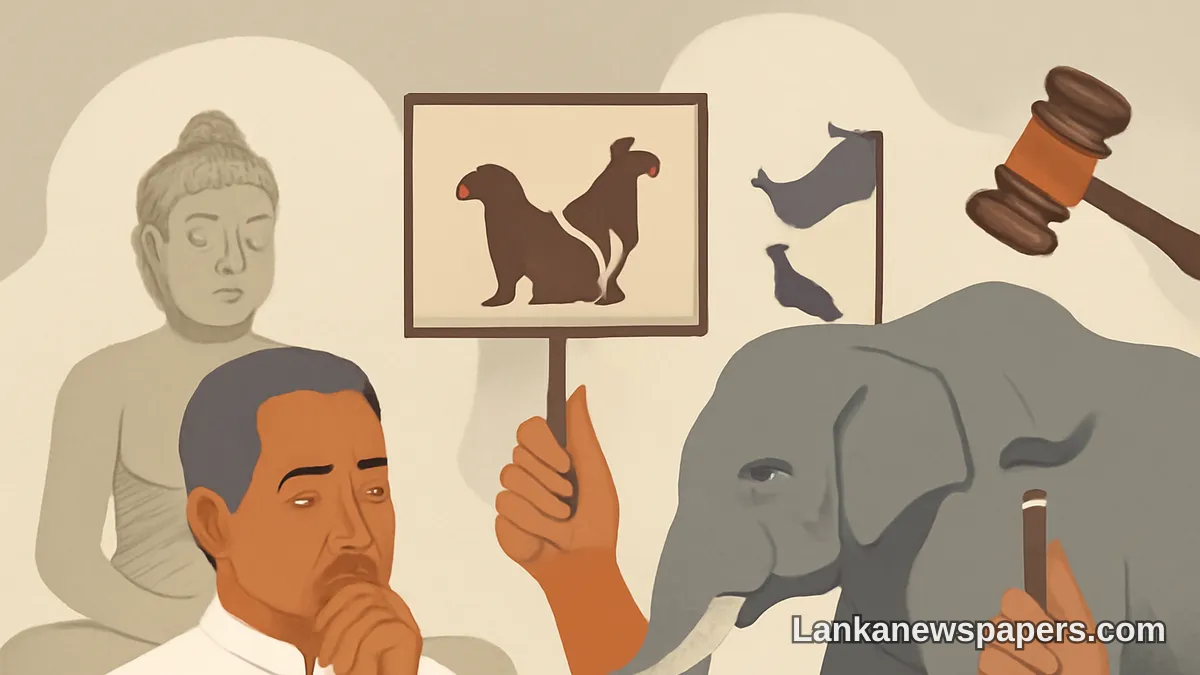
Sri Lanka's long-awaited animal welfare legislation remains mired in delay, caught in a complex web of cultural sensitivities, political hesitation and competing lobbying interests — leaving animal rights advocates frustrated and animals vulnerable to continued abuse and neglect.
Decades in the Making
Sri Lanka currently relies on the Prevention of Cruelty to Animals Ordinance, a colonial-era law dating back to 1907, to govern the treatment of animals across the island. Activists and legal experts have long argued that this outdated legislation is wholly inadequate to address modern animal welfare concerns, and calls for comprehensive reform have grown louder over recent years.
Despite repeated promises from successive governments, a new Animal Welfare Bill has failed to reach the floor of Parliament, stalling at various stages of the legislative process. The delay has drawn sharp criticism from local and international animal welfare organisations who view Sri Lanka's inaction as a significant policy failure.
Cultural and Religious Tensions
One of the central obstacles to passing the legislation is the deeply sensitive intersection between animal welfare and Sri Lanka's rich cultural and religious traditions. Practices tied to Buddhist, Hindu, and rural agricultural customs have complicated efforts to draft legislation that satisfies both welfare standards and community expectations.
Critics of stronger protections argue that certain provisions in proposed versions of the bill could criminalise longstanding cultural practices, including those connected to religious festivals and traditional livelihoods. Farmers, livestock handlers and religious communities have at various points raised concerns that overly broad legislation could unfairly target their way of life.
Political Will Under Scrutiny
Animal welfare campaigners point squarely at a lack of political will as the primary reason the bill has not progressed. Successive administrations have been accused of shelving the legislation to avoid antagonising powerful lobbying groups, including those representing the livestock industry, dairy sector and entities involved in elephant keeping.
The elephant question, in particular, has proven especially contentious in Sri Lanka, where captive elephants hold enormous cultural and religious significance. Any legislation that seeks to regulate the conditions under which elephants are kept, transported or used in public events touches on deeply held national sentiments, making it politically risky for any government to act decisively.
What Advocates Are Demanding
Animal welfare groups are pushing for a modern, comprehensive law that would:
- Establish clear legal definitions of animal cruelty and neglect
- Introduce meaningful penalties that serve as genuine deterrents
- Create an independent enforcement mechanism with adequate resources
- Regulate the keeping and use of both domestic and wild animals
- Align Sri Lanka's standards with internationally recognised animal welfare principles
Advocates argue that a humane and progressive animal welfare framework is not only a moral obligation but also essential to Sri Lanka's standing in the international community, particularly as the country seeks to attract tourism and foreign investment.
A Nation Waiting for Change
Sri Lanka has produced some of South Asia's most passionate animal welfare advocates, and public awareness around the issue has grown considerably in recent years, driven in part by social media exposure of animal abuse cases. Yet public sentiment alone has proven insufficient to overcome the legislative inertia that has kept meaningful reform out of reach.
With Parliament facing numerous competing priorities — from economic recovery to constitutional matters — animal welfare legislation continues to rank low on the formal agenda, despite the urgency expressed by those working on the ground.
For now, Sri Lanka's animals remain protected only by a law written more than a century ago, while the nation's lawmakers continue to navigate the cultural, political and institutional barriers standing between good intentions and genuine reform.



💬 Join the Discussion 2
See what readers are saying — and add your view.
how many years we waiting for this law? goverment always talking only
exactly. ppl suffering, animals suffering, nothing changes