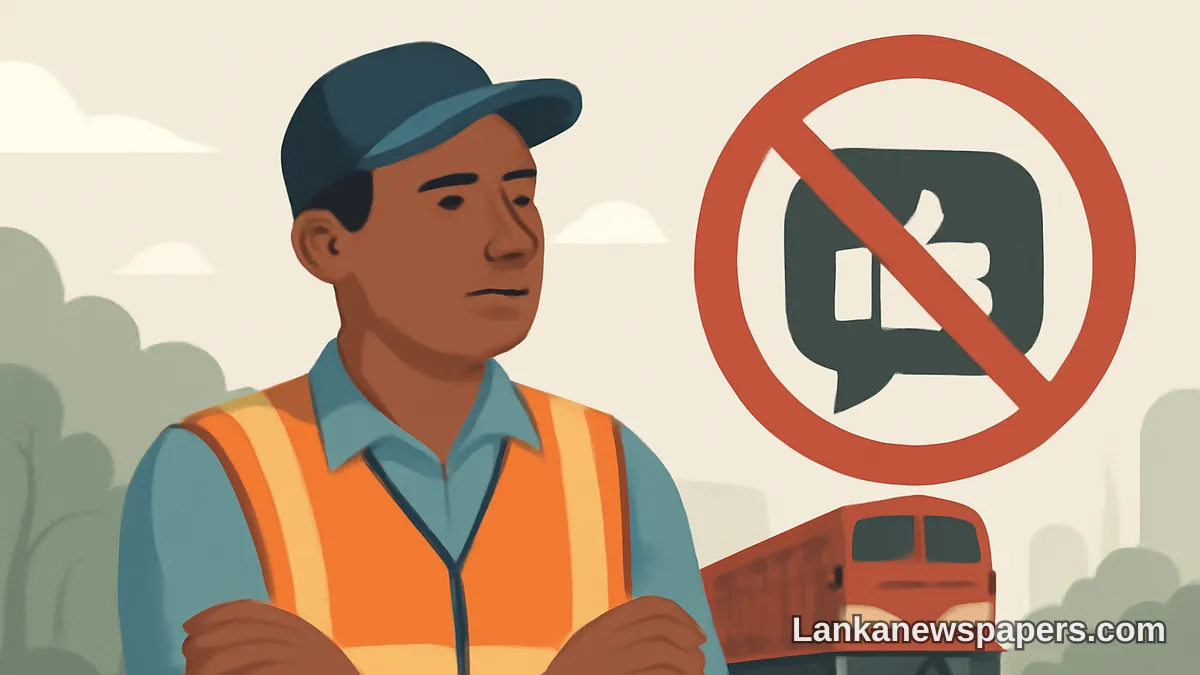
The Sri Lankan government has imposed a ban prohibiting railway workers from using social media, a move that has drawn sharp criticism from labour rights advocates and trade union representatives across the country.
A Sweeping Restriction on Workers' Rights
The directive, which applies to employees of Sri Lanka Railways, restricts workers from engaging on social media platforms, raising immediate concerns about freedom of expression and the rights of public sector employees to communicate openly. Critics argue the ban represents a significant overreach by authorities seeking to suppress worker dissent and limit the ability of railway staff to organise or voice grievances publicly.
The railway sector in Sri Lanka has historically been a focal point of labour activism, with workers frequently using digital platforms to coordinate industrial action and raise awareness about working conditions, wage disputes, and staffing shortfalls.
Government Justifies the Directive
Authorities have defended the restriction as a measure aimed at maintaining discipline and operational integrity within the national railway service. Officials contend that public sector workers, particularly those in critical transport infrastructure roles, must adhere to stricter communication protocols to avoid disruption to essential services.
However, union leaders have strongly rejected this justification, viewing it as a thinly veiled attempt to silence workers ahead of potential industrial action.
Wider Context of Labour Unrest
The ban comes against a backdrop of sustained economic hardship in Sri Lanka, where workers across multiple sectors have continued to press the government for better wages and improved working conditions in the wake of the country's devastating financial crisis. Railway workers have been among the most vocal in demanding accountability and reform.
- Railway employees have staged multiple work stoppages in recent years over unresolved wage disputes.
- Trade unions have repeatedly called on the government to engage in meaningful collective bargaining.
- Social media has become a primary tool for workers to mobilise support and communicate with the public.
Labour rights groups warn that restricting social media access for public sector workers sets a dangerous precedent that could be extended to other government departments.
Rights Groups Sound the Alarm
Civil society organisations and international labour rights bodies are expected to scrutinise the directive closely, with some already calling for it to be withdrawn immediately. Commentators note that in a democratic society, workers in any sector — public or private — retain the fundamental right to freedom of expression, including on digital platforms.
As pressure mounts on the government to address the economic grievances of its workforce, this latest restriction is likely to intensify rather than ease tensions within the railway sector and beyond.


💬 Join the Discussion 2
See what readers are saying — and add your view.
This is dictatorship no? Cannot even post on facebook now?
What to do men, goverment scared of workers organizing thats all.