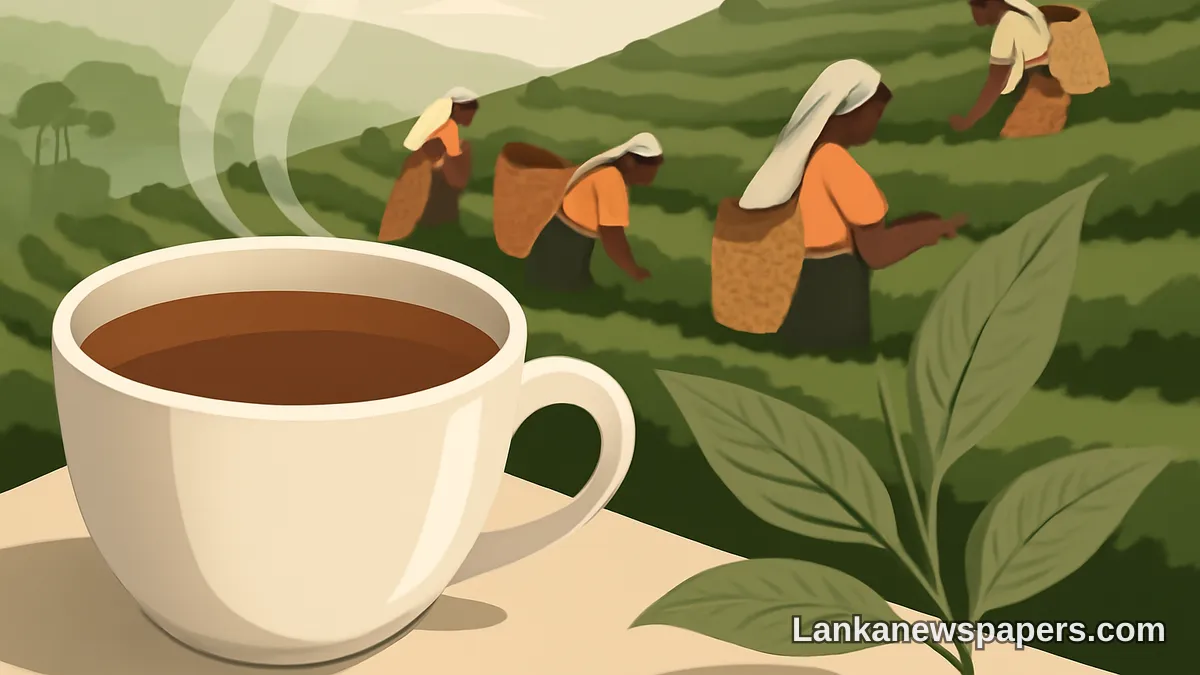
A Global Symbol With a Local Struggle
Ceylon Tea is one of Sri Lanka's most celebrated exports, renowned across the world for its rich flavour and storied heritage. Yet behind the mist-covered hills of the island's tea country lies a deeply entrenched inequality that has shaped — and scarred — generations of workers who make the industry possible.
The People Behind the Plantations
The majority of Sri Lanka's tea estate workers are Tamil labourers, descendants of those brought from South India by British colonial rulers in the 19th century. Generations on, many of these communities continue to live and work within the same plantation system, often earning wages that bear little resemblance to the global prestige of the product they harvest.
Despite Ceylon Tea commanding premium prices in international markets, daily wages for estate workers have long remained among the lowest in the country. Workers and trade unions have repeatedly raised concerns about inadequate pay, poor housing conditions, and limited access to quality healthcare and education within estate communities.
Systemic Barriers Persist
The plantation system itself has been identified as a structural barrier to social mobility. Many workers reside in estate-owned line rooms — basic communal housing that ties their living arrangements directly to their employment. This dependency makes it difficult for families to seek opportunities outside the plantations, effectively keeping communities locked within a cycle of low-wage labour.
Access to quality schooling remains limited in many estate areas, with children facing disadvantages that compound over time. Healthcare facilities, where they exist, are often under-resourced, leaving workers vulnerable to occupational health issues including those associated with prolonged physical labour and chemical exposure on tea fields.
Wages at the Centre of the Debate
The question of fair wages has been a flashpoint between plantation management companies, trade unions, and the government for years. While negotiated wage agreements have periodically increased daily pay rates, unions argue that increases have consistently failed to keep pace with the rising cost of living, leaving workers in real terms no better off than before.
- Estate workers have historically earned wages below the national minimum wage benchmarks applied to other industries.
- Wage negotiations are often prolonged, leaving workers in uncertainty for extended periods.
- Non-wage benefits such as housing and healthcare, while nominally provided, are frequently described as inadequate by worker representatives.
The Industry's Global Image vs. Ground Reality
Sri Lanka's tea industry contributes significantly to the national economy, generating hundreds of millions of dollars in foreign exchange annually. Ceylon Tea is marketed internationally with imagery of lush green hills and a tradition of quality — a brand identity that rarely acknowledges the labour conditions underpinning it.
Consumers around the world enjoy Ceylon Tea without any awareness of the inequality embedded in its production — inequality that has persisted for well over a century.
Advocacy groups and researchers have called on both the Sri Lankan government and multinational buyers to take greater accountability for conditions along the tea supply chain. Ethical sourcing certifications exist, but critics argue that their enforcement and impact on worker welfare remain inconsistent.
A Path Forward
Addressing the inequalities within Sri Lanka's plantation sector will require coordinated action from multiple stakeholders — government policy reform, corporate responsibility from tea companies, meaningful engagement with trade unions, and greater transparency for international consumers and buyers.
Until the human cost embedded in every cup of Ceylon Tea is honestly reckoned with, the island's most iconic export will continue to carry an uncomfortable contradiction: a world-class product built on the enduring hardship of some of Sri Lanka's most marginalised communities.



💬 Join the Discussion 2
See what readers are saying — and add your view.
these workers been suffering for decades, nothing new, goverment does nothing
exactly, every election they promise and then forget no