Sri Lanka's Amendment Treadmill: Six Decades of Constitutional Change and Broken Promises
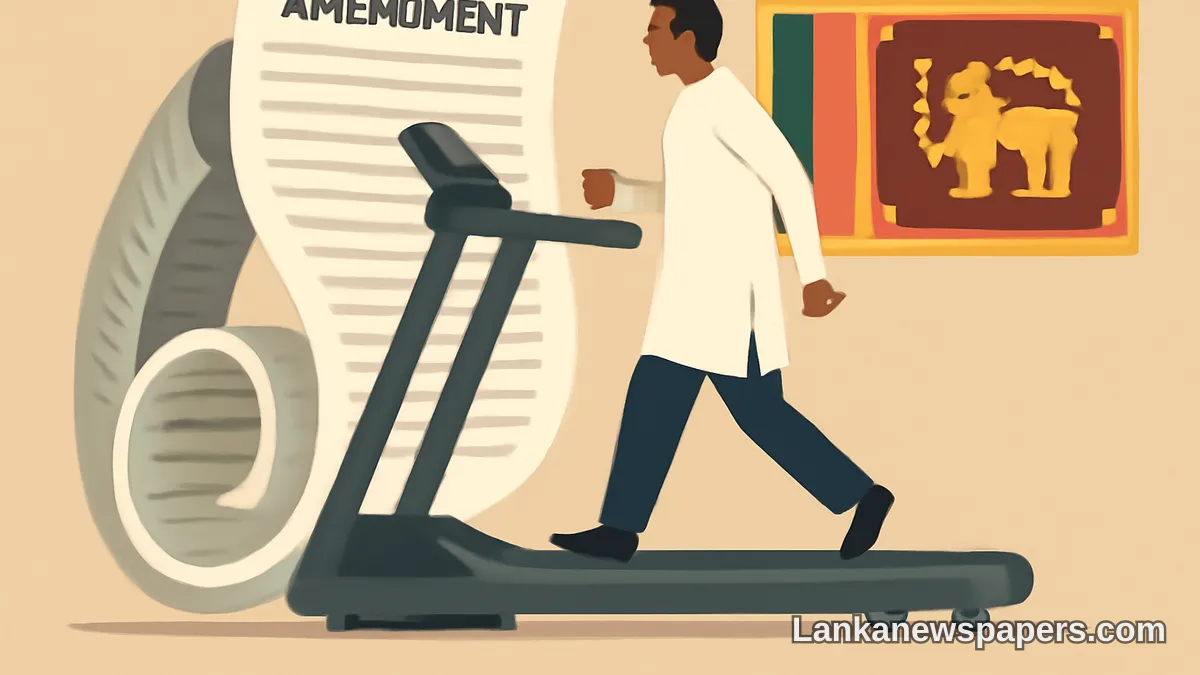
A Constitution in Constant Flux
Sri Lanka is once again at the crossroads of constitutional change. The island nation is set to adopt its 22nd amendment in just 48 years — a figure that, on its own, tells a story of political instability, competing ambitions, and a governing class that has repeatedly turned to constitutional tinkering as a substitute for genuine reform.
The Weight of History
The country's amendment journey stretches back to the earliest years of its post-independence constitutional framework. The first 16 amendments were shaped largely by the political imperatives of the era — power consolidation, electoral manipulation, and the occasional genuine attempt at democratic improvement. Each generation of leaders arrived with promises of systemic change, and each, to varying degrees, left the document more layered and more contradictory than they found it.
What makes the current moment distinct is not simply the number — 22 — but the extraordinary political environment in which this latest amendment is being pursued. Sri Lanka has rarely seen a confluence of pressures quite like the present: an economy still recovering from historic collapse, a public deeply disillusioned with the established political order, and a Parliament navigating the aftermath of mass citizen protest that drove a sitting president from office.
Reform or Repetition?
Critics and constitutional scholars have long argued that Sri Lanka's amendment culture reflects a fundamental weakness in how the country's ruling class approaches governance. Rather than building durable institutions, successive administrations have amended their way around accountability — expanding executive powers when convenient, curtailing them when politically expedient, and rarely delivering the structural reform ordinary citizens have demanded.
The 22nd amendment arrives not in a vacuum, but in the midst of what many observers describe as the most consequential political realignment Sri Lanka has seen in a generation.
Whether this latest intervention will break the cycle or simply add another layer to it remains an open question. Previous amendments — including the 19th, which sought to rein in presidential authority, and the 20th, which reversed many of those gains — demonstrated just how easily constitutional progress can be undone when the political winds shift.
Unique Circumstances, Uncertain Consequences
What distinguishes the 22nd amendment from many of its predecessors is the environment of heightened public scrutiny in which it is being crafted. Sri Lankans, galvanised by the Aragalaya movement and acutely aware of how constitutional arrangements enabled the failures of recent years, are less willing than before to accept reform on paper that delivers nothing in practice.
Analysts note that the consequences of this particular amendment — whatever its final form — could prove far-reaching. In a political landscape being reshaped by new electoral forces and shifting voter allegiances, even modest constitutional changes carry outsized significance.
For a nation that has spent nearly five decades amending its way through crisis after crisis, the central challenge remains the same: whether those in power possess the will to pursue reforms that genuinely redistribute authority and restore public trust, rather than amendments that merely serve the interests of the moment.



💬 Join the Discussion 1
See what readers are saying — and add your view.
22 amendments and still nothing works. what a joke this country is.