Sinhala-Speaking Citizens in the North Face Real Barriers to Constitutional Language Rights
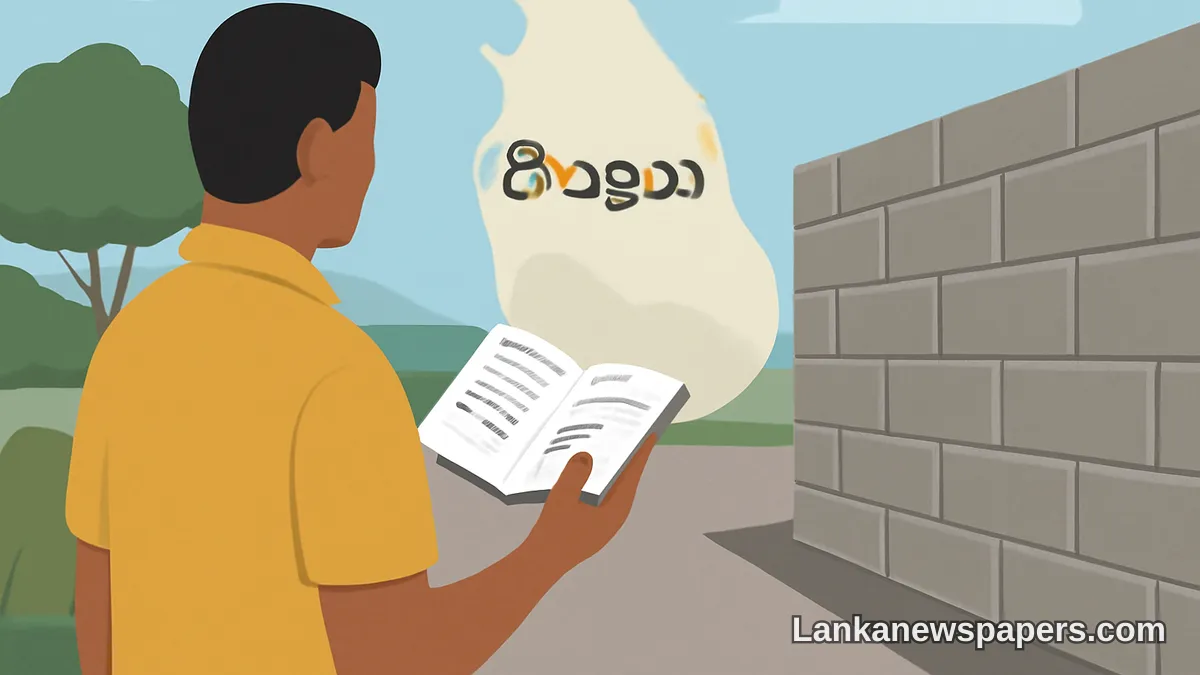
Rights on Paper, Not in Practice
Sri Lanka's Constitution enshrines both Sinhala and Tamil as official national languages, promising every citizen the right to access education, public administration, and government services in their mother tongue. Yet for Sinhala-speaking residents living in the Northern Province, that constitutional guarantee remains largely theoretical — a right that exists in law but is seldom honoured in daily life.
A Community Left Behind
Sinhala-speaking citizens residing in areas such as Vavuniya, Mannar, and Kilinochchi report persistent difficulties in conducting basic interactions with government institutions in their own language. From obtaining civil documentation to seeking redress at provincial offices, many find themselves unable to communicate effectively — not because the law fails them, but because the practical infrastructure to support their language rights is simply absent.
Education in the Mother Tongue Remains Elusive
Access to Sinhala-medium schooling in the Northern Province is severely limited. Families who wish to have their children educated in Sinhala often face a stark choice: relocate to another province or enrol children in Tamil-medium schools despite the language barrier. This disparity effectively denies younger generations the foundational right to learn in their mother tongue — a right that children in other parts of the country take for granted.
Administrative Hurdles in Public Services
Beyond the classroom, adults seeking government services frequently encounter a system that is functionally monolingual in Tamil at the provincial level. Official forms, signage, and staff communications in many Northern Province institutions are conducted exclusively in Tamil, leaving Sinhala-speaking residents unable to fully participate in civic processes without the assistance of an interpreter or a third party.
The Constitution does not distinguish between regions when granting language rights. A citizen in Jaffna holds the same legal entitlements as a citizen in Galle — yet the lived experience tells a very different story.
A National Responsibility
Language policy experts and civil society advocates argue that the responsibility for bridging this gap lies squarely with the central government. Meaningful implementation of bilingual administrative services, training of government staff in both national languages, and the establishment of adequate Sinhala-medium educational facilities in the North are steps that have been discussed for decades — but have yet to materialise in any substantive way.
Broader Implications for Reconciliation
Sri Lanka continues to navigate the long road of post-war reconciliation, and language equity is widely regarded as an essential pillar of that process. Advocates note that genuine reconciliation must be reciprocal — it cannot be meaningful if the language and service rights of any community, however small, are systematically neglected.
- Sinhala-medium schools are scarce or absent in several Northern Province districts
- Government offices frequently lack Sinhala-speaking staff capable of serving residents
- Official documentation and forms are often unavailable in Sinhala in the North
- Affected citizens have limited formal channels to lodge language-rights complaints
Until concrete steps are taken to align practice with constitutional principle, Sinhala-speaking citizens in Northern Sri Lanka will continue to experience their language rights as a promise the state has not yet kept.

💬 Join the Discussion 0
Be the first to share your view on this story.