Sri Lankan Government Refuses to Return Military-Occupied Land Seized During Civil War
Authorities Dig In Over Disputed Northern and Eastern Territories
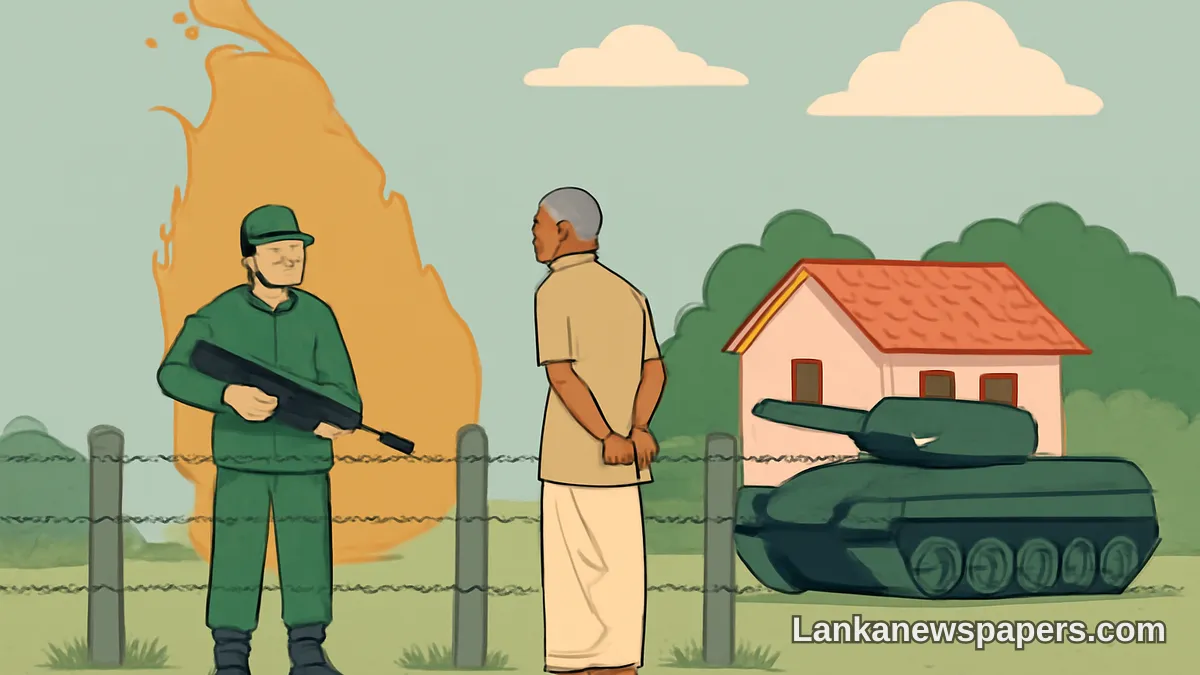
The Sri Lankan government has firmly rejected calls to return land that was seized by the military during the decades-long civil war, dealing a fresh blow to Tamil communities in the North and East who have spent years campaigning to reclaim their properties and livelihoods.
Large swathes of land in the Northern and Eastern provinces have remained under military occupation since the end of the brutal conflict in 2009, when government forces defeated the Liberation Tigers of Tamil Eelam (LTTE). Despite repeated appeals from affected residents, civil society organisations, and international human rights bodies, authorities have refused to relinquish control over these areas.
Displaced Families Left in Limbo
Thousands of Tamil families who were displaced during the war have been unable to return to their ancestral lands, with military installations, bases, and high-security zones continuing to occupy vast portions of territory that once served as farmland, fishing grounds, and residential settlements.
For many affected communities, the continued military presence is not merely a practical inconvenience — it is seen as an enduring symbol of post-war marginalisation. Families describe losing access to fertile agricultural land and coastal fishing areas that formed the backbone of their economic survival for generations.
Rights advocates argue that the government's refusal to return occupied land undermines reconciliation efforts and signals a continued disregard for the rights and dignity of Tamil civilians who suffered enormously during the conflict.
Government Cites Security Concerns
Officials have consistently justified the military's continued presence in these regions by invoking national security considerations, arguing that a full withdrawal from strategic locations could pose risks to the country's stability. Critics, however, contend that these justifications have long outlived any legitimate basis, given that the armed conflict concluded over fifteen years ago.
The issue has drawn sustained attention from Tamil political parties and diaspora groups, who have urged both domestic authorities and the international community to apply greater pressure on Colombo to honour its post-war commitments to affected populations.
Reconciliation Process Under Scrutiny
Sri Lanka's broader reconciliation process has faced persistent criticism from human rights organisations and foreign governments, with the land question representing one of several unresolved grievances that continue to strain relations between the Sinhalese-majority south and Tamil communities in the north and east.
Observers note that without meaningful progress on tangible issues such as land restitution, accountability for wartime abuses, and political devolution, prospects for genuine national reconciliation remain deeply uncertain. The government's latest stance is expected to intensify pressure from Tamil political representatives ahead of upcoming parliamentary discussions on post-war governance and minority rights.

💬 Join the Discussion 2
See what readers are saying — and add your view.
These ppl lost everything and still cant get their land back. Shame.
Easy to say but army is still needed there no?