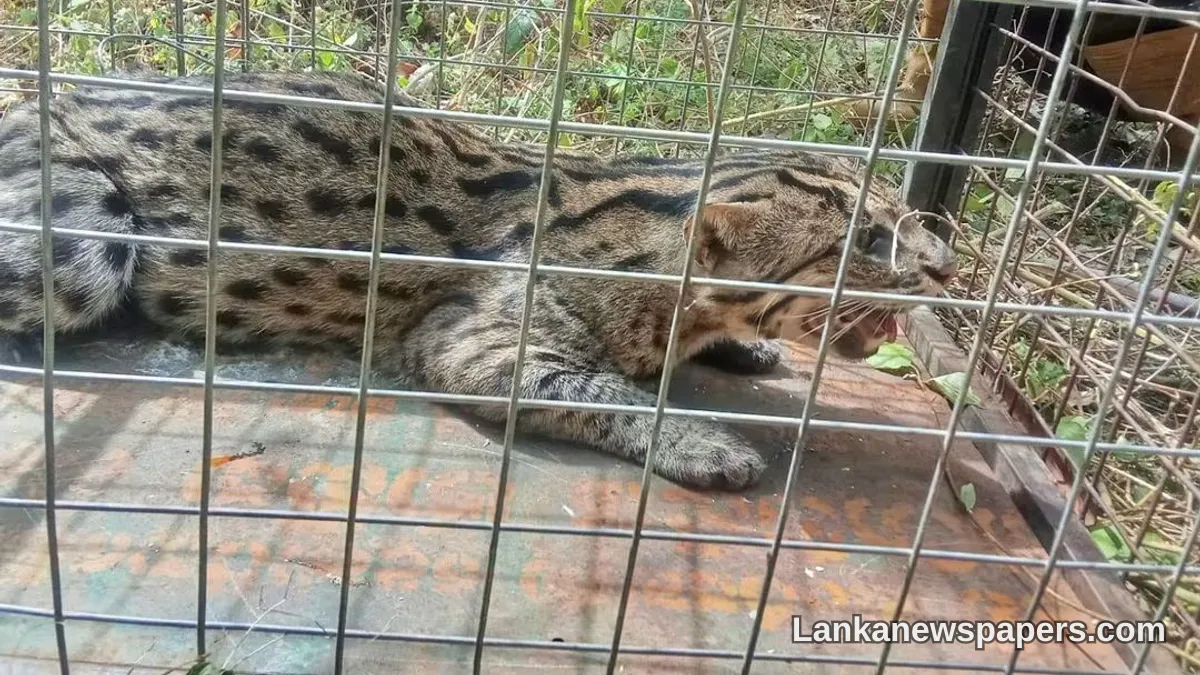
A fishing cat, one of Sri Lanka's most elusive and protected wild animals, has been rescued after being found trapped in an illegal snare in the Sevagama area of Polonnaruwa, wildlife authorities have confirmed.
Timely Intervention by Wildlife Officers
Officers from the Department of Wildlife Conservation responded swiftly after receiving information about the trapped animal. The fishing cat, known scientifically as Prionailurus viverrinus, was discovered entangled in the snare and was successfully freed by the responding team.
The rescue highlights the ongoing threat that illegally set snares pose to Sri Lanka's native wildlife, including species that are globally recognised as vulnerable to extinction.
About the Fishing Cat
The fishing cat is a medium-sized wild cat closely associated with wetland habitats such as marshes, mangroves, and riverbanks. Though not as widely known as the leopard, it is a significant part of Sri Lanka's biodiversity and is protected under the country's Fauna and Flora Protection Ordinance.
- The species is listed as vulnerable on the International Union for Conservation of Nature (IUCN) Red List.
- Fishing cats are skilled swimmers and rely heavily on aquatic prey, including fish, frogs, and crustaceans.
- Wetland destruction and illegal trapping remain the primary threats to the species in Sri Lanka.
A Broader Concern
Wildlife conservationists have long warned that indiscriminate snaring in rural areas causes serious harm not only to targeted animals but also to non-target species such as the fishing cat. These traps, often set to catch bushmeat, can maim or kill protected animals before authorities are even made aware.
The rescue of this fishing cat serves as a reminder of the critical work carried out by wildlife officers across the country, and of the urgent need for stronger community awareness around the dangers of illegal trapping.
Authorities are urging members of the public to report any suspected use of snares or illegal trapping activity to the Department of Wildlife Conservation immediately. Those found guilty of setting snares in protected or wildlife-rich areas face prosecution under Sri Lankan wildlife law.



💬 Join the Discussion 2
See what readers are saying — and add your view.
Good job wildlife officers. these animals need more protection.
but how many snares are still out there that we dont know about?