UN Special Rapporteur Raises Concerns Over Sri Lanka's 22nd Amendment to the Constitution
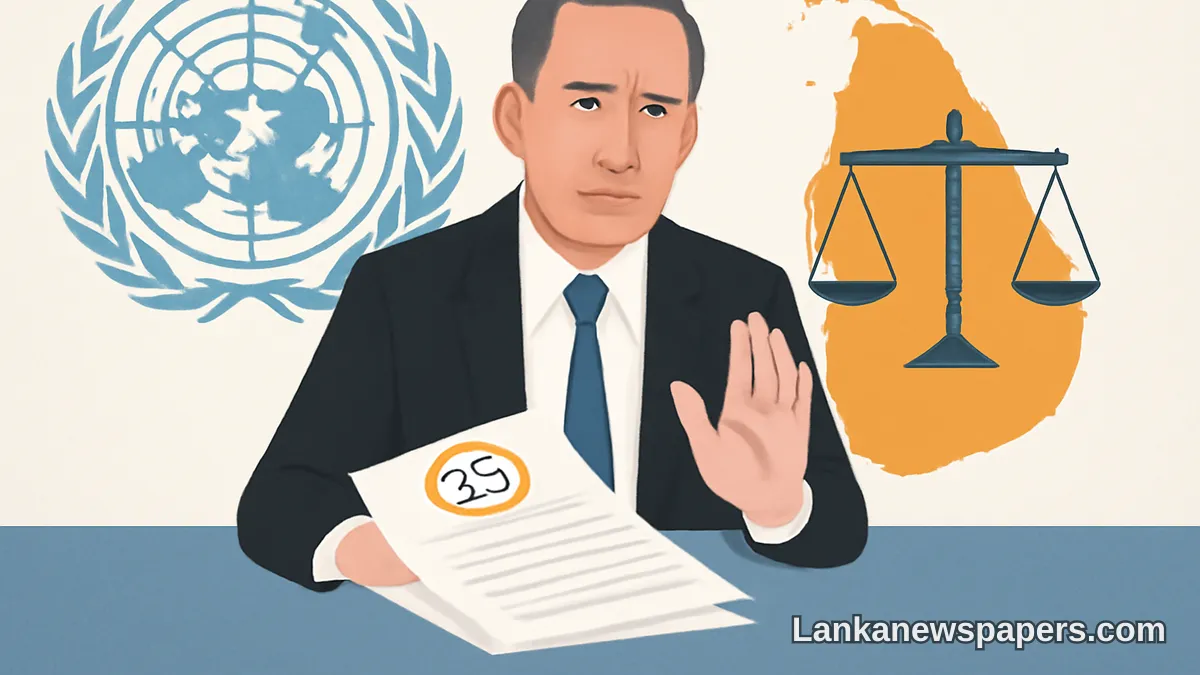
The United Nations Special Rapporteur on the independence of judges and lawyers, Margaret Satterthwaite, has issued a formal statement to the Sri Lankan government expressing concerns over the country's controversial 22nd Amendment to the Constitution.
Satterthwaite, who holds her mandate pursuant to Human Rights Council resolution 62/12, communicated directly with the Sri Lankan government in her official capacity, drawing attention to information her office had received regarding the amendment and its potential implications for judicial independence and the rule of law.
A Formal Communication to the Government
The statement, addressed formally to the Sri Lankan government, follows established UN procedures through which Special Rapporteurs engage with member states on matters falling within their areas of mandate. The communication signals that the 22nd Amendment has attracted scrutiny at the highest levels of international human rights oversight.
The Special Rapporteur's intervention highlights growing international attention on constitutional developments in Sri Lanka, particularly as they relate to the separation of powers, the independence of the judiciary, and the broader legal framework governing the country's institutions.
Why the 22nd Amendment Has Drawn Attention
The 22nd Amendment has been a subject of significant debate within Sri Lanka since its introduction, with critics raising questions about its impact on checks and balances within the constitutional structure. Concerns have centred on provisions that observers argue could affect the independence of key institutions, including the judiciary and constitutional councils.
The involvement of a UN Special Rapporteur underscores the extent to which such domestic constitutional changes are viewed through an international human rights lens, particularly in a country that remains under close observation following its recent economic and political crises.
What Happens Next
Under standard UN procedures, the government of Sri Lanka is expected to respond formally to the Special Rapporteur's communication. Such exchanges are typically made public after a designated period, allowing for transparency in how governments engage with international human rights mechanisms.
Legal experts and civil society organisations in Sri Lanka are expected to closely monitor the government's response, as it will likely reflect the administration's stance on international scrutiny of its constitutional reforms.
The development adds another dimension to the ongoing national conversation about governance, constitutional integrity, and Sri Lanka's obligations under international human rights law.
💬 Join the Discussion 0
Be the first to share your view on this story.