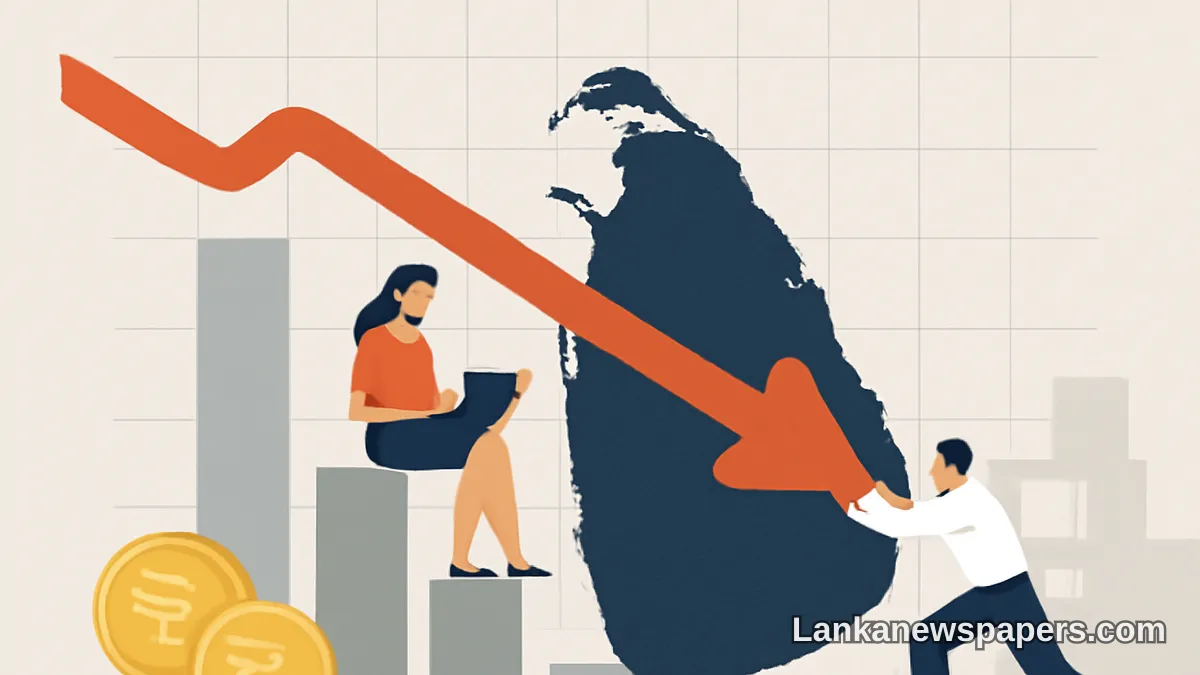
Sri Lanka's economy has shown encouraging signs of recovery following its devastating financial crisis, with GDP growth reaching 5.1 percent in the first quarter of 2026. However, analysts and investors are raising serious questions about whether the country's current economic policy direction is doing enough to sustain that momentum.
IMF Projections Paint a Cautious Picture
Despite the promising first-quarter figures, the International Monetary Fund has projected that Sri Lanka's GDP growth will remain at approximately 3 percent for both 2026 and 2027. For a country still in the critical stages of post-crisis recovery, many economists argue that this level of growth falls well short of what is needed to meaningfully improve the lives of ordinary Sri Lankans.
The gap between the strong opening quarter and the IMF's modest full-year forecast has prompted growing concern among the business community and policy observers, who question whether the structural reforms currently in place are truly designed to accelerate recovery or merely to satisfy external creditors.
Investor Confidence Under Scrutiny
A key concern being raised is why more decisive measures to catalyse post-crisis economic recovery have not been implemented. Many investors remain hesitant, citing uncertainty around the policy environment and the pace at which meaningful economic transformation is taking place.
- GDP growth reached 5.1 percent in the first quarter of 2026
- The IMF forecasts growth of around 3 percent for 2026 and 2027
- Investor confidence remains fragile amid policy uncertainty
The Neoliberal Policy Debate
Critics, including economist and commentator Indika Hettiarachchi, argue that Sri Lanka's adherence to neoliberal economic policies — characterised by privatisation, fiscal austerity, and reduced state intervention — may be acting as a brake on the very recovery the country urgently needs. The argument is that while such policies may satisfy IMF programme conditions, they risk suppressing domestic demand and limiting the state's capacity to invest in productive sectors of the economy.
Despite 5.1 percent GDP growth during the first quarter of 2026, the IMF predicts Sri Lanka's GDP growth will remain around 3 percent in 2026 and 2027, raising urgent questions about the adequacy of current recovery measures.
As Sri Lanka continues to navigate one of the most challenging economic periods in its modern history, the debate over the appropriate policy mix is far from settled. Whether the government will recalibrate its approach to deliver stronger and more inclusive growth remains a critical question for the island nation's economic future.



💬 Join the Discussion 1
See what readers are saying — and add your view.
3% growth only? After all that suffering ppl went through, this is the result?