Government's Judicial Retirement Age Amendment Slammed as Constitutional Smokescreen
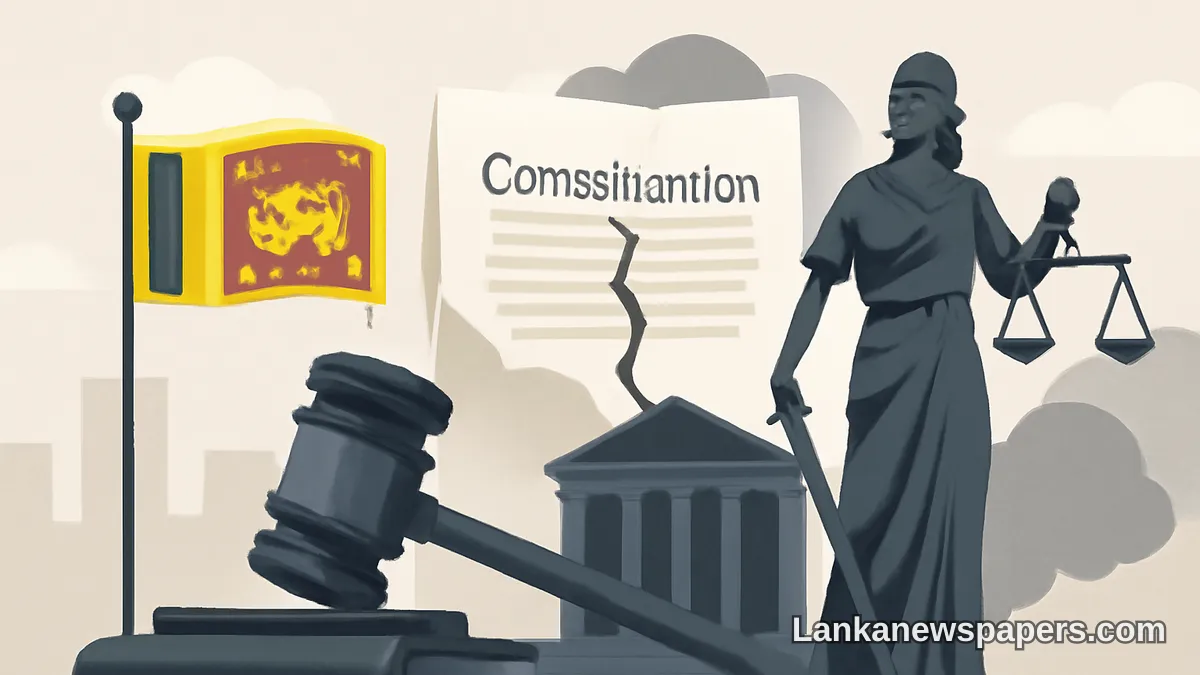
Critics Accuse Government of Using Broad Reform to Mask Targeted Agenda
A proposed constitutional amendment to extend the retirement ages of judges across the board is being condemned by legal observers and political critics as a calculated act of legislative deception — a move dressed up as systemic reform but designed to serve a far narrower purpose.
The amendment, which would apply a blanket increase to judicial retirement ages, has been characterised as a classic case of pretextual legislation — what constitutional scholars sometimes describe as "constitutional camouflage." On its face, the proposal appears to be a broad, principled reform of the judiciary. In substance, critics argue, it is nothing more than a carefully constructed cover to retain one specific judge in office.
A Fig Leaf for a Targeted Objective
Legal analysts warn that packaging a politically motivated objective within sweeping constitutional language is among the more insidious forms of executive overreach, precisely because it is difficult to challenge on its face. By extending retirement ages for all judges rather than making an exception for one, the government insulates itself from the appearance of impropriety — while achieving the same result.
The amendment is a fig leaf. The breadth of its application does not disguise the narrowness of its true intent.
This type of constitutional engineering, observers note, poses a serious long-term threat to judicial independence. When the legislature is perceived as reshaping the bench to suit the executive's preferences — even indirectly — public confidence in the impartiality of the courts is inevitably eroded.
A Rubicon Moment for Sri Lanka's Democratic Institutions
The decision to proceed with this amendment has been described as a watershed moment — a crossing of the Rubicon — in the relationship between the executive and the judiciary in Sri Lanka. Once a government demonstrates willingness to use constitutional mechanisms to influence the composition of the courts, critics argue, it becomes significantly harder to defend institutional boundaries in the future.
Sri Lanka has had a troubled history with attempts to subordinate judicial independence to political will. Commentators are drawing parallels with past episodes that severely damaged public trust in both the legislature and the courts, cautioning that the country can ill afford another such chapter.
Calls for Transparency and Accountability
Civil society groups and members of the legal fraternity are now calling on Parliament to subject the proposed amendment to rigorous public scrutiny before any vote is taken. They argue that lawmakers have a responsibility to look beyond the technical wording of the amendment and interrogate its real-world effect.
- Does the amendment serve a genuine, evidence-based need to reform judicial tenure across the board?
- Is the timing of the proposal coincidental, or does it align suspiciously with the impending retirement of a particular judicial figure?
- What safeguards are being put in place to ensure the amendment is not exploited as a precedent for future political interference in the judiciary?
Until these questions are answered transparently, critics say the government's assurances of good faith will ring hollow — and Sri Lanka's hard-won democratic norms will remain under threat.



💬 Join the Discussion 0
Be the first to share your view on this story.