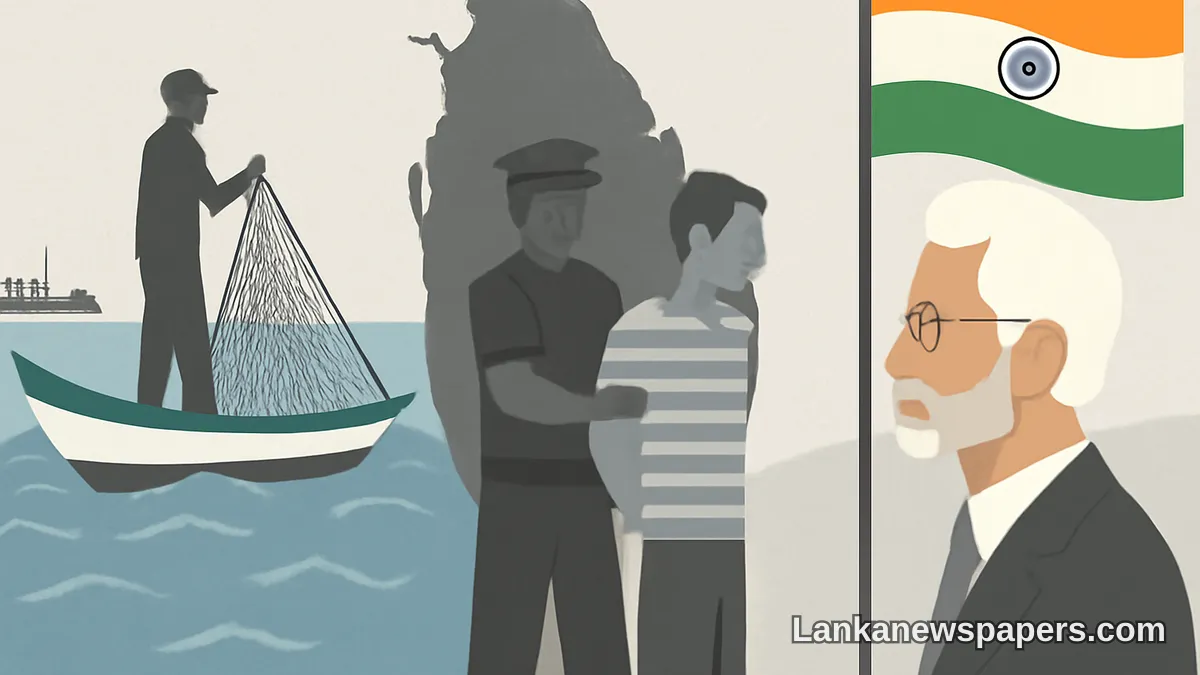
Indian External Affairs Minister S. Jaishankar has underscored that ensuring the safety and wellbeing of Indian fishermen detained by Sri Lankan authorities remains among his government's foremost diplomatic concerns, signalling the persistent sensitivity of the issue between the two neighbouring nations.
A Recurring Point of Tension
The arrest of Indian fishermen by the Sri Lanka Navy has long been a contentious matter in bilateral relations, with fishing communities — particularly from the southern Indian state of Tamil Nadu — regularly venturing into waters that overlap with Sri Lankan maritime boundaries. Sri Lankan authorities have maintained that such crossings constitute violations of the island nation's territorial waters, leading to periodic detentions of fishermen and the seizure of their vessels.
Minister Jaishankar's remarks reflect New Delhi's awareness of the distress these detentions cause to affected families and coastal fishing communities, who depend on these waters for their livelihoods.
Diplomatic Channels Under Focus
The Indian government has consistently raised the issue through diplomatic channels, pressing for the humane treatment of detained fishermen and their prompt release. Jaishankar's latest statements reinforce that this commitment has not wavered, with the Ministry of External Affairs treating each case of detention as a matter requiring urgent consular attention.
Both countries have engaged in dialogue over the fishing dispute at multiple levels, including discussions between their respective foreign ministries and through joint working groups established to address cross-border fishing conflicts in the Palk Strait region.
A Complex Maritime Issue
The broader dispute is rooted in longstanding disagreements over fishing rights in the Palk Bay and the Palk Strait, waters that separate India and Sri Lanka. Indian fishermen, many using bottom trawling methods, frequently cross the International Maritime Boundary Line, drawing criticism not only from Sri Lankan authorities but also from Sri Lankan fishing communities who argue that the practice depletes local fish stocks.
- Sri Lanka has repeatedly called for Indian fishermen to cease bottom trawling in its territorial waters.
- Tamil Nadu fishermen argue that alternative fishing zones remain insufficient to sustain their communities.
- Both governments have acknowledged the need for a long-term, mutually agreeable solution.
With Minister Jaishankar placing the safety of detained fishermen at the top of India's diplomatic agenda, observers expect New Delhi to continue pressing Colombo for swift and humane resolution of active detention cases, even as the two sides work toward a more lasting framework to govern fishing rights in the contested waters.
India has consistently maintained that while it respects Sri Lanka's sovereign jurisdiction over its waters, the welfare of its citizens abroad — including detained fishermen — will always be a primary concern of its foreign policy.


💬 Join the Discussion 3
See what readers are saying — and add your view.
hope both sides handle this calmly, dont want more tension with India
they cross our waters, get caught, then India complains. rules are rules no?
exactly. our navy just doing their job men.