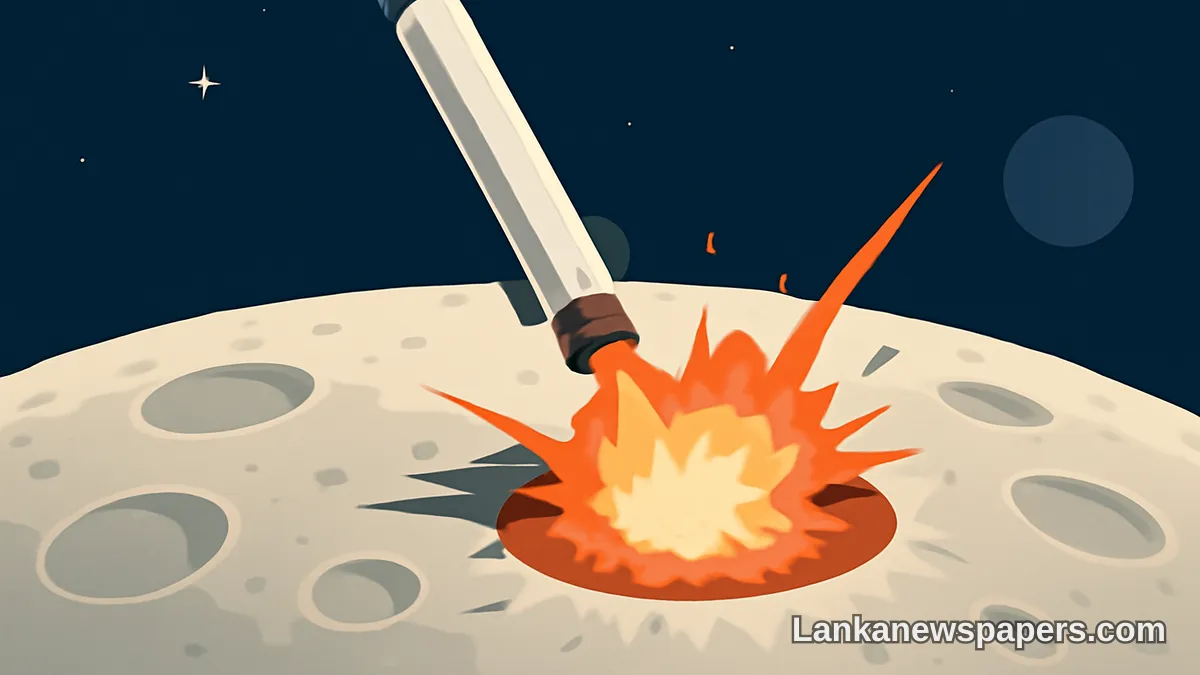
A massive piece of debris from a SpaceX rocket, roughly the size of a school bus and weighing approximately four tonnes, has slammed into the lunar surface, according to tracking data from space analysts monitoring the object's trajectory.
A Rare Cosmic Impact Event
The chunk of debris, identified as the second stage of a Falcon rocket, had been drifting through space for years before its eventual collision with the Moon. The high-velocity impact carved out a fresh crater on the lunar surface, offering scientists an uncommon opportunity to study the mechanics of such collisions up close.
Researchers noted that events of this nature, while dramatic, provide invaluable data on how cosmic debris behaves upon striking a rocky celestial body at extreme speeds. The Moon, which lacks the protective atmosphere that burns up most debris falling toward Earth, bears the full brunt of such impacts.
What This Means for Space Science
Scientists are expected to analyse images and data captured before and after the impact to measure the size and depth of the newly formed crater. Such findings can help improve models used to understand the Moon's geological history and the broader dynamics of debris in near-Earth space.
- The debris weighed approximately four tonnes
- It was comparable in size to a standard school bus
- The object was identified as the upper stage of a SpaceX Falcon rocket
- Its collision created a new crater on the Moon's surface
Scientists described the event as a rare and valuable opportunity to observe a high-velocity impact on the lunar surface under known conditions.
Growing Concerns Over Space Debris
The incident has reignited discussions within the global space community about the long-term management of defunct rocket components and other hardware left in space following missions. As commercial and governmental space activity continues to intensify, the volume of such debris in Earth's orbital neighbourhood and beyond is expected to increase.
For Sri Lankan space enthusiasts and the wider scientific community, the event serves as a vivid reminder of both the extraordinary reach of modern space exploration and the unresolved challenges that come with it.



💬 Join the Discussion 1
See what readers are saying — and add your view.
so now they littering in space also ah