President Dissanayake Doubles Down on Pledge to Scrap Sri Lanka's Executive Presidency
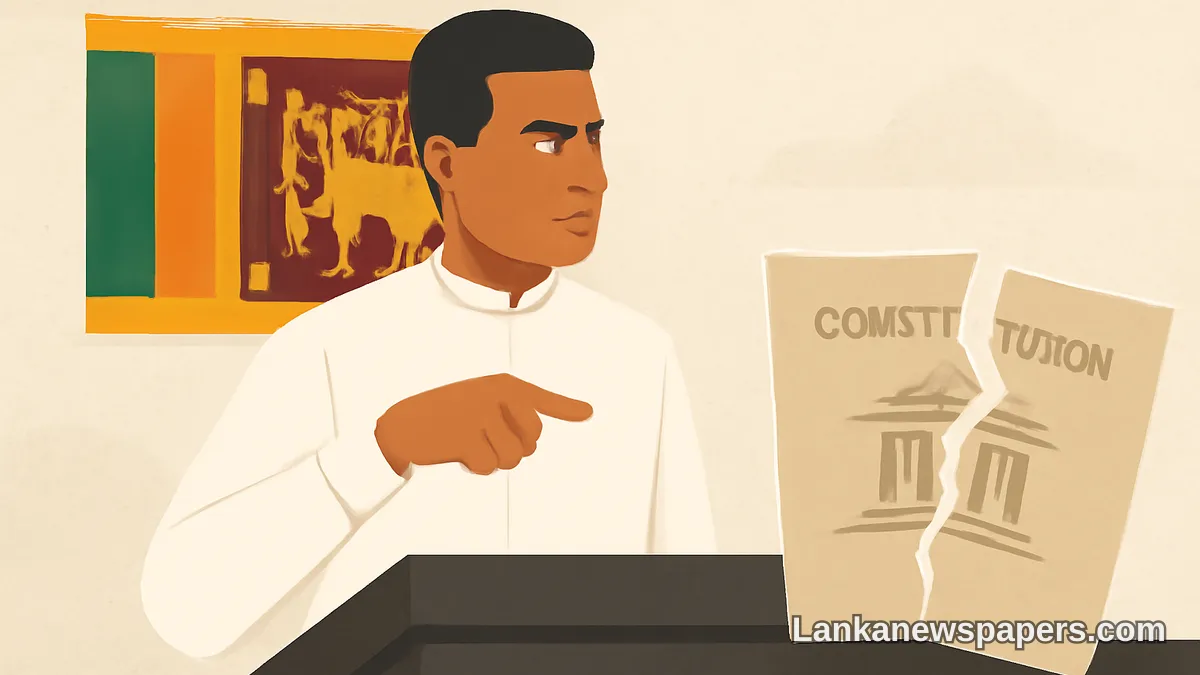
Government Renews Commitment to Constitutional Overhaul
President Anura Kumara Dissanayake has once again reaffirmed his government's firm stance on abolishing Sri Lanka's executive presidential system, signalling that constitutional reform remains a central pillar of his administration's agenda.
The declaration reinforces a long-standing position held by Dissanayake and his National People's Power government, which came to power promising sweeping political changes to the way Sri Lanka is governed at its highest levels.
A System Long Debated
The executive presidency in Sri Lanka has been a subject of intense political debate for decades. Critics have argued that the system concentrates excessive power in the hands of a single individual, undermining democratic checks and balances. Calls for its abolition have been made by various political parties over the years, though successive governments have fallen short of delivering on that promise.
Dissanayake's renewed commitment suggests his administration intends to push the matter forward, setting itself apart from predecessors who made similar pledges but did not follow through with concrete legislative action.
What Abolition Could Mean
Scrapping the executive presidential system would represent one of the most significant constitutional transformations in Sri Lanka's post-independence history. Such a move would likely shift the balance of governing power toward Parliament and the Prime Minister, fundamentally restructuring the country's political architecture.
- Greater parliamentary oversight of executive decisions
- Reduced concentration of power in a single office
- Potential strengthening of democratic institutions and accountability
President Dissanayake has consistently maintained that abolishing the executive presidency is not merely a political promise but a necessary step toward building a more equitable and transparent system of governance in Sri Lanka.
Road Ahead
Achieving such a constitutional amendment would require a two-thirds majority in Parliament, making cross-party cooperation essential. Whether the government can secure the necessary political support remains a key question as the administration looks to translate its reform rhetoric into reality.
For ordinary Sri Lankans, still navigating the aftermath of the country's worst economic crisis in recent memory, the push for constitutional reform signals that Dissanayake's government is determined to address not only economic hardship but also the deeper structural issues that many believe contributed to the nation's instability.


💬 Join the Discussion 4
See what readers are saying — and add your view.
who will have the power then? parliament? that also full of jokers no
if they actually do this i will be shocked honestly
Talk is cheap. every president said same thing then kept the power.
exactly, AKD also wont give up once he tastes it fully