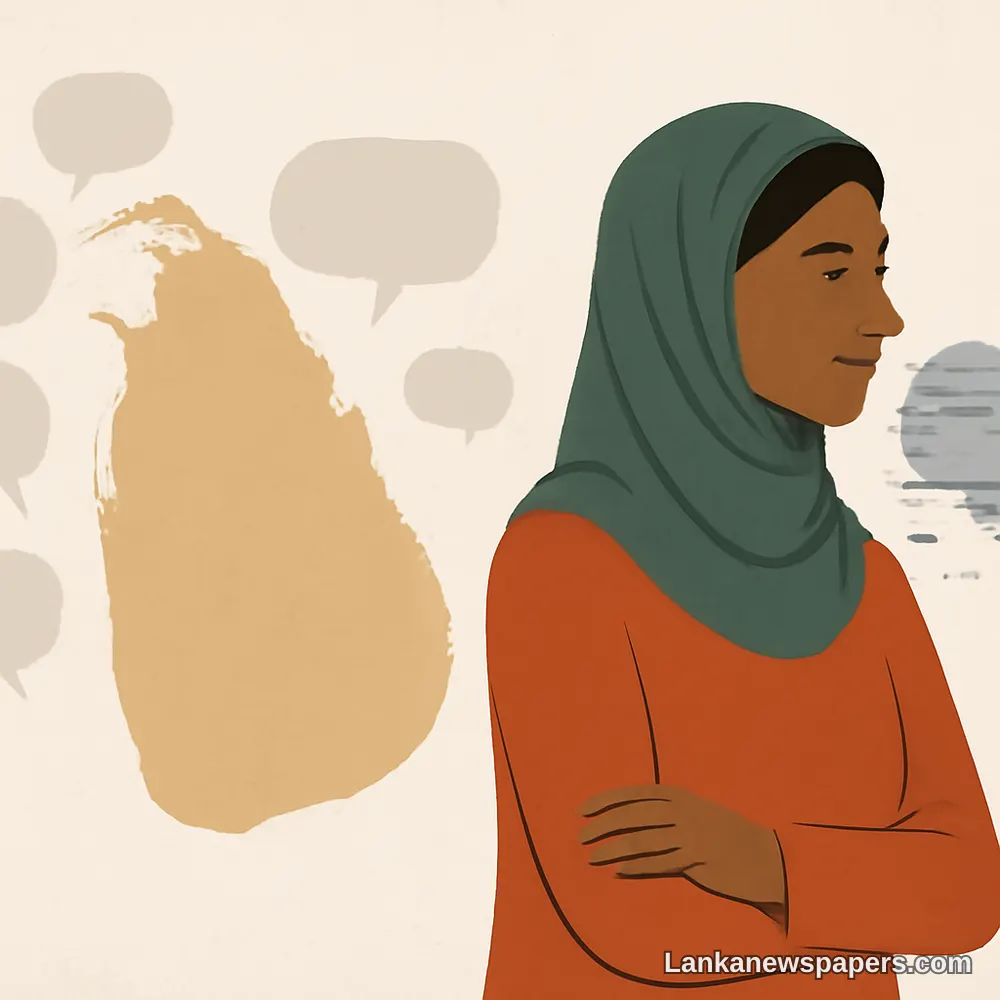
A Language Born From History, Dying in the Present
Tucked quietly within Sri Lanka's rich tapestry of cultures and communities lies a linguistic treasure that few outside its speakers even know exists. Sri Lankan Malay — a language with roots stretching back centuries to the island's colonial past — is today fighting a desperate battle for survival, with linguists and community elders warning that it could disappear within a generation.
Origins of a Remarkable Tongue
Sri Lankan Malay is spoken by the Malay community, descendants of people brought to the island during the Dutch and British colonial periods, primarily from what is now Indonesia and Malaysia. Over centuries of living alongside Sinhalese, Tamil, and other communities, these settlers developed a wholly distinct dialect — one that borrowed heavily from Sinhala and Tamil while retaining its Malay grammatical core. The result is a language found nowhere else on earth, a living artefact of Sri Lanka's complex colonial history.
Linguists describe Sri Lankan Malay as a remarkable example of language contact and creolisation. Unlike standard Malay spoken in Southeast Asia, it adopted the sentence structure patterns of the local Dravidian and Indo-Aryan languages, making it mutually unintelligible with modern Bahasa Malaysia or Indonesian. In short, it is entirely Sri Lankan.
A Community Shrinking in Voice
The Sri Lankan Malay community numbers only around 50,000 people, concentrated largely in Colombo, Hambantota, and Kirinda. However, the number of fluent speakers of the traditional language is believed to be far smaller — and declining rapidly. Younger generations, drawn toward Sinhala, Tamil, and English for education and economic opportunity, are increasingly growing up without learning their ancestral tongue.
- The language has no official status under Sri Lanka's constitution.
- It is not taught in schools or supported by state media.
- Intergenerational transmission within families has weakened significantly.
- Many younger community members can understand fragments of the language but are unable to hold full conversations.
Linguists Sound the Alarm
Academics who have studied Sri Lankan Malay for decades warn that the window for meaningful preservation is rapidly closing. The passing of elderly fluent speakers takes with it not just vocabulary, but idioms, oral traditions, folktales, and a way of understanding the world that cannot be reconstructed once lost.
A language is not merely a communication tool — it is the soul of a community's identity. When Sri Lankan Malay disappears, an irreplaceable chapter of this island's history disappears with it.
Documentation efforts have been undertaken by a small number of dedicated researchers, both local and international, who have worked to record spoken samples, compile dictionaries, and analyse the language's unique grammatical features. However, these academic efforts, while valuable, have yet to translate into a broader national movement to protect and revitalise the language.
What Can Be Done?
Language revival movements around the world offer some hope and instruction. Communities in similar circumstances have successfully slowed or even reversed language decline through targeted interventions — community language schools, radio and digital media programmes, and government recognition of minority linguistic heritage.
Advocates for Sri Lankan Malay argue that the state has a responsibility to support the preservation of all living languages within its borders as part of its commitment to cultural diversity. They are calling for the inclusion of Sri Lankan Malay in national heritage programmes, funding for community-led teaching initiatives, and greater visibility in public life.
A Heritage Worth Saving
Sri Lanka has long prided itself on its multicultural identity — a mosaic of peoples, faiths, and traditions shaped by millennia of exchange and coexistence. Sri Lankan Malay is a profound expression of that identity. Allowing it to vanish in silence would be a loss not only for the Malay community, but for the entire nation and for humanity's shared linguistic heritage.
The question now is whether enough people — within the community and beyond it — will act before it is too late.

💬 Join the Discussion 1
See what readers are saying — and add your view.
sad lah, our own goverment doesnt even care about minority languages