Why Great Teachers Will Always Outshine Artificial Intelligence in Sri Lanka's Classrooms
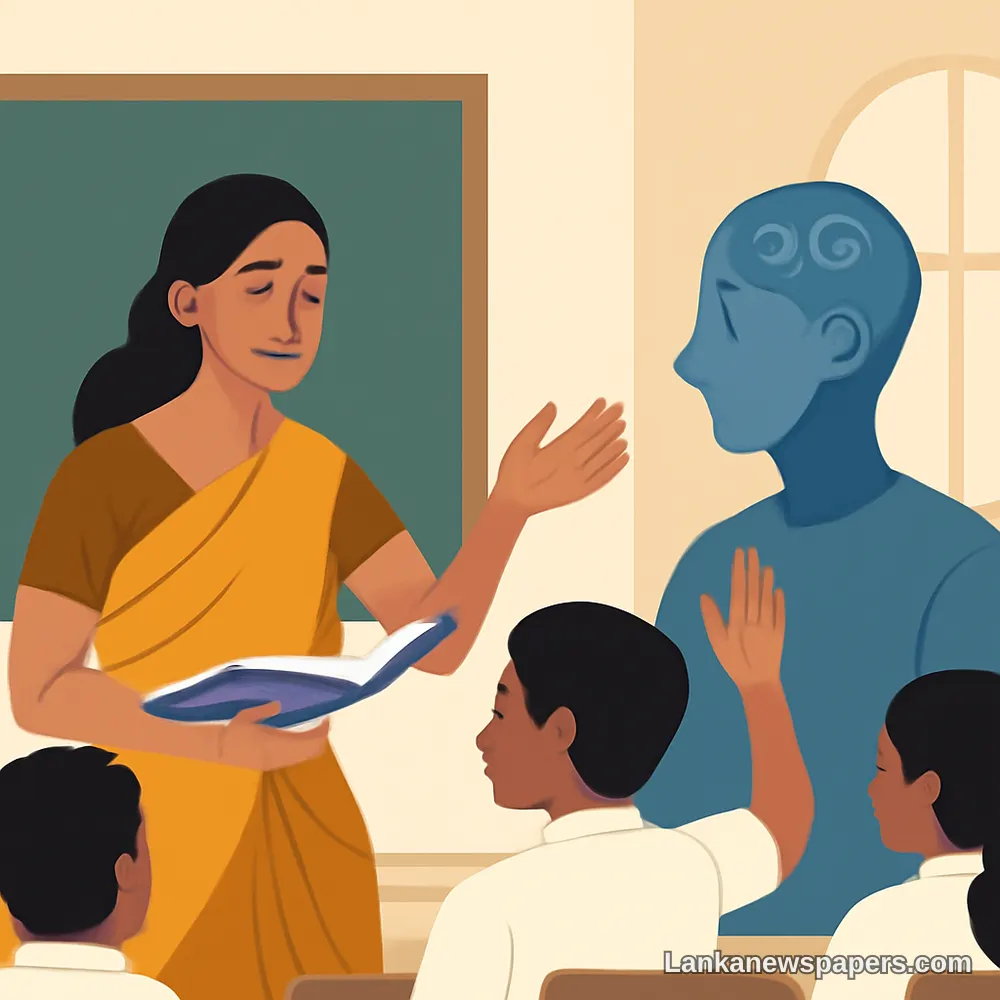
A Village Lesson That Technology Cannot Replicate
As Prime Minister Dr. Harini Amarasuriya's administration pushes forward with ambitious education reforms placing significant emphasis on digital learning, a compelling argument is emerging from Sri Lanka's rural heartland — that no algorithm, however sophisticated, can ever replace the transformative power of an exceptional teacher.
Reforms Welcome, But Questions Remain
The education reforms proposed under Prime Minister Dr. Amarasuriya's government have been broadly welcomed by academics and educators across the island. The initiative places considerable weight on digital education as a cornerstone of modernising Sri Lanka's learning environment, a direction many consider both necessary and timely in an increasingly technology-driven world.
However, Professor Amarasiri de Silva, a respected academic voice in Sri Lankan education circles, has raised a thought-provoking counterpoint — one that resonates deeply when viewed through the lens of rural schooling in this country.
What Rural Sri Lanka Teaches Us About Teaching
In villages scattered across Sri Lanka's provinces, where internet connectivity remains inconsistent and digital devices are still considered a luxury for many families, dedicated teachers continue to produce remarkable outcomes through sheer skill, empathy, and human connection. These classrooms offer a living demonstration of what artificial intelligence, for all its rapid advancement, fundamentally cannot replicate.
A great teacher does not merely deliver content. They read the room, sense a struggling student's frustration before it is voiced, adjust their approach mid-lesson, offer encouragement at precisely the right moment, and build a relationship of trust that sustains a child's motivation across years of learning. These are deeply human qualities that no digital platform has yet come close to matching.
The Risk of Over-Relying on Digital Solutions
Educators warn that an over-dependence on artificial intelligence and digital tools in the reform agenda could inadvertently widen existing inequalities rather than close them. Rural schools often lack the infrastructure to meaningfully absorb technology-first approaches, and if policy leans too heavily in that direction, students in underserved communities may be left further behind.
- Unreliable electricity supply in many rural schools limits consistent digital access
- Teacher shortages in rural areas already strain the quality of in-person instruction
- Many families cannot afford devices necessary to complement school-based digital learning
- Language barriers and low digital literacy among parents reduce at-home reinforcement
A Call for Balance, Not Rejection
The argument being made is not one of rejection toward technology. Artificial intelligence and digital tools, when properly integrated and supported by adequate infrastructure, can genuinely enhance learning outcomes and expand access to quality educational resources across Sri Lanka.
The point is not whether AI has a role in education — it clearly does. The point is that the human teacher must remain at the centre of any reform effort, particularly in a country where rural communities still depend entirely on that personal relationship between teacher and student.
Professor de Silva's perspective invites policymakers to ensure that investment in digital education is matched by equally strong investment in teacher training, professional development, and the well-being of educators serving the nation's most remote communities.
The Irreplaceable Human Element
Sri Lanka has a proud tradition of valuing education as a path to social mobility, a tradition built not on machines but on generations of dedicated men and women who stood before chalkboards in often difficult conditions and changed young lives. As the country looks toward a more technologically integrated future, that human legacy deserves not just acknowledgement, but active protection within the framework of any national education reform.
The villages of rural Sri Lanka are not simply waiting to be digitally transformed. In many respects, they are already offering the rest of the country a quiet but powerful lesson about what truly makes education work.


💬 Join the Discussion 2
See what readers are saying — and add your view.
Good teachers are irreplaceable, no AI can teach with heart and understanding
True but goverment schools dont even have enough good teachers no?