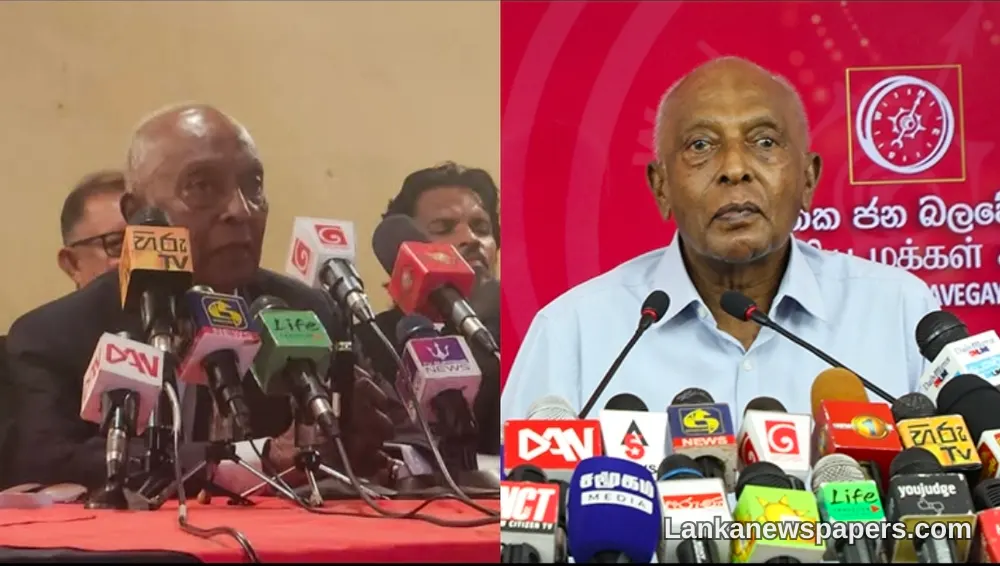
A prominent legal figure within the ruling National People's Power (NPP) has publicly broken ranks with his party over the proposed extension of the retirement age for judges, making clear that the move does not carry the endorsement of the party's highest decision-making body.
A Voice of Dissent from Within
Senior lawyer Lal Wijenayake, who holds membership in both the NPP Leadership Council and its Executive Council, has come forward to openly oppose the proposed extension of the mandatory retirement age for judges. His remarks are significant given the weight his position carries within the party structure and the broader legal community in Sri Lanka.
Wijenayake was unequivocal in stating that the proposal was not a decision sanctioned or approved by the NPP Executive Council, distancing the party's collective leadership from what appears to be an initiative being pushed through separate channels.
What the Proposal Involves
The controversy centres on a move to extend the retirement age of judges in Sri Lanka, a measure that has drawn scrutiny from legal professionals and civil society observers who are concerned about the implications for judicial independence and the integrity of the country's court system.
Critics argue that altering the tenure conditions of sitting judges — particularly through executive or legislative pressure — risks undermining the separation of powers that is fundamental to a functioning democracy.
Party Governance Under Scrutiny
Wijenayake's public stance raises broader questions about internal cohesion within the NPP, which came to power pledging transparency, accountability, and systemic reform. For a senior member of the Executive Council to openly contradict a policy direction associated with his own party signals a degree of internal disagreement that is unusual for the relatively young administration.
The proposal to extend the retirement age of judges was not a decision taken by the NPP Executive Council, according to Wijenayake's public remarks.
His intervention is likely to intensify debate both within NPP circles and among legal professionals across the island, many of whom have been watching the new government's approach to the judiciary with close attention.
Wider Implications for Judicial Independence
Sri Lanka's judiciary has historically been a focal point of political controversy, with past administrations accused of attempting to influence court appointments and the terms of senior judges. Any move to adjust the retirement age of judges, regardless of the justification offered, is therefore a matter that resonates deeply with those who advocate for an independent and impartial legal system.
As the debate continues, all eyes will be on how the NPP leadership responds to Wijenayake's dissent and whether the party will offer a clearer, unified position on the contentious proposal in the days ahead.

💬 Join the Discussion 3
See what readers are saying — and add your view.
Why extend retirement age? Are there no younger qualified judges?
Finally someone in NPP with a backbone. Good on Lal.
One man speaking up doesnt mean the party will listen though.