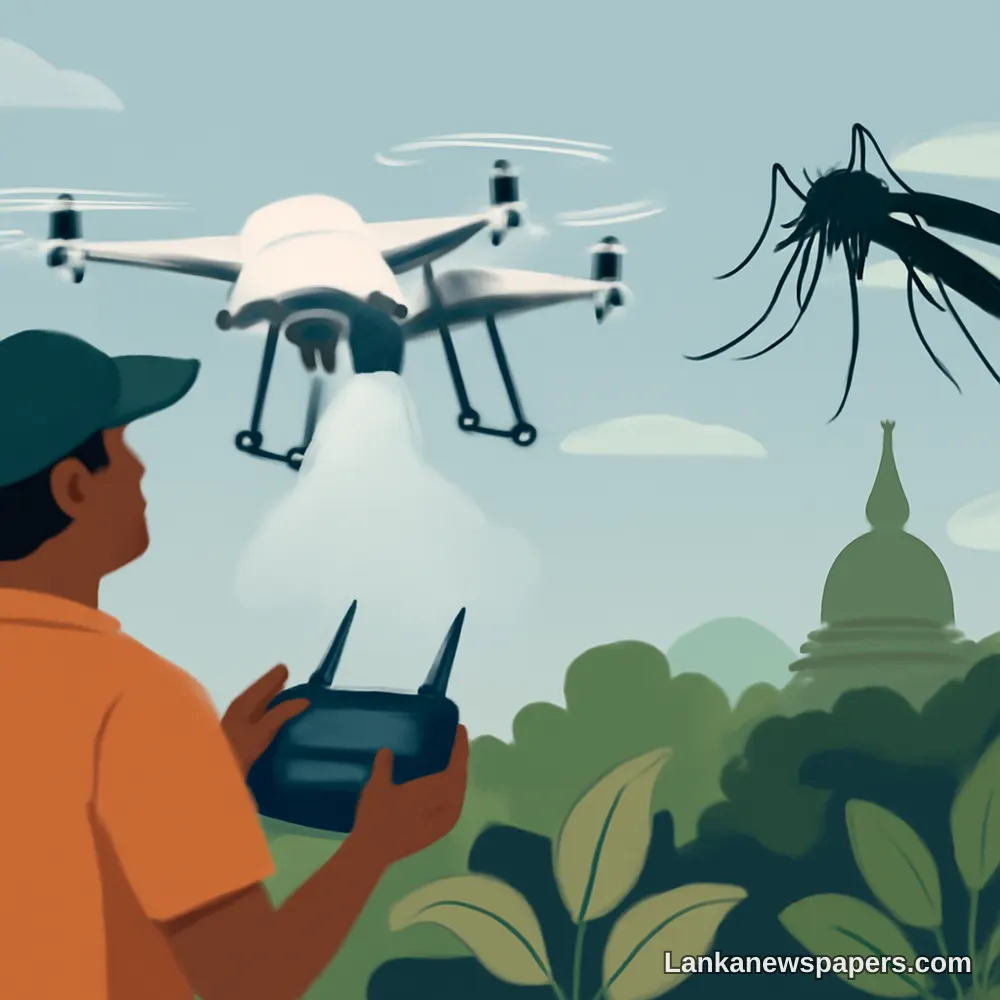
Technology Takes Flight in War on Dengue
Sri Lanka has taken a significant technological leap in its ongoing fight against dengue fever, turning to drone technology as part of a fresh strategy to combat the mosquito-borne disease that continues to pose a serious public health threat across the island.
A High-Tech Approach to a Persistent Problem
Health authorities have begun deploying unmanned aerial vehicles, commonly known as drones, to assist in anti-dengue operations. The move marks a notable shift from conventional ground-level fumigation and inspection methods, allowing teams to cover larger areas more efficiently and target hard-to-reach breeding grounds that would otherwise go undetected.
Drones offer the ability to survey vast stretches of land, identify stagnant water pools, and carry out aerial spraying of insecticides with far greater precision and speed than traditional approaches. This is expected to significantly enhance the country's capacity to suppress mosquito populations, particularly in densely populated urban areas and remote rural communities alike.
Dengue Remains a Major Public Health Concern
Dengue fever has long been one of Sri Lanka's most persistent public health challenges, with the country recording thousands of cases annually. The Aedes aegypti mosquito, which thrives in stagnant water found in discarded containers, tyres, and poorly maintained drainage systems, remains the primary carrier of the virus. Outbreaks typically intensify during and after the monsoon seasons, placing enormous pressure on healthcare facilities and communities nationwide.
Modernising the Public Health Response
The introduction of drones reflects a broader push by Sri Lankan authorities to modernise public health interventions and leverage emerging technologies to address longstanding challenges. Officials are hopeful that the initiative will complement existing ground-level efforts and contribute to a measurable reduction in dengue transmission rates.
Public health experts have long advocated for more innovative, data-driven solutions to vector control, and the adoption of drone technology is being viewed as a positive and forward-thinking step in that direction.
Public Cooperation Still Essential
Despite the promising new approach, health officials continue to stress that community participation remains an irreplaceable component of dengue prevention. Residents are urged to:
- Regularly dispose of or cover water-holding containers around their homes
- Keep gutters and drains clear of blockages
- Report potential mosquito breeding sites to local authorities
- Seek immediate medical attention if dengue symptoms such as high fever, severe headache, or joint pain develop
Technological solutions can only go so far — the fight against dengue ultimately depends on the collective responsibility of every Sri Lankan household and community.
As the island nation continues to grapple with dengue's recurring threat, the integration of drone technology into national health strategies signals a determined and evolving response to one of Sri Lanka's most enduring public health battles.



💬 Join the Discussion 2
See what readers are saying — and add your view.
better than nothing la, dengue killing ppl every year and goverment just talking
true but how much this drone thing cost us taxpayers