Sri Lanka's Marriages and Births Hit Record Lows as Demographic Trends Shift Dramatically
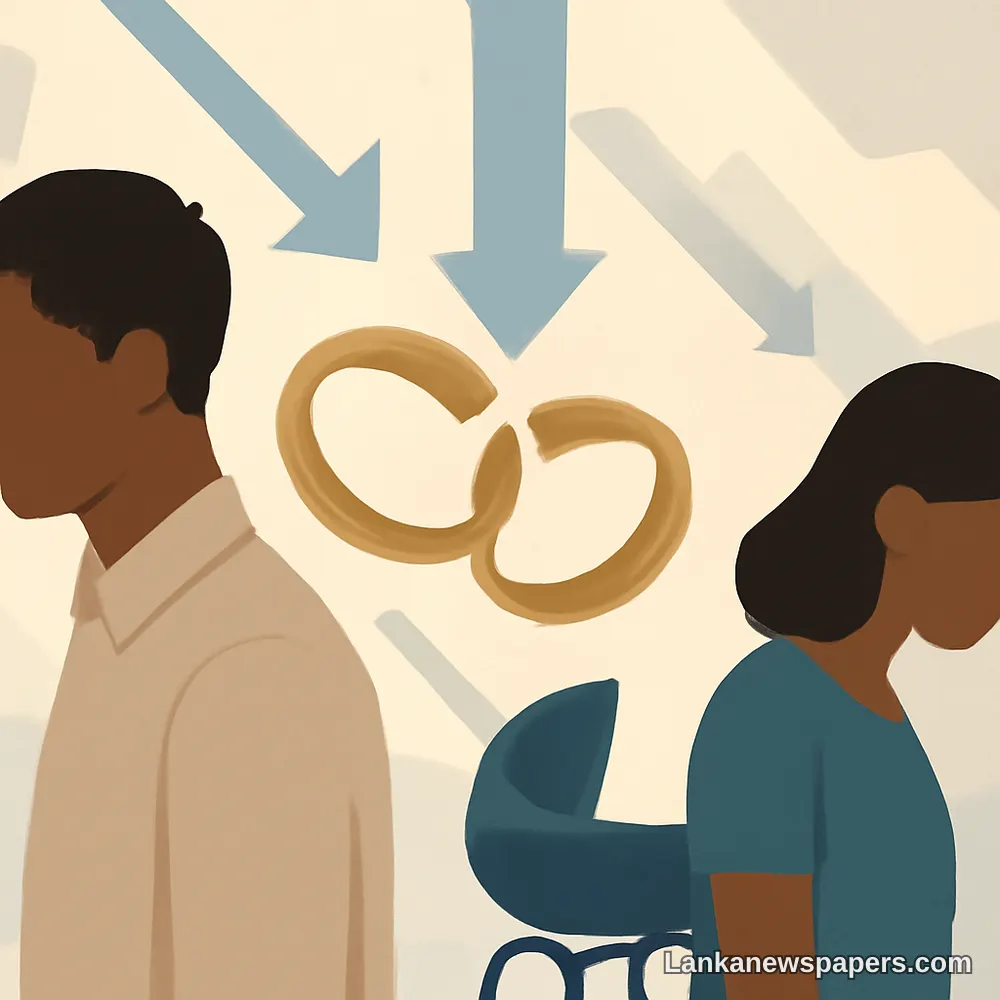
Sri Lanka is experiencing a significant and sustained decline in both marriages and births over the past decade, raising fresh concerns among demographers, policymakers, and social researchers about the long-term implications for the island nation's population structure and economic future.
A Nation Marrying and Having Children Less
Official data tracking vital statistics across the country reveals a sharp downward trend in the number of marriages registered annually, alongside a notable reduction in birth rates. The figures paint a picture of a society undergoing profound social and economic transformation, with younger Sri Lankans increasingly delaying or forgoing both marriage and parenthood.
The trend mirrors patterns observed across other parts of Asia, where rising living costs, greater access to education, shifting cultural attitudes, and expanding career opportunities — particularly for women — have collectively contributed to changing family formation patterns.
What Is Driving the Decline?
Analysts point to several interconnected factors behind Sri Lanka's demographic shift:
- The prolonged economic crisis, which placed enormous financial pressure on young couples considering marriage and starting families
- Rising costs of housing, education, and healthcare making large families less financially viable
- Increasing participation of women in the workforce and higher education
- Changing social norms around marriage and family planning among urban and rural populations alike
- Emigration of working-age Sri Lankans seeking better opportunities abroad, reducing the pool of those forming families locally
Long-Term Consequences for Sri Lanka
Demographers warn that a sustained decline in births will accelerate Sri Lanka's ageing population challenge. With fewer young people entering the workforce in coming decades, the country faces mounting pressure on its pension systems, healthcare infrastructure, and overall economic productivity.
A shrinking younger generation combined with a growing elderly population creates a demographic imbalance that requires urgent attention from government planners and social policy architects.
Sri Lanka already has one of the older population profiles in South Asia, and without intervention, the dependency ratio — the proportion of non-working citizens relative to those employed — is expected to worsen considerably in the decades ahead.
A Call for Policy Response
Experts are urging the government to consider proactive measures to address the trend, including family support programmes, affordable housing initiatives for young couples, improved maternal and child healthcare services, and policies that make balancing work and family life more manageable for Sri Lankan women and men alike.
While the decline in marriages and births reflects deeply personal decisions made by individuals and families, the cumulative effect on national demographics makes it a pressing public policy concern that authorities can no longer afford to overlook.



💬 Join the Discussion 1
See what readers are saying — and add your view.
Cost of living too high la, who can afford to have kids now