Rare Earths and Rising Debts: How Global Powers Are Tightening Their Grip on Sri Lanka
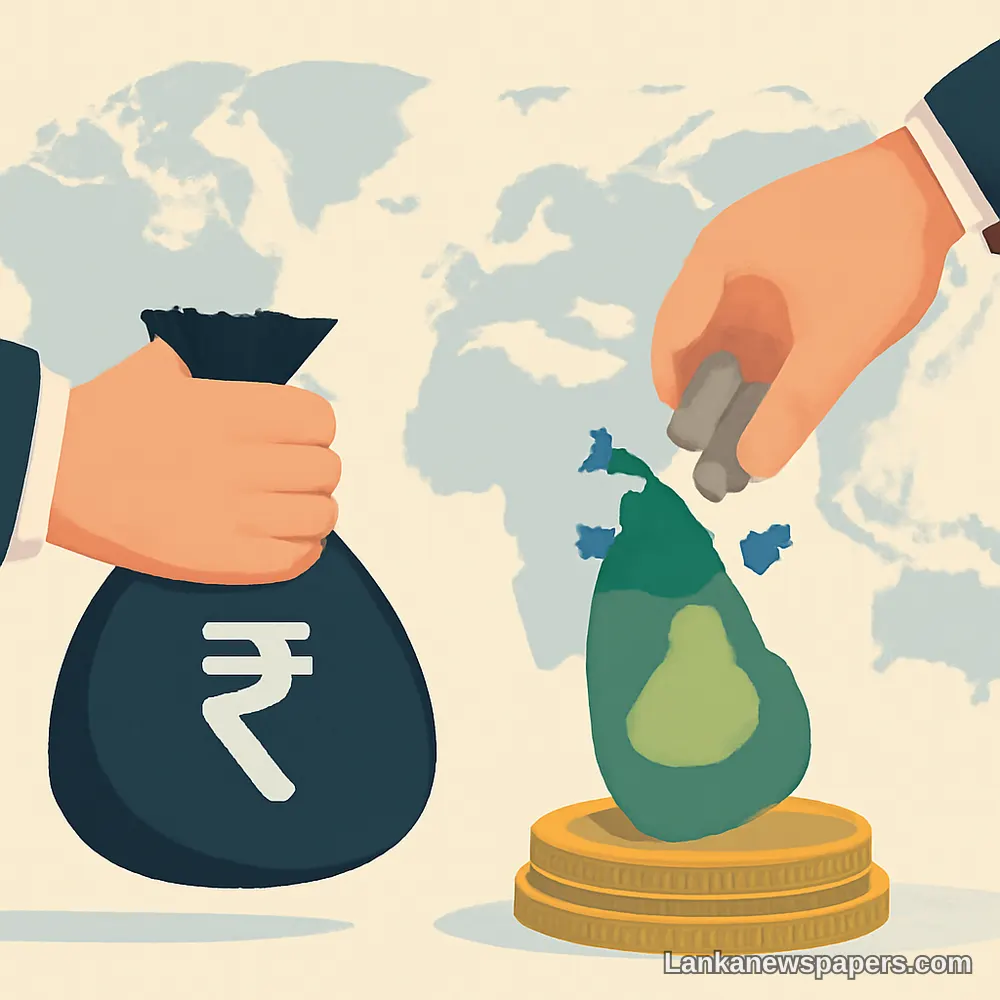
Sri Lanka, still navigating the aftermath of its worst economic crisis in decades, now finds itself at the centre of a high-stakes geopolitical contest — one driven not merely by financial interests, but by the strategic value of the island nation's rare earth mineral deposits.
A Nation Under Pressure
As Sri Lanka continues to restructure its sovereign debt and seek pathways to economic recovery, analysts and international observers are raising alarm over how the country's mineral wealth — particularly its rare earth elements — is becoming a bargaining chip in negotiations with powerful creditor nations and multilateral institutions.
Rare earth elements are critical components in the manufacture of electric vehicles, advanced defence systems, semiconductors, and clean energy technologies. Their global strategic importance has surged in recent years, making nations that possess such deposits increasingly attractive to major powers competing for resource dominance.
Debt as Leverage
Sri Lanka's debt crisis, which peaked in 2022 when the country declared its first-ever sovereign default, left the government with little room to manoeuvre. With foreign reserves virtually depleted and the rupee in freefall, Colombo was forced to seek assistance from the International Monetary Fund as well as engage in complex restructuring talks with bilateral creditors including China, India, and members of the Paris Club.
Critics argue that this vulnerability has created conditions in which creditor nations can exert undue influence over Sri Lanka's resource policies. The concern is that debt relief or financial assistance may come attached — formally or informally — to conditions that grant foreign entities preferential access to the island's mineral reserves.
The Rare Earth Dimension
Sri Lanka is known to possess deposits of monazite, a mineral rich in rare earth elements, found primarily along its coastal and inland heavy mineral sand deposits. These resources have largely remained underdeveloped, but their potential value has attracted growing international interest as the global clean energy transition accelerates demand for such materials.
Geopolitical analysts warn that without robust legal frameworks and transparent governance structures, Sri Lanka risks entering agreements that could compromise national sovereignty over its natural resources — a pattern observed in several other debt-distressed developing nations.
Competing Interests on the Indian Ocean Stage
Sri Lanka's geographic position in the Indian Ocean makes it strategically significant to multiple global powers. China, the United States, India, and the European Union all have vested interests in maintaining influence over Colombo's policy decisions. This competition intensifies when resource extraction enters the equation.
China, which currently dominates global rare earth processing, has been an active infrastructure investor in Sri Lanka for years. Meanwhile, Western nations and India have stepped up engagement with Colombo, partly to counterbalance Chinese influence in the region.
Calls for Transparency and Caution
Civil society organisations and debt justice advocates are calling on the Sri Lankan government to exercise extreme caution before entering any agreements that link debt relief to resource access. They argue that the country must prioritise transparent parliamentary oversight and public consultation before committing its mineral wealth to any foreign entity.
- Ensuring all mineral resource agreements are subject to parliamentary approval
- Conducting independent environmental and economic impact assessments
- Establishing clear legal protections against exploitative contract terms
- Engaging civil society in negotiations that affect national assets
Debt distress should never become a mechanism through which a country is stripped of its natural heritage. Sri Lanka must not trade long-term resource sovereignty for short-term financial relief.
The Road Ahead
As Sri Lanka works to restore macroeconomic stability and rebuild investor confidence, the decisions made in the coming months regarding its rare earth resources could have consequences that extend far beyond the current debt cycle. Policymakers in Colombo face the difficult task of attracting necessary foreign investment while ensuring that the nation's mineral endowments serve the long-term interests of its own people — and not merely those of powerful external actors.
For a country still healing from economic collapse, the rare earths question may prove to be one of the most consequential policy challenges of the decade.


💬 Join the Discussion 0
Be the first to share your view on this story.