Why Sri Lanka Is Banning Goods Made With Forced Labour — And What It Means for Trade With the US
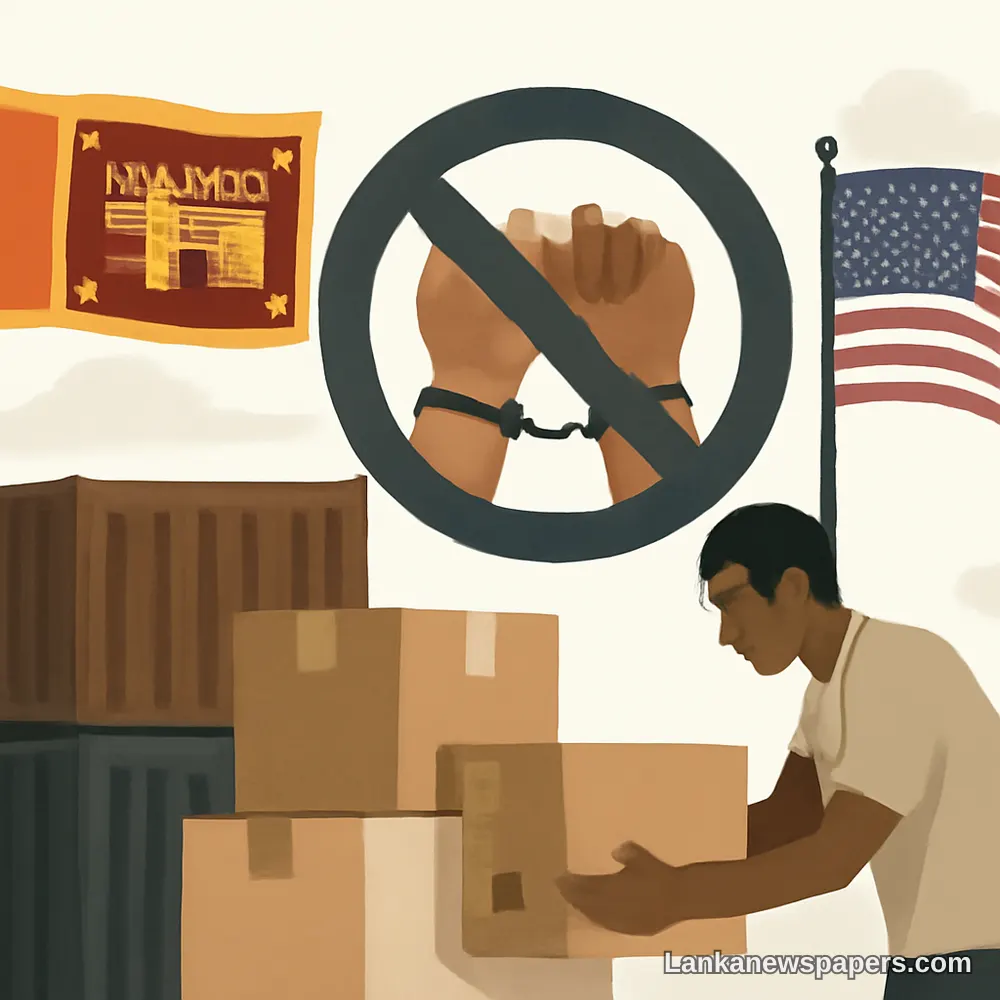
Sri Lanka is moving to prohibit the importation of goods produced using forced or compulsory labour, a significant policy shift that comes in the wake of pressure from the United States over trade practices and the looming threat of punitive tariffs.
What Is Being Proposed?
The Sri Lankan government is working to introduce legislation that would ban the import of any product manufactured wholly or in part through forced labour. The move mirrors similar laws already in place in the United States, the European Union, and other major economies, which restrict goods linked to exploitative labour practices from entering their markets.
Under the proposed framework, Sri Lankan customs authorities would have the power to detain, seize, or reject shipments if there is credible evidence that forced labour was involved at any stage of the supply chain.
The US Tariff Pressure
The push for this legislation has been closely tied to Sri Lanka's vulnerability under United States trade policy. Washington has signalled concerns about forced labour in global supply chains and has used tariff threats as leverage to encourage trading partners to strengthen their own regulatory frameworks.
Sri Lanka, which depends heavily on garment and textile exports to the American market, cannot afford to be seen as a weak link in international supply chains. Any classification of Sri Lankan exports as tainted by forced labour could trigger import bans or steep tariff penalties in the US, devastating an already fragile export economy.
Why This Matters for Sri Lanka
Sri Lanka's apparel sector is one of the country's largest foreign exchange earners, employing hundreds of thousands of workers — the majority of them women. The industry has long marketed itself on ethical labour standards, and any reputational damage could have far-reaching consequences.
Beyond apparel, the ban would apply across all product categories, meaning businesses that source or transit goods through Sri Lanka would also need to ensure their supply chains are free of forced labour.
Key Points of the Policy
- Imports made using forced or compulsory labour would be prohibited under Sri Lankan law.
- Customs officials would be empowered to inspect and block suspect shipments.
- The legislation aligns Sri Lanka with international trade norms championed by the US and EU.
- The move is partly intended to protect Sri Lanka's preferential trade access to Western markets.
- Local businesses would need to undertake due diligence on the origins of imported goods.
The Broader Context
Globally, forced labour remains a serious concern embedded in supply chains spanning agriculture, manufacturing, and fishing. Countries that fail to act risk being locked out of lucrative Western markets, which have grown increasingly stringent in enforcing ethical sourcing requirements.
For Sri Lanka, still recovering from its worst economic crisis in decades, maintaining strong trade relationships with the United States and Europe is not optional — it is essential. Introducing a forced labour import ban is therefore as much a pragmatic economic decision as it is a moral one.
What Happens Next?
The government is expected to proceed with drafting and presenting the relevant legislation to Parliament. Industry stakeholders, including exporters and importers, will likely be consulted during the process. Once enacted, businesses operating in Sri Lanka will need to adapt their procurement and compliance practices accordingly.
Observers say the speed with which Sri Lanka moves on this legislation could itself send a signal to Washington about the island nation's commitment to fair trade principles — and its desire to protect its export lifeline.


💬 Join the Discussion 2
See what readers are saying — and add your view.
finally goverment doing something to keep US happy. better than more tariffs no?
keeping US happy wont fix our own workers issues machan