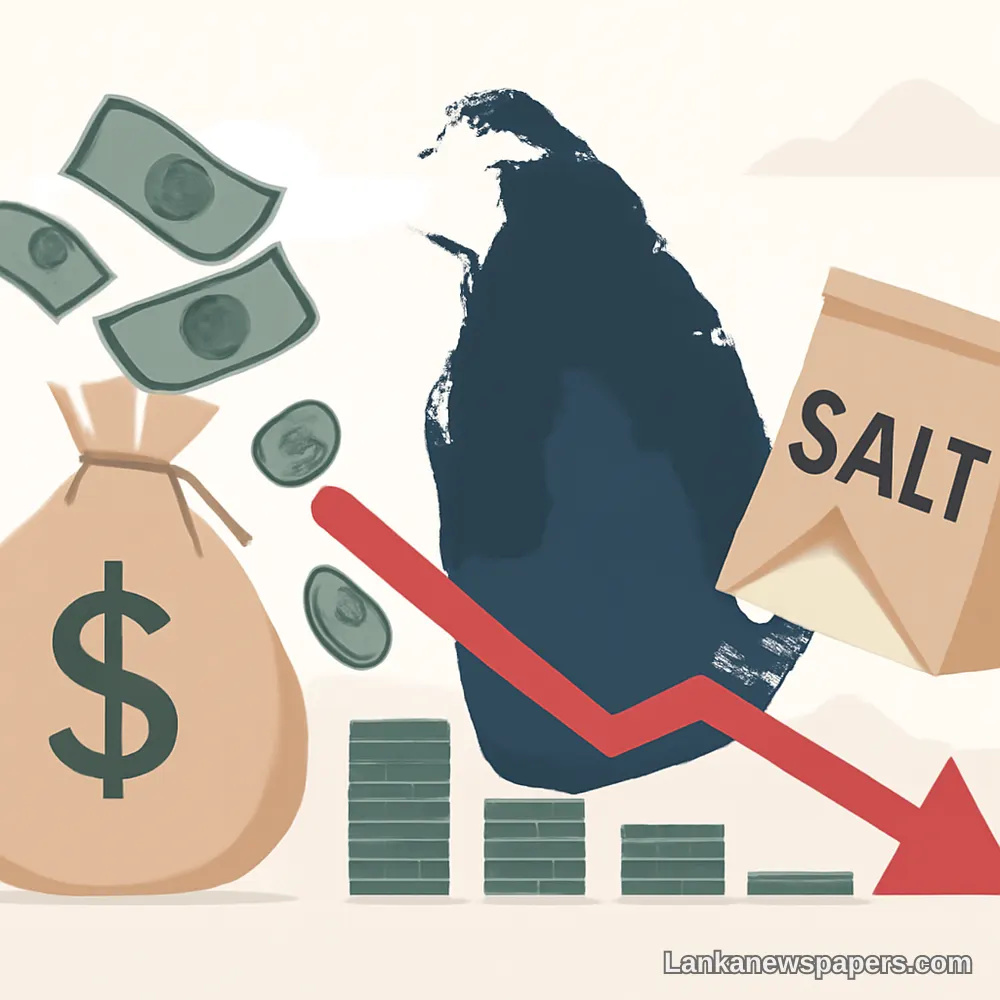
Sri Lanka has suffered a staggering loss of approximately USD 100 million in precious foreign exchange reserves as a direct consequence of a one-year delay in facilitating the importation of salt, according to reports emerging from industry sources.
A Costly Administrative Failure
The prolonged hold-up, which stretched across an entire year, prevented the timely arrival of imported salt into the country, forcing industries that depend heavily on the commodity to seek costly alternatives or face severe supply disruptions. The resulting strain on foreign exchange is a significant blow to an economy that has only recently begun to claw its way back from a historic financial crisis.
Sri Lanka's industrial sector relies on salt not merely as a food ingredient but as a critical raw material in a range of manufacturing processes, including chemical production and food processing. Any interruption in its steady supply carries wide-ranging economic consequences that ripple well beyond the dinner table.
Foreign Exchange Reserves Under Pressure
The USD 100 million foreign exchange impact underscores the real cost of bureaucratic inaction and policy indecision at a time when the country can least afford it. Sri Lanka has been working painstakingly to rebuild its foreign reserves following the devastating economic collapse of 2022, making such avoidable losses particularly damaging.
Critics have pointed to this episode as a stark example of how delays in regulatory decision-making and import policy can translate directly into quantifiable economic harm, undermining efforts to stabilise the broader economy.
Calls for Accountability and Reform
The revelation has prompted fresh calls from business community representatives and economists for greater efficiency and transparency within the government bodies responsible for import approvals and trade facilitation. Stakeholders are urging authorities to implement streamlined processes to prevent similar situations from arising in the future.
- The delay spanned approximately one full year, during which salt imports were held up.
- The estimated foreign exchange loss stands at USD 100 million.
- Industries reliant on salt as a raw material were among those most severely affected.
- The incident has reignited debate over import policy reform and administrative accountability.
As Sri Lanka continues its fragile economic recovery, episodes such as this serve as a reminder that policy efficiency and timely decision-making are not merely administrative concerns — they carry a direct and measurable cost to the nation's financial wellbeing.



💬 Join the Discussion 2
See what readers are saying — and add your view.
100 million for salt man. SALT. this country is something else.
and they took a whole year to sort it out. unbelievable.