Opinion: How Sri Lanka's Diplomatic Protocol Failures Are Quietly Undermining National Sovereignty
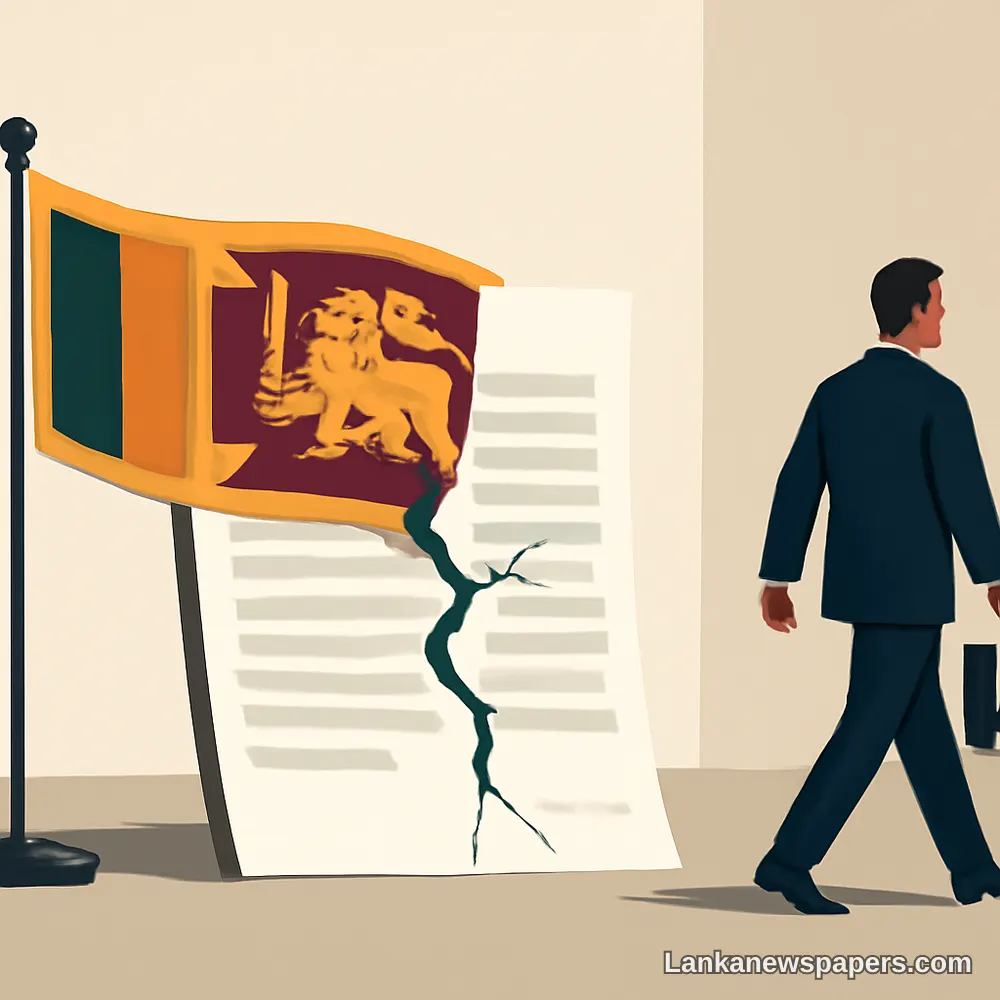
Sri Lanka's standing on the world stage is increasingly being called into question — not through dramatic geopolitical confrontations, but through a quieter, more insidious process: the gradual erosion of diplomatic protocol and the steady drift away from the principles that underpin national sovereignty.
A Slow but Significant Shift
Protocol in diplomacy is far more than ceremonial formality. It represents the codified expression of a nation's dignity, its respect for international norms, and its assertion of independence in dealings with foreign powers. When a country begins to let these standards slip — whether through negligence, political expediency, or external pressure — the consequences can be far-reaching and deeply damaging to its long-term interests.
Sri Lanka, analysts warn, appears to be navigating exactly such a drift. Over recent years, observers have noted patterns in the island nation's diplomatic conduct that suggest a loosening grip on the procedural safeguards that protect sovereign integrity.
What Protocol Drift Actually Means
Protocol drift does not announce itself loudly. It manifests in subtle ways:
- Foreign dignitaries being granted access or courtesies that bypass established diplomatic channels
- Agreements and memoranda being signed without adequate parliamentary scrutiny or public transparency
- The blurring of boundaries between state engagements and informal political dealings with foreign actors
- A reluctance to assert reciprocal standards when engaging with more powerful bilateral partners
Each instance, taken alone, may appear inconsequential. Collectively, however, they represent a pattern that can fundamentally alter the relationship between Sri Lanka and the international community — often to the nation's disadvantage.
Sovereignty Is Not Just a Legal Concept
Sovereignty, in practical terms, is exercised daily through the decisions a government makes about who it engages with, how it engages, and on whose terms. For a small island nation strategically positioned in the Indian Ocean — coveted by major powers for its ports, its geography, and its economic potential — the stakes of getting this wrong are particularly high.
When protocol is treated as optional, sovereignty becomes negotiable. And for a country like Sri Lanka, that is a risk it simply cannot afford.
Sri Lanka's location has historically made it a focal point of great power competition. Colonial history, Cold War-era pressures, and more recent strategic rivalries involving India, China, and Western nations have all shaped the island's diplomatic landscape. Against this backdrop, maintaining clear and consistent protocols is not bureaucratic pedantry — it is a line of defence.
The Domestic Political Dimension
Part of the problem lies within Sri Lanka's own political culture. Successive governments have at times prioritised short-term diplomatic wins — loans, investment pledges, or political goodwill — over the longer-term discipline of principled engagement. This has occasionally resulted in agreements that were perceived, rightly or wrongly, as having been concluded under conditions that did not fully reflect Sri Lanka's sovereign interests.
Public trust in the government's ability to manage foreign relations with independence and transparency has also been uneven. When citizens are left in the dark about the terms of major international engagements, the democratic foundation of sovereign decision-making is weakened.
A Call for Renewed Diplomatic Discipline
Restoring confidence in Sri Lanka's diplomatic conduct requires deliberate effort. Policymakers must recommit to the formal processes that govern international engagement — ensuring that every agreement, every visit, and every joint declaration is handled in a manner consistent with both international standards and the nation's constitutional framework.
Civil society, the media, and parliament all have a role to play in holding the executive accountable for how Sri Lanka presents and conducts itself abroad. Scrutiny of diplomatic affairs should not be considered intrusive — it is, in a functioning democracy, entirely necessary.
Sri Lanka has the history, the cultural depth, and the strategic importance to engage the world from a position of confidence and clarity. Allowing protocol to drift is not a minor administrative failing — it is a concession that, once made repeatedly, becomes very difficult to reclaim.



💬 Join the Discussion 1
See what readers are saying — and add your view.
This is nothing new. Goverment been bowing to foreign powers for years.