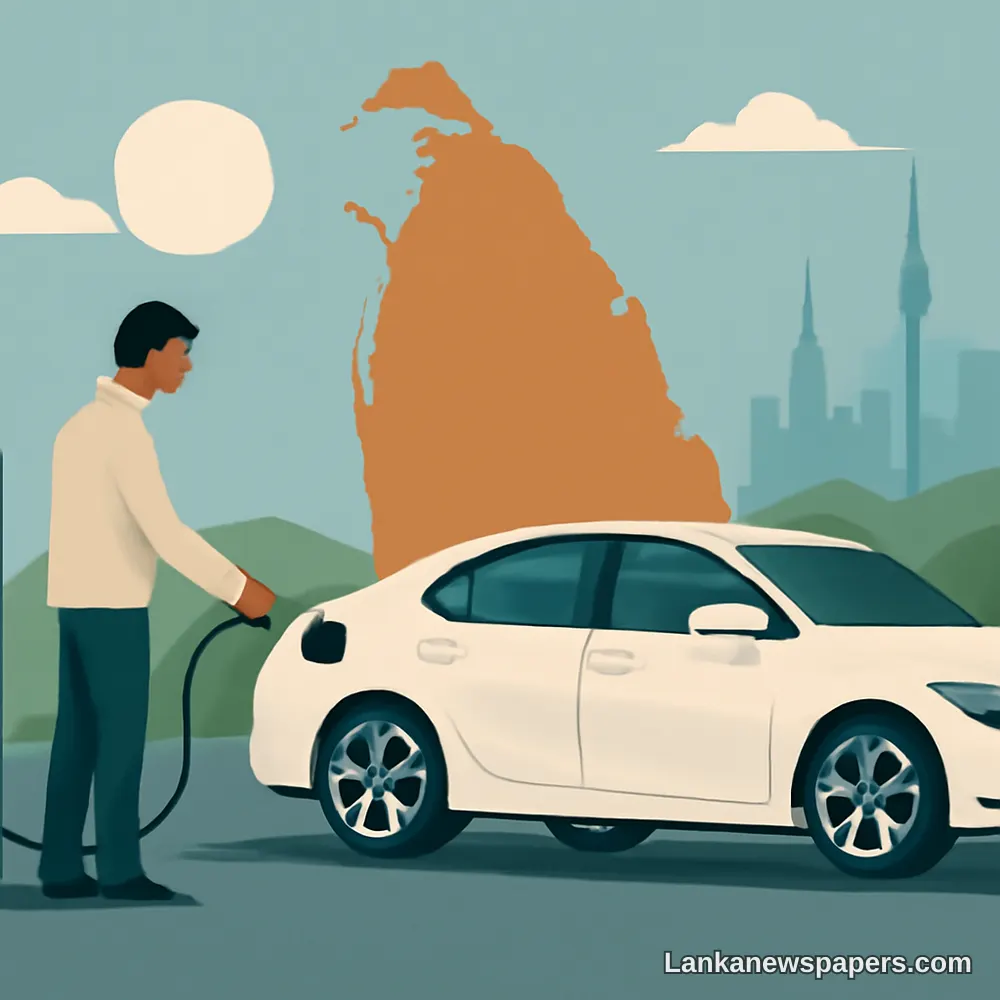
Sri Lanka has quietly positioned itself as one of South Asia's most progressive nations when it comes to adopting plug-in hybrid electric vehicles (PHEVs), prompting analysts and policymakers across the region to ask whether India — a far larger and more complex automotive market — should consider following suit.
Sri Lanka's Shift Toward Cleaner Mobility
In recent years, Sri Lanka has seen a notable surge in the uptake of plug-in hybrid vehicles, a category that combines a conventional internal combustion engine with a rechargeable electric battery. Unlike fully electric vehicles, PHEVs offer drivers the flexibility of running on electric power for shorter trips while falling back on petrol or diesel for longer journeys — a practical compromise in a country where charging infrastructure remains limited.
The island nation's embrace of this technology has been driven by a combination of factors, including government policy incentives, rising fuel costs, and a growing public awareness of environmental concerns. For many Sri Lankan motorists, PHEVs have represented a realistic and affordable step toward greener transportation without the anxiety of range limitations associated with fully electric vehicles.
Why the Comparison With India Matters
India, with its vast population and one of the world's fastest-growing vehicle markets, faces its own urgent challenge in reducing transportation-related emissions. The country has made significant commitments to electric vehicle adoption, yet the transition has been uneven, with uptake concentrated largely in two-wheelers and select urban centres.
Proponents of the PHEV model argue that India could benefit from a similar transitional approach, particularly given the country's patchy electric vehicle charging network and the practical realities faced by motorists in smaller cities and rural areas.
- PHEVs reduce dependence on fossil fuels without requiring comprehensive charging infrastructure
- They offer a familiar driving experience, easing consumer hesitation around new technology
- In markets with unreliable electricity supply, PHEVs provide a reliable backup through conventional engines
- They can serve as a bridge technology while governments scale up charging networks
The Counterarguments
Not everyone is convinced that PHEVs represent the right path forward for India. Critics point out that plug-in hybrids are ultimately still dependent on fossil fuels and may slow the momentum toward a fully electric future. There are also concerns that incentivising PHEVs could divert attention and investment away from building the robust charging ecosystem that fully electric vehicles require.
Additionally, the pricing of PHEVs remains a barrier in price-sensitive markets. While Sri Lanka has managed to make inroads with targeted policy measures, replicating that success across India's far more diverse and expansive market would present considerably greater challenges.
Lessons From Colombo for New Delhi
Sri Lanka's experience does offer a compelling case study in pragmatic policy-making. Rather than waiting for the perfect conditions to roll out a fully electric ecosystem, the country chose to meet consumers where they were — offering a cleaner option that worked within existing infrastructure constraints.
For India's policymakers, the takeaway may not be to simply replicate Sri Lanka's approach wholesale, but rather to acknowledge that a flexible, multi-technology strategy could prove more effective than an all-or-nothing push toward full electrification.
As South Asia grapples with air pollution, fuel import costs, and climate commitments, the debate over which vehicle technologies deserve government support is only set to intensify. Sri Lanka's quiet PHEV revolution may yet prove to be an instructive chapter in that ongoing regional conversation.



💬 Join the Discussion 2
See what readers are saying — and add your view.
finally something we did right before india for once
dont get too excited, our roads are still a mess lah