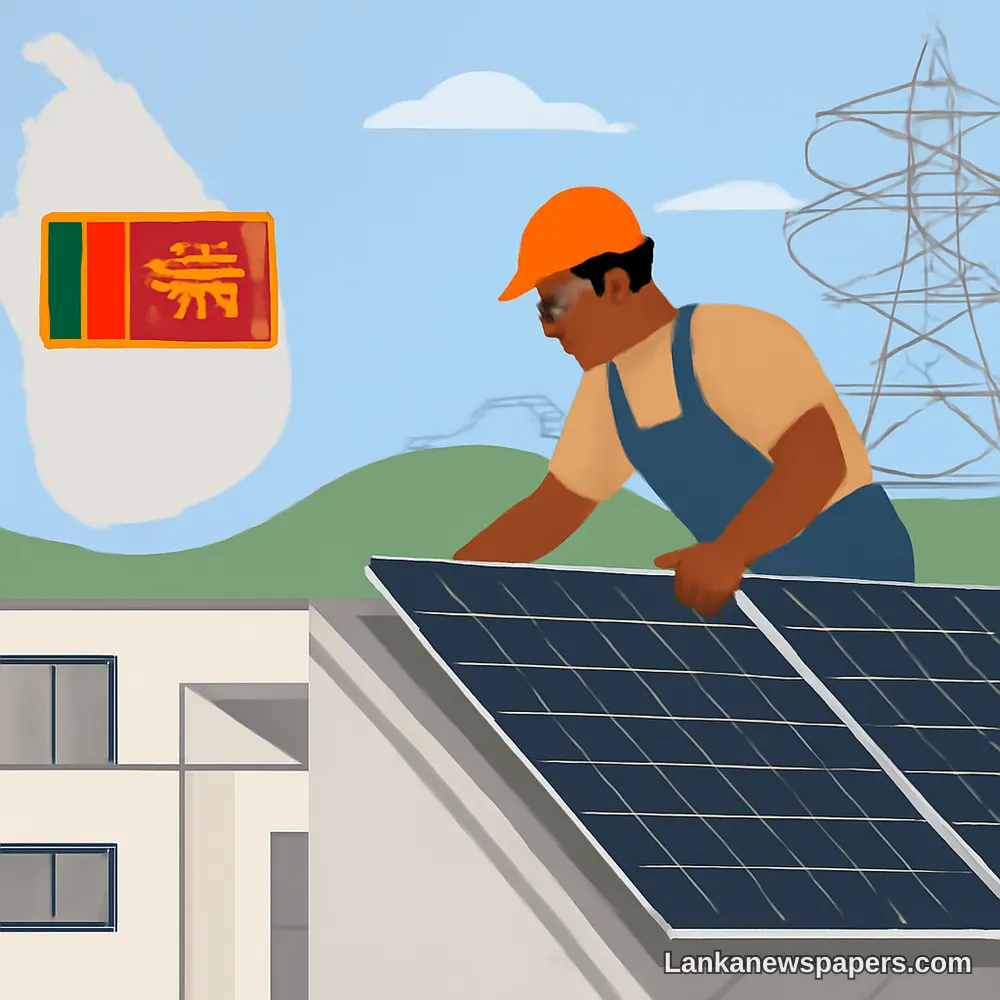
The Asian Development Bank (ADB) has given the green light to a financing package worth $57.4 million aimed at accelerating Sri Lanka's transition to clean energy through a major rooftop solar initiative, marking a significant step forward in the country's renewable energy ambitions.
A Boost for Affordable Clean Energy
The approved funding is designed to broaden access to affordable solar power for Sri Lankan households and businesses by supporting a large-scale rooftop solar aggregation programme. Central to the initiative is a virtual net metering system, which will allow energy generated from rooftop solar installations to be credited back to consumers, making clean energy adoption more financially attractive.
Tackling Emissions and Energy Costs
Beyond expanding energy access, the programme carries a strong environmental mandate. By encouraging the widespread uptake of rooftop solar technology, the initiative is expected to deliver measurable reductions in greenhouse gas emissions — a critical goal for an island nation increasingly exposed to the effects of climate change.
Sri Lanka has struggled in recent years with an energy sector under significant financial and operational strain. Soaring fuel import costs and recurring power shortages have underscored the urgent need to diversify the country's energy mix and reduce dependence on fossil fuels.
What the Financing Package Entails
The $57.4 million package from the ADB comprises a combination of financing instruments structured to support both the deployment of rooftop solar systems and the development of supporting infrastructure. While full details of the financing breakdown were not disclosed, the package reflects the ADB's continued commitment to supporting Sri Lanka's economic recovery and sustainability goals.
Sri Lanka's Renewable Energy Trajectory
This latest ADB intervention aligns with Sri Lanka's broader national targets for renewable energy, which include ambitious goals to transition a significant share of electricity generation away from fossil fuels in the coming decades. Rooftop solar, in particular, has been identified as a key pillar of that strategy given the country's abundant sunlight and the relatively low infrastructure costs compared to large utility-scale projects.
The virtual net metering framework supported by this programme is expected to incentivise greater private sector and household participation, helping to distribute the benefits of clean energy more widely across the population.
Industry observers have welcomed the ADB's approval as a timely and strategically important injection of support, noting that scaling up distributed solar generation could play a meaningful role in stabilising electricity costs for ordinary Sri Lankans while contributing to the country's climate commitments on the international stage.



💬 Join the Discussion 0
Be the first to share your view on this story.