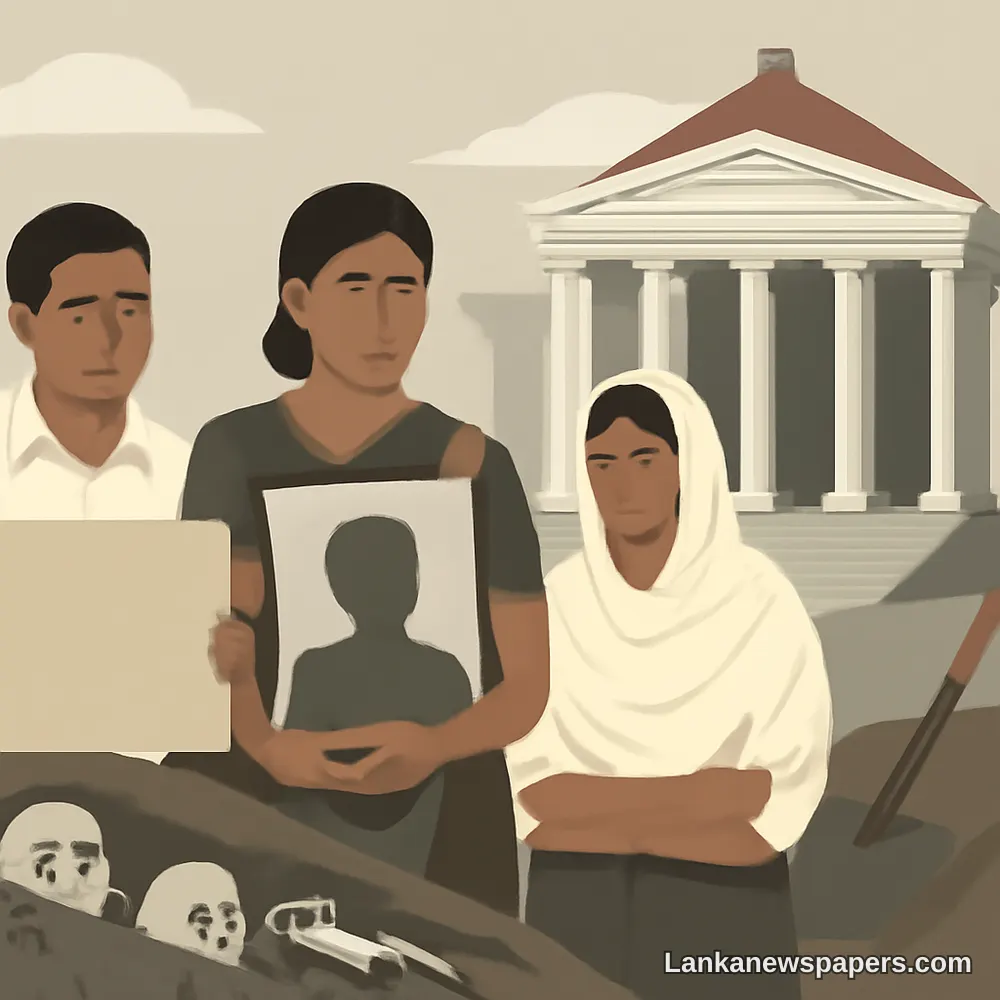
Families of victims linked to the Matale mass grave have called on Sri Lankan courts to reopen investigations into one of the country's most haunting and unresolved cases, renewing pressure on authorities to deliver long-overdue answers to those who have waited years for justice.
A Case Buried But Not Forgotten
The Matale mass grave, discovered in 2012 during construction work at the premises of a hospital in the central Sri Lankan town, unearthed skeletal remains of a significant number of individuals. The discovery sent shockwaves through the nation, raising urgent questions about who the victims were and when and how they died.
Investigators and forensic experts at the time suggested the remains could be linked to periods of political violence in Sri Lanka's turbulent history, including the late 1980s when the country experienced brutal crackdowns on the Janatha Vimukthi Peramuna uprising. However, the case stalled without a definitive conclusion, leaving families desperate for clarity.
Families Refuse to Let the Matter Rest
Relatives of those believed to be among the victims have persistently pursued legal avenues to force a thorough and transparent investigation. Their latest court petition reflects a growing frustration that successive governments have failed to take meaningful action to identify the remains or hold accountable those responsible for the deaths.
The families argue that proper forensic analysis, including advanced DNA testing, was never conclusively carried out under adequate judicial oversight, and that the case was effectively shelved without justice being served.
The victims deserve to be identified, and their families deserve the truth — no matter how long it takes or how uncomfortable that truth may be for those in power.
Broader Implications for Transitional Justice
The push to reopen the Matale case comes at a time when Sri Lanka continues to face international scrutiny over its human rights record and its commitment to transitional justice. Critics have long argued that the country's institutions have been slow to address past atrocities, particularly those involving state security forces.
Human rights advocates have backed the families' calls, noting that the Matale grave represents a critical test of Sri Lanka's willingness to confront dark chapters in its history with genuine accountability rather than institutional silence.
What the Families Are Asking For
- A formal court order to reopen the investigation into the Matale mass grave
- Independent and credible forensic examination, including DNA identification of remains
- Full transparency in proceedings and findings
- Accountability for those found responsible for the deaths
As the petition makes its way through the judicial system, the eyes of victims' families, civil society organisations, and international observers remain firmly fixed on whether Sri Lanka's courts will take a decisive step toward truth and reconciliation — or allow yet another opportunity for justice to slip away.



💬 Join the Discussion 3
See what readers are saying — and add your view.
who will honestly investigate this? same ppl in power no
these families waited so long already, goverment must give answers
exactly, decades passed and still nothing done properly