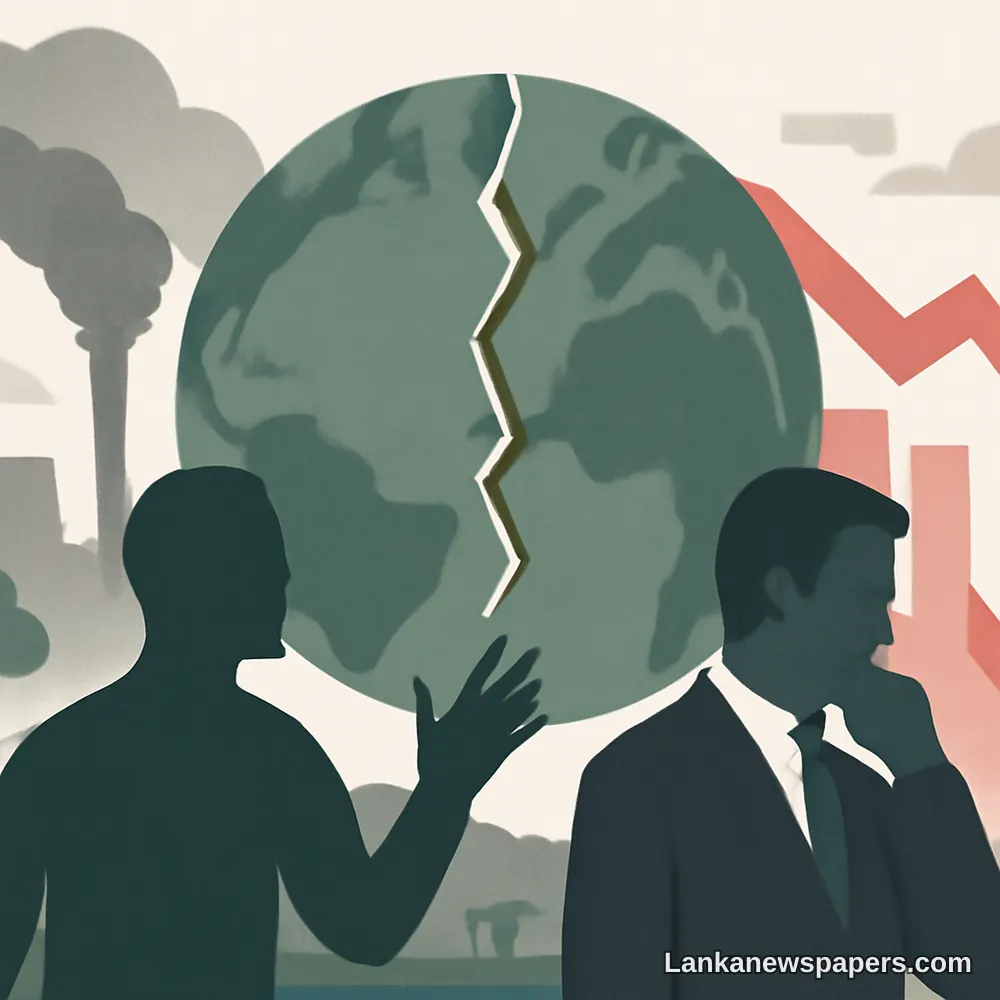
Climate change, pollution, deforestation and the degradation of water resources are no longer distant environmental worries — they are active economic threats already battering Sri Lanka's key industries, the President of the Bar Association of Sri Lanka (BASL) has warned.
A Crisis Hitting Close to Home
The BASL chief underscored that the consequences of environmental breakdown are being felt across critical sectors of the Sri Lankan economy, including power generation, food security, trade, fisheries and tourism. What was once treated as a matter for scientists and activists is now firmly a concern for economists, policymakers and legal professionals alike.
The warning signals a growing recognition within Sri Lanka's legal establishment that environmental governance can no longer be treated as secondary to economic development — the two are increasingly inseparable.
Sectors Under Threat
Several pillars of Sri Lanka's economy face direct exposure to environmental deterioration:
- Power generation is being disrupted by erratic rainfall patterns affecting hydroelectric output.
- Food security is increasingly vulnerable as agricultural productivity suffers under changing climate conditions and soil degradation.
- Fisheries face mounting pressure from ocean pollution and shifting marine ecosystems.
- Tourism, one of Sri Lanka's most vital foreign exchange earners, is threatened by coastal erosion, coral reef damage and deforestation.
- Trade risks are rising as global markets impose stricter environmental compliance standards on partner nations.
A Call for Legal and Policy Action
The BASL president's remarks reflect a broader global shift in how environmental issues are being framed — not merely as moral obligations, but as urgent economic and legal imperatives. For Sri Lanka, a nation still navigating the aftermath of a severe economic crisis, the added burden of environmental degradation could prove deeply damaging to any recovery efforts.
Climate change, pollution, deforestation and water degradation are no longer abstract environmental concerns but mounting economic threats already affecting Sri Lanka's power generation, food security, trade, fisheries and tourism.
Legal experts and civil society groups have increasingly called on the Sri Lankan government to strengthen environmental legislation, enforce existing regulations more rigorously and align national policy with international climate commitments.
The BASL chief's intervention adds significant weight to those calls, signalling that the country's legal community is prepared to play a more active role in holding institutions accountable for environmental harm and its economic fallout.



💬 Join the Discussion 4
See what readers are saying — and add your view.
cant even fix Colombo flooding and they want to discuss climate change
BASL talking about environment now? stick to legal matters la
finally someone is saying it out loud. our paddy farmers already suffering no
yes but will goverment actually listen or just another seminar