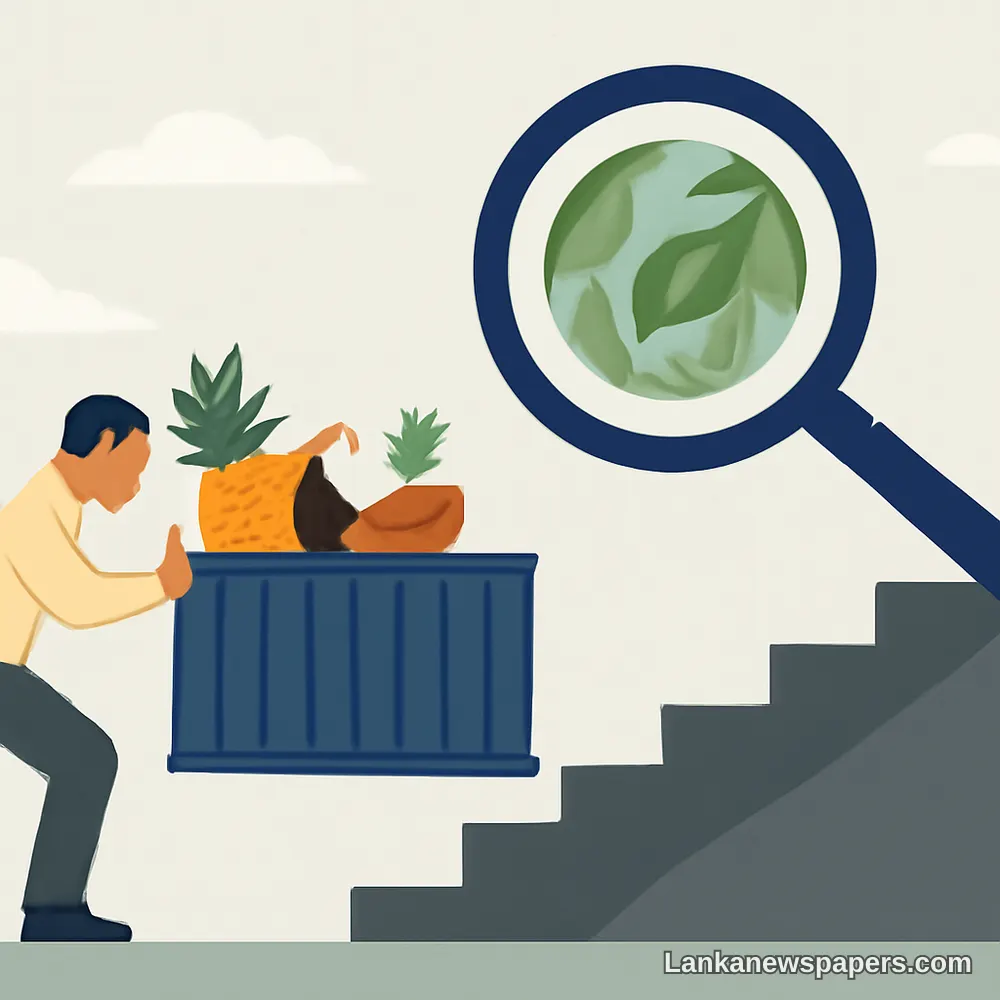
New European Regulations Set to Reshape Export Landscape
Sri Lankan exporters are bracing for significant disruption as the European Union rolls out sweeping new regulations designed to crack down on greenwashing — the practice of making misleading or unsubstantiated environmental claims about products and services.
What the New Rules Entail
The EU's latest anti-greenwashing directives require companies selling goods in European markets to provide verifiable, science-based evidence to support any environmental or sustainability claims made on their products. Vague terms such as "eco-friendly," "green," or "carbon neutral" will no longer be acceptable without rigorous independent verification and documentation.
Businesses found in violation of these standards could face penalties, import restrictions, or outright bans from European markets — consequences that carry enormous weight for export-dependent economies like Sri Lanka.
Why Sri Lankan Exporters Are at Risk
Sri Lanka's export sector, which relies heavily on the European market for key industries including apparel, tea, spices, and rubber products, has long promoted its goods on the strength of their natural and sustainable origins. However, many of these claims have historically lacked the formal certification and documentation frameworks that the new EU rules will demand.
- The apparel and textile industry, one of Sri Lanka's largest foreign exchange earners, will need to overhaul supply chain transparency reporting.
- Tea exporters, who frequently market Ceylon Tea as an environmentally responsible product, must now back such claims with traceable, audited data.
- Small and medium-sized enterprises (SMEs), which make up a substantial portion of Sri Lanka's export base, face the steepest challenge due to limited resources for compliance.
Compliance Costs a Growing Concern
Industry stakeholders warn that the cost of achieving compliance with these new standards could be prohibitive, particularly for smaller exporters who lack the financial capacity to engage international auditors or restructure their supply chains at short notice. Experts have called on the Sri Lankan government and relevant trade bodies to step in with guidance, financial support, and capacity-building programmes to help affected businesses navigate the transition.
Without coordinated national support, many smaller Sri Lankan exporters risk being effectively shut out of European markets — not because their products are unsustainable, but because they lack the infrastructure to prove otherwise.
A Call for Urgent Action
Trade analysts stress that Sri Lanka cannot afford a reactive approach to these developments. Proactive engagement with EU regulators, investment in third-party certification systems, and stronger collaboration between the government, the Export Development Board, and the private sector are seen as essential steps to safeguarding the country's foothold in European markets.
With the EU representing one of Sri Lanka's most critical trading partners, the stakes could not be higher. Exporters and policymakers alike are being urged to treat compliance not merely as a legal obligation, but as a strategic opportunity to genuinely strengthen Sri Lanka's sustainability credentials on the world stage.



💬 Join the Discussion 2
See what readers are saying — and add your view.
our exporters cant even meet basic standards, now this also
exactly, small tea farmers especially will suffer most