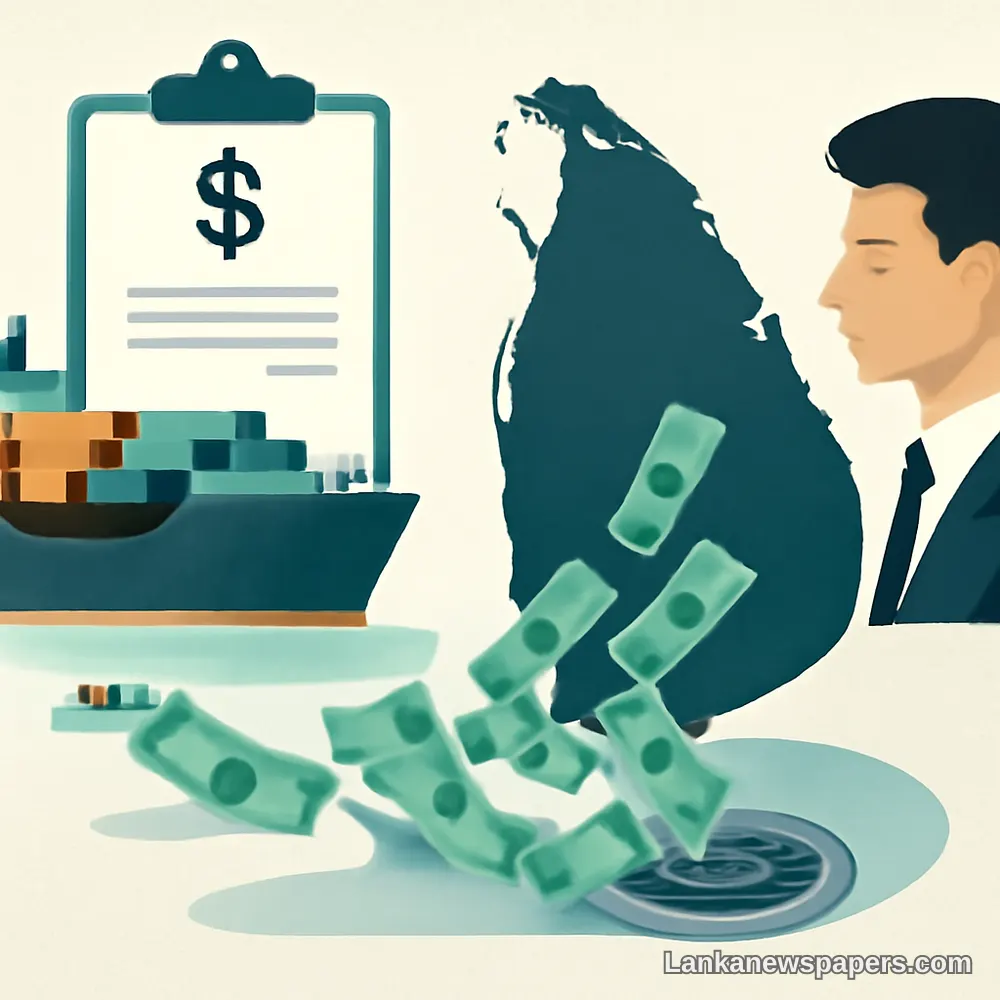
A Hidden Drain on the Nation's Wealth
While Sri Lanka continues to navigate the painful aftermath of its worst economic crisis in modern history, a less visible but deeply damaging financial crime has been quietly hollowing out the country's wealth for decades — trade misinvoicing.
What Is Trade Misinvoicing?
Trade misinvoicing is the deliberate falsification of the value, quantity, or nature of goods and services on customs declarations and invoices during cross-border transactions. It is one of the most widely used methods of illicit financial outflow, allowing businesses and individuals to move money out of a country while evading taxes, customs duties, and regulatory oversight.
In simple terms, an importer may declare a shipment as being worth far less than its actual value — a practice known as import under-invoicing — in order to pay lower duties. Conversely, an exporter may report a lower value for goods sold abroad, allowing the difference to be retained in an overseas account, effectively stripping foreign exchange earnings from the domestic economy.
The Scale of the Problem in Sri Lanka
Sri Lanka has long been identified by international financial watchdog bodies as a country significantly exposed to illicit financial flows driven by trade misinvoicing. Billions of rupees worth of revenue that should rightfully flow into state coffers are instead siphoned away through manipulated trade documentation, depriving the government of critical tax income and the Central Bank of legitimate foreign exchange reserves.
The consequences of this practice are far-reaching. A government starved of revenue is forced to borrow more, accumulate debt, and ultimately impose austerity measures on ordinary citizens — the very outcome Sri Lanka suffered so catastrophically in 2022 when it declared its first-ever sovereign default.
How the Scheme Operates
Trade misinvoicing typically operates through networks involving complicit trading partners in both the exporting and importing countries. Common methods include:
- Under-invoicing of exports to retain foreign currency earnings abroad
- Over-invoicing of imports to transfer funds out of the country under the guise of legitimate payments
- False declarations of the nature or classification of goods to exploit lower duty brackets
- Phantom shipments — invoicing for goods that are never actually traded
These schemes often involve offshore shell companies and correspondent banking arrangements that make detection extremely difficult for customs and tax authorities operating with limited resources.
Institutional Weaknesses That Enable the Crime
Experts point to several systemic vulnerabilities within Sri Lanka's trade and financial regulatory framework that allow misinvoicing to thrive. Weak inter-agency coordination between the Customs Department, the Inland Revenue Authority, and the Central Bank means that suspicious trade patterns frequently go undetected or uninvestigated.
The absence of robust risk-profiling systems at ports of entry, combined with a historically low rate of prosecution for financial crimes, has created an environment where the rewards of misinvoicing vastly outweigh the perceived risks. Political patronage networks and the influence of powerful business interests have further undermined enforcement efforts over the years.
The Broader Economic Cost
The economic damage extends well beyond lost tax revenue. When exporters under-invoice their earnings and retain foreign currency offshore, it directly reduces the supply of dollars and other hard currencies available within Sri Lanka's banking system. This contributed to the severe foreign exchange shortages that preceded the 2022 crisis, making it harder for the country to pay for essential imports including fuel, medicine, and food.
Sri Lanka's economic collapse was not simply the result of bad luck or global headwinds — it was accelerated by decades of institutional failure to confront the systematic theft of national wealth through illicit financial flows.
Calls for Reform and Action
Financial reform advocates and economists have repeatedly urged the Sri Lankan government to adopt a more aggressive stance against trade misinvoicing as part of any credible economic recovery programme. Recommended measures include the modernisation of customs risk assessment systems, mandatory cross-verification of trade data with partner countries, and the establishment of a dedicated financial crimes prosecution unit with sufficient independence and resources.
Strengthening whistleblower protections and improving international cooperation with financial intelligence units in key trading partner nations have also been highlighted as essential steps.
A Test of Political Will
Ultimately, tackling trade misinvoicing in Sri Lanka is as much a political challenge as a technical one. Vested interests with the ability to influence policy have historically resisted the kind of transparency and enforcement mechanisms that would disrupt profitable illicit flows. Whether the current government, under pressure from the International Monetary Fund and a citizenry exhausted by economic hardship, has both the will and the capacity to confront this entrenched problem remains to be seen.
What is certain is that no sustainable economic recovery is possible while the systematic plunder of Sri Lanka's trade revenues continues unchecked.


💬 Join the Discussion 4
See what readers are saying — and add your view.
billions leaving the country and we are paying taxes like fools
can someone explain in simple terms how this actually works
this been happening for years, nobody cares to stop it
exactly, goverment knows but pockets are full no