A Hidden Financial Haemorrhage
A damning new report by Washington-based think tank Global Financial Integrity (GFI), released in March 2026, has shed fresh light on a long-standing but largely invisible threat to Sri Lanka's economy — trade misinvoicing. The report, titled "Trade-Related Illicit Financial Flows in Developing Asia," examines a ten-year period from 2013 to 2022 and calculates the possible scale of financial misappropriation occurring through manipulated trade documentation across the region.
What Is Trade Misinvoicing?
Trade misinvoicing is a method by which importers and exporters deliberately falsify the declared value, quantity, or nature of goods on customs documents. By over- or under-declaring the worth of traded goods, individuals and companies are able to illegally move money across borders, evade taxes, launder proceeds of crime, and circumvent capital controls — all at enormous cost to national economies.
For a country like Sri Lanka, which has been navigating a severe economic crisis marked by foreign reserve shortfalls and mounting debt obligations, illicit financial outflows of this nature represent a direct assault on public finances and economic stability.
Sri Lanka and Thailand: A Case Study
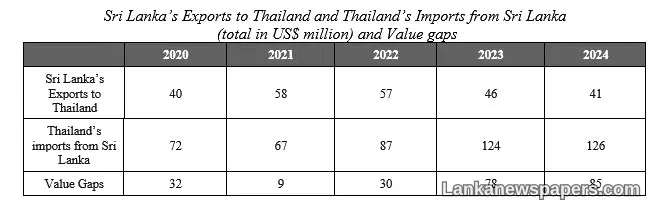
The GFI report uses Sri Lanka's trade relationship with Thailand as one of its key case studies, offering a concrete illustration of how misinvoicing operates between two developing Asian nations. By comparing what Sri Lanka reported exporting to Thailand against what Thailand reported receiving — and vice versa — researchers were able to identify significant discrepancies that cannot be explained by standard measurement differences or logistical factors alone.
These gaps in reported figures point strongly to the deliberate manipulation of trade invoices, with funds being siphoned out of Sri Lanka through mechanisms that remain largely undetected by customs authorities and regulatory bodies.
The Scale of the Problem Across Developing Asia
Sri Lanka is far from alone in facing this challenge. The GFI report covers multiple developing economies across Asia, painting a broader picture of systemic financial leakage that undermines government revenue, weakens currencies, and deepens inequality. Across the region, billions of dollars are estimated to flow illicitly through trade channels each year, robbing governments of tax revenue that could otherwise fund essential public services.
For Sri Lanka specifically, the implications are especially grave given the country's recent experience with economic collapse, International Monetary Fund bailout negotiations, and the urgent need to rebuild foreign exchange reserves.
Regulatory Gaps and the Way Forward
Experts and anti-corruption advocates have long argued that Sri Lanka's customs infrastructure, trade monitoring mechanisms, and financial intelligence capabilities require significant strengthening to combat misinvoicing effectively. Enhanced data sharing between trading partner nations, stricter verification of trade documents, and greater transparency in corporate ownership structures are among the measures frequently recommended.
The GFI report adds renewed urgency to calls for reform, arriving at a moment when Sri Lanka is under intense scrutiny from international lenders and development partners over its fiscal governance and revenue mobilisation efforts.
A Call to Action
The findings serve as a stark reminder that the economic wounds Sri Lanka has suffered are not solely the result of domestic policy failures or global shocks. A portion of the country's financial losses can be traced to deliberate, criminal manipulation of international trade — a form of plunder that occurs in plain sight, buried within the paperwork of everyday commerce.
Addressing this issue will require political will, institutional investment, and robust international cooperation. Without decisive action, trade misinvoicing will continue to quietly drain resources from a nation that can ill afford to lose them.

💬 Join the Discussion 3
See what readers are saying — and add your view.
can someone explain in simple terms how exactly this misinvoicing works
this has been going on for decades and only now a report comes out? typical
not even our goverment found this, had to be some american think tank to tell us