The Proposed India-Sri Lanka Bridge: A Infrastructure Link That Could Transform the Island Nation's Future
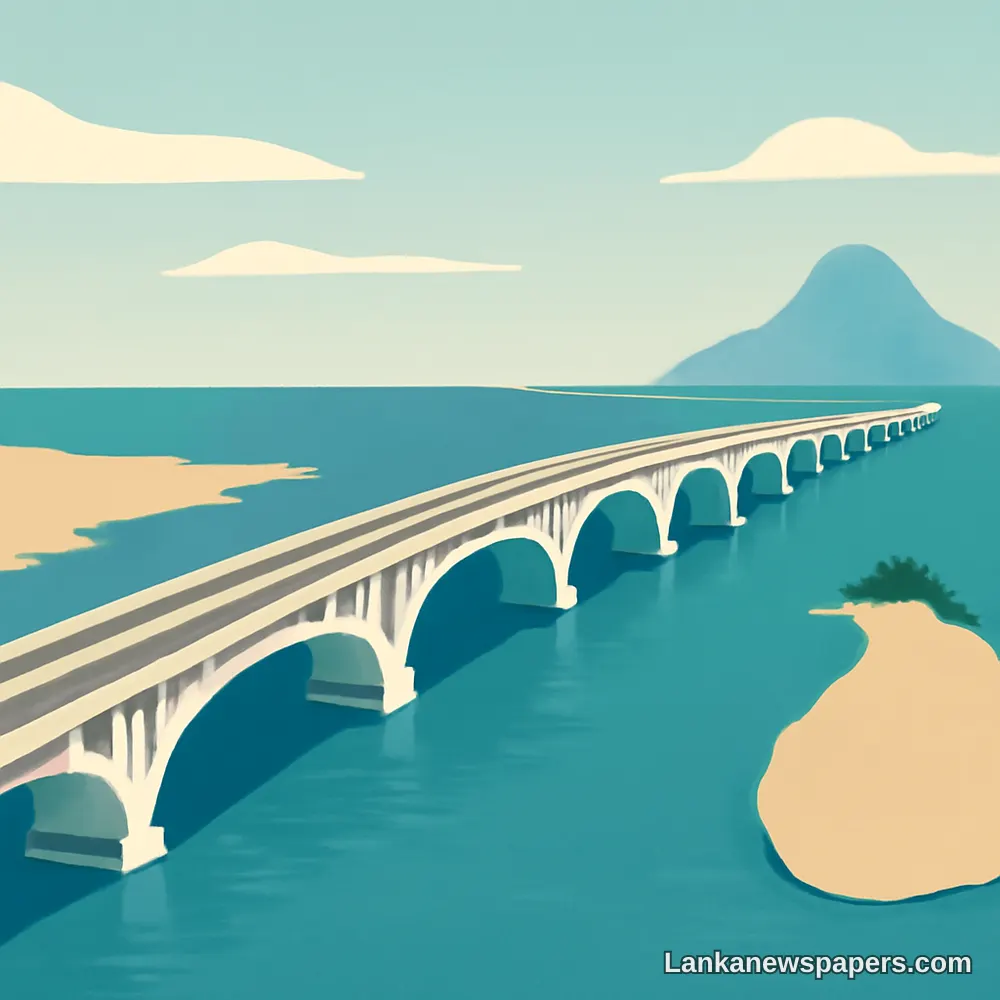
A Vision Decades in the Making
For generations, the idea of a physical land connection between Sri Lanka and India has lingered in the realm of ambitious dreams. Now, with renewed political momentum and growing regional interest in connectivity infrastructure, the prospect of a bridge linking the two neighbouring nations is once again commanding serious attention — and with it, the possibility of fundamentally reshaping Sri Lanka's economic and geopolitical destiny.
What the Connection Could Mean
A fixed link between Sri Lanka and India — whether in the form of a bridge, a tunnel, or a combination of both — would represent one of the most transformative infrastructure projects ever undertaken in South Asia. Analysts and policymakers have long argued that such a connection could unlock enormous economic potential for Sri Lanka, providing direct land access to the vast Indian market and positioning the island as a critical transit hub in the broader region.
The implications would stretch far beyond trade. Tourism, labour mobility, and investment flows could all receive a dramatic boost, offering Sri Lanka fresh avenues for economic recovery following the severe financial crisis the country endured in recent years.
The Palk Strait Crossing
The most frequently discussed route for such a connection runs across the Palk Strait, the narrow body of water separating Sri Lanka's northern coast from the southern tip of India. The shortest crossing point lies between Talaimannar in Sri Lanka and Rameswaram in India's Tamil Nadu state — a distance that, while geographically modest, presents considerable engineering, environmental, and financial challenges.
Previous feasibility studies have highlighted the technical complexity of such an undertaking, citing factors such as shallow waters, seismic activity in the region, and the ecological sensitivity of the surrounding marine environment, including the protected waters of the Gulf of Mannar.
Economic Opportunities and Concerns
Proponents of the project paint an optimistic picture for Sri Lanka's future should such a link become reality. Among the potential benefits cited are:
- Direct road and rail connectivity to the Indian subcontinent, opening access to a market of over a billion consumers
- A significant reduction in freight costs and transit times for Sri Lankan exporters
- A major stimulus for tourism, particularly from India, which already represents one of Sri Lanka's largest visitor sources
- Increased foreign direct investment driven by improved logistics and regional integration
However, not all voices are enthusiastic. Critics and economists have raised concerns about the potential impact on local industries, warning that easier access could also mean a flood of cheaper Indian goods into the Sri Lankan market, placing pressure on domestic producers who may struggle to compete.
Geopolitical Dimensions
Beyond economics, a physical land bridge carries profound geopolitical significance. Sri Lanka occupies a strategically vital position in the Indian Ocean, and any major connectivity project with India would inevitably attract the attention of other regional and global powers. Balancing relationships with India, China, and Western nations has long been a delicate act for Colombo, and a project of this magnitude would add new layers of complexity to that diplomatic equation.
Sri Lanka's geographic position has always been both its greatest asset and its most delicate challenge — a bridge to India would amplify both dimensions considerably.
The Road Ahead
For now, the bridge remains a concept under discussion rather than a project under construction. Any realistic pathway forward would require extensive bilateral negotiations between Colombo and New Delhi, comprehensive feasibility and environmental assessments, and the identification of substantial funding — likely running into billions of dollars.
Nevertheless, the conversation itself marks a significant moment. As Sri Lanka charts its course toward economic recovery and long-term development, bold ideas about regional connectivity are finding renewed relevance. Whether the bridge ever spans the Palk Strait, the debate surrounding it is already reshaping how Sri Lankans think about their nation's place in the world.


💬 Join the Discussion 2
See what readers are saying — and add your view.
good idea on paper but goverment will mess it up somehow
exactly, remember the highway projects? same story