What the Xi-Trump Summit Means for Sri Lanka: A Defining Moment in Global Power Politics
A Meeting That Could Reshape the World Order
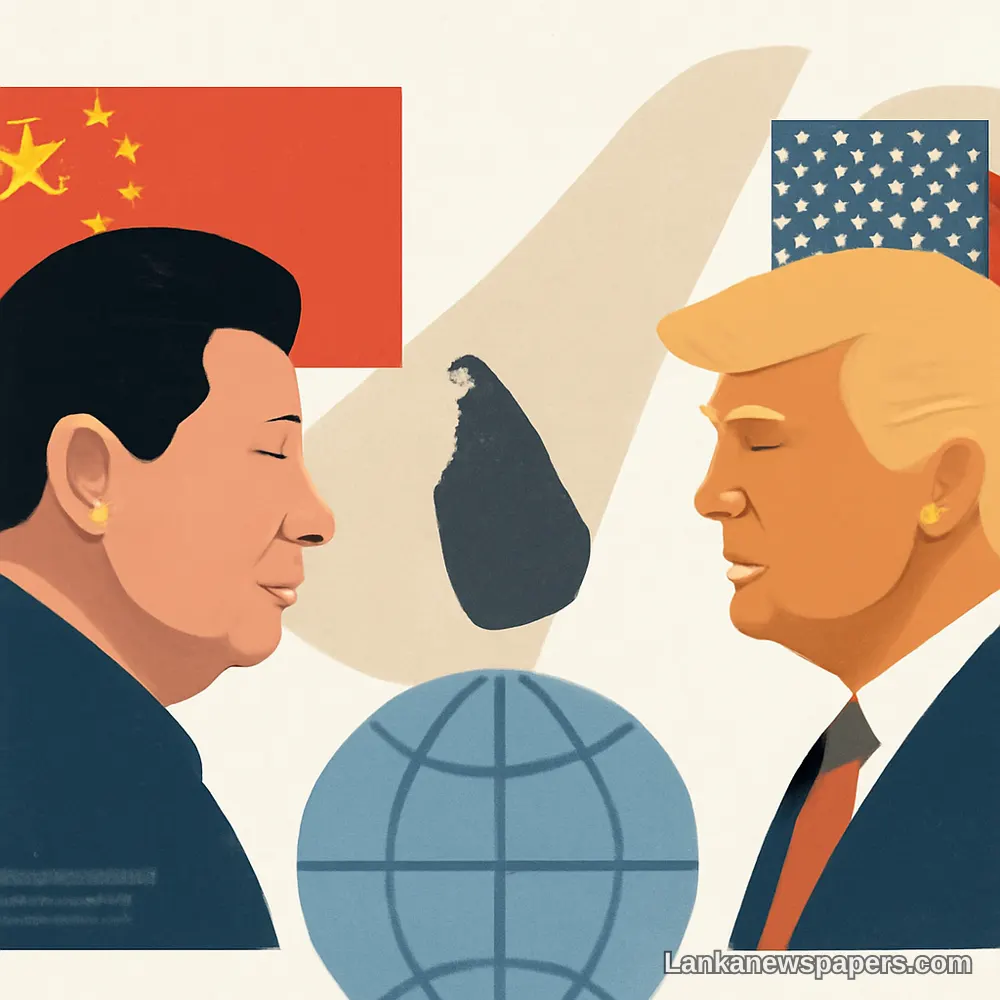
When the leaders of the world's two most powerful nations sit across from each other, the reverberations are felt far beyond their borders. The high-stakes summit between United States President Donald Trump and Chinese President Xi Jinping is being described by analysts as the most consequential meeting of this decade — and for a small island nation like Sri Lanka, positioned at the crossroads of competing global interests, the outcomes carry profound significance.
The Weight of What Is Being Negotiated
At the heart of the talks lie deeply contested issues: trade tariffs, technological rivalry, military posturing in the Indo-Pacific, and the broader struggle for global influence. Both Washington and Beijing have spent years cementing competing visions of international order, and Sri Lanka has found itself — sometimes uncomfortably — caught between those two visions.
The bilateral relationship between the US and China has swung between cautious cooperation and outright confrontation. A summit of this nature signals that both powers recognise the dangers of unchecked rivalry, yet the fundamental tensions driving their competition remain unresolved.
Sri Lanka's Delicate Balancing Act
Sri Lanka has long pursued a foreign policy of strategic non-alignment, maintaining ties with both Washington and Beijing. China remains one of Sri Lanka's largest creditors and infrastructure partners, with major projects including the Hambantota Port and the Colombo Port City bearing the imprint of Chinese investment. The United States, meanwhile, has deepened its engagement with Colombo through diplomatic, economic, and security channels, particularly as Washington sharpens its Indo-Pacific strategy.
Any shift in the tone or substance of US-China relations directly influences the space available to smaller nations like Sri Lanka to manoeuvre. A warmer relationship between the two superpowers could ease pressure on Colombo to pick sides, while a deterioration could force more difficult choices.
Economic Implications Cannot Be Ignored
Sri Lanka is still navigating the aftermath of its worst economic crisis in decades. The country's recovery trajectory depends significantly on stable global trade flows, foreign investment, and continued access to international financial support. Escalating trade wars or financial decoupling between the US and China would send shockwaves through global supply chains, commodity prices, and capital markets — all of which affect Sri Lanka's fragile economic stabilisation efforts.
- A de-escalation in US-China trade tensions could benefit Sri Lanka's export sectors by stabilising global demand.
- Renewed infrastructure competition between the two powers may bring fresh investment opportunities to the island.
- Heightened geopolitical rivalry in the Indian Ocean region could complicate Sri Lanka's security environment.
The Indo-Pacific Dimension
Sri Lanka's geographic location in the Indian Ocean makes it a point of strategic interest for both superpowers. The Colombo Port and Hambantota have featured in broader conversations about naval access, trade routes, and regional security architecture. How Washington and Beijing frame their respective Indo-Pacific ambitions in the aftermath of this summit will have direct bearing on the diplomatic pressures Sri Lanka faces.
Analysts have noted that Sri Lanka's ability to leverage its strategic geography depends heavily on how much room exists between the two superpowers — and that room is shaped, to a large degree, by summits exactly like this one.
Colombo Must Watch Closely and Act Wisely
For Sri Lanka's policymakers, the message is clear: this is not a distant diplomatic event to be observed from the sidelines. The outcomes of US-China engagement will shape the contours of international trade, debt restructuring diplomacy, and regional security for years to come. Sri Lanka must engage proactively with both powers, protect its sovereign interests, and resist being drawn into a binary choice that serves neither its people nor its long-term stability.
As the world watches Washington and Beijing, Colombo would do well to watch just as carefully — and prepare its responses with both pragmatism and principle.



💬 Join the Discussion 3
See what readers are saying — and add your view.
our goverment better have a clear position, cant keep playing both sides forever
whoever wins this power struggle, poor countries like us always suffer no?
exactly, they shake hands and we pay the price with our economy