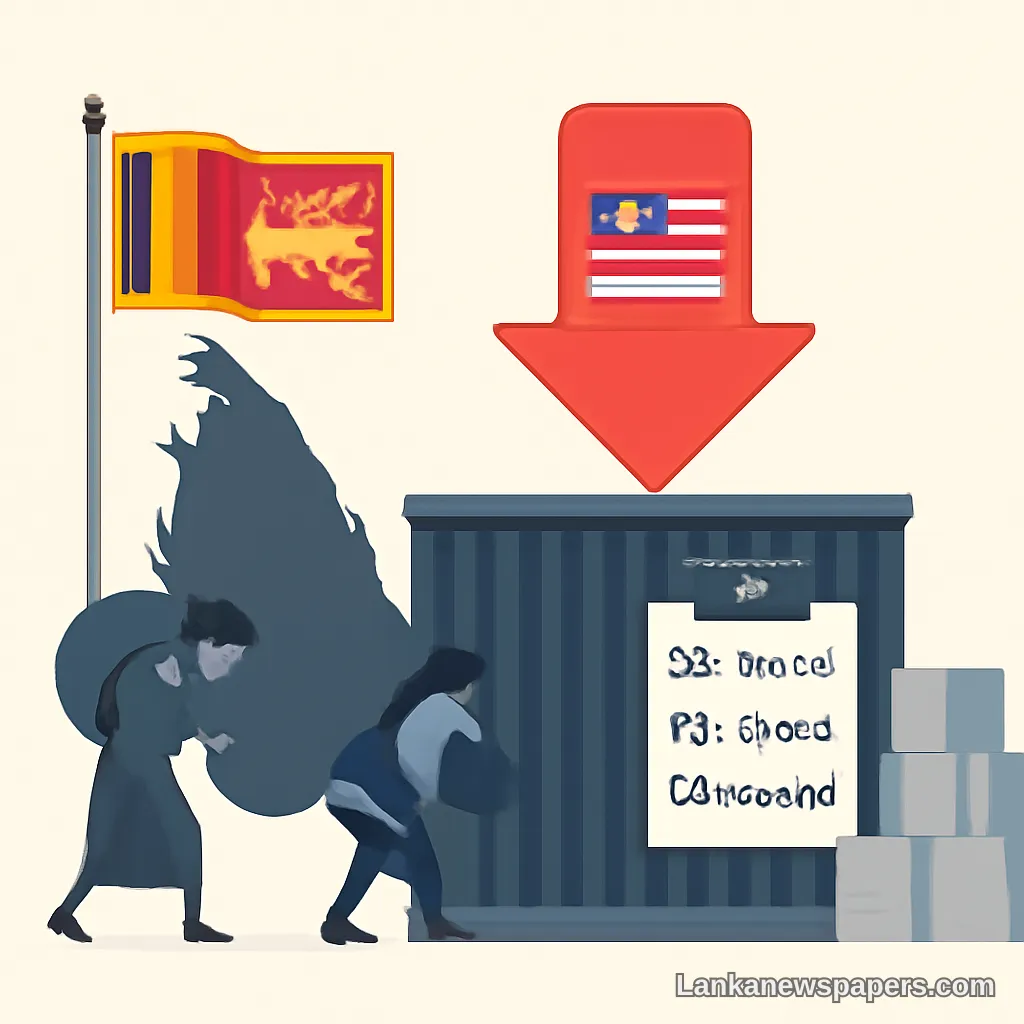
Sri Lanka is among approximately 60 nations now subject to sweeping new import tariffs imposed by the United States, with the island nation's inclusion tied not only to broader trade imbalance concerns but also to specific allegations over its handling of forced labour practices.
Forced Labour Findings Raise Alarm
The United States Trade Representative (USTR) has indicated that investigations found Sri Lanka has "failed to impose and effectively enforce a forced labor import prohibition" — a finding that has placed the country under additional scrutiny beyond the general tariff framework being applied globally.
The designation signals a serious concern from Washington regarding labour standards within Sri Lanka's supply chains, and could have significant implications for the country's key export sectors, particularly the garment and apparel industry, which depends heavily on access to the American market.
Part of a Sweeping Global Trade Move
The new import taxes form part of a broad U.S. trade policy action targeting dozens of countries simultaneously. The move reflects Washington's intensifying efforts to reshape global trade relationships, penalise what it considers unfair trade practices, and bring manufacturing and supply chains under closer ethical scrutiny.
Sri Lanka finds itself in the company of roughly 60 nations caught in this wide-reaching tariff net, though the forced labour finding adds a distinct and more damaging dimension to the country's situation compared to many others on the list.
Potential Impact on Sri Lanka's Economy
For a nation still navigating the aftermath of its worst economic crisis in modern history, the timing of this development could not be more challenging. Sri Lanka's export economy relies significantly on preferential access to Western markets, and any erosion of that access threatens jobs and foreign exchange earnings at a critical moment of recovery.
- The garment sector is one of Sri Lanka's largest employers, particularly of women in rural areas.
- The United States is among the top destinations for Sri Lankan apparel exports.
- Loss of trade goodwill with Washington could complicate broader economic stabilisation efforts.
Government Response Awaited
As of the time of reporting, no formal public response had been issued by the Sri Lankan government addressing either the forced labour findings or the implications of the new tariff regime. Economists and trade analysts are expected to closely monitor developments in the coming days as the full scope of the measures becomes clearer.
The findings serve as a stark reminder that Sri Lanka's path to economic recovery must also contend with international scrutiny over governance, labour rights, and regulatory enforcement — areas where credibility with key trading partners will be essential.


💬 Join the Discussion 0
Be the first to share your view on this story.