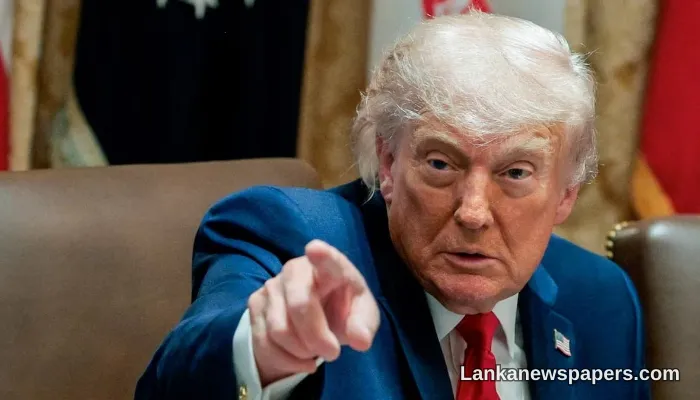
US President Makes Bold Claim on Iran Nuclear Stance
United States President Donald Trump has announced that Iran has agreed not to develop nuclear weapons, signalling what could be a significant shift in one of the world's most closely watched geopolitical standoffs.
Trump made the declaration publicly, indicating that a level of understanding had been reached between Washington and Tehran regarding Iran's nuclear ambitions — a issue that has fuelled international tension for decades.
A Long-Standing Point of Contention
Iran's nuclear programme has been a persistent flashpoint in global diplomacy, drawing concern from the United States, Israel, and numerous Western nations who have long feared that Tehran was pursuing the capability to build nuclear weapons. Iran has consistently maintained that its nuclear activities are intended solely for civilian and energy purposes.
The announcement by Trump, if substantiated, would mark a notable development in efforts to prevent nuclear proliferation in the Middle East — a region already burdened by conflict and instability.
Cautious Optimism Expected
International observers are likely to approach the claim with caution, given the complex and often turbulent history of US-Iran relations. Previous diplomatic efforts, including the 2015 Joint Comprehensive Plan of Action — from which Trump himself withdrew during his first term in office — have shown how fragile such agreements can be.
No formal treaty or written agreement has been publicly presented to confirm the reported understanding, and independent verification of Trump's statement remains pending.
Implications for the Region and Beyond
Should the claim prove credible and lead to a verifiable commitment, it could have far-reaching consequences for regional security in the Middle East, as well as for global non-proliferation efforts. Analysts will be watching closely for any follow-up statements from Iranian officials or third-party mediators who may have been involved in facilitating any such agreement.
Sri Lanka, like many nations dependent on stable global energy markets and international trade routes, has a keen interest in de-escalation between major powers in the Middle East, as tensions in the region have historically impacted oil prices and broader economic conditions worldwide.



💬 Join the Discussion 0
Be the first to share your view on this story.