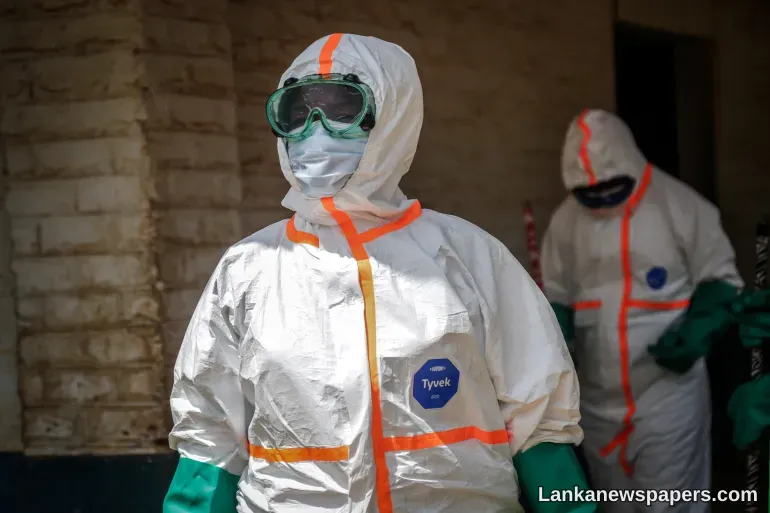
Healthcare workers in Ebola-affected regions of eastern DRC have often encountered pushback from the community regarding strict burial rules, which require careful handling of bodies to stop the virus from spreading. Aid organizations noted that fear, misinformation, and distrust of medical teams often drive these tensions. Gloire Idriss, a Rwampara resident who witnessed the events, said, “Some people here think Ebola is a business. When healthcare workers do not return the bodies of Ebola victims, people suspect they might be selling their organs.” The Congolese health minister emphasized that the bodies of Ebola victims are extremely contagious and should only be dealt with by trained personnel in protective gear. “Let us bury the deceased safely,” Roger Kamba told Radio France Internationale. “The dead should not take others with them into the grave.” In eastern DRC, it is common for family and friends to gather at the home of the deceased to pay their respects, with some mourners touching the body for a final farewell. Lokana Jean, a 40-year-old Mongbwalu resident, shared his grief, saying, “When my daughter died of Ebola last month, the medical team came to bury her. We couldn’t say our final goodbyes. It still hurts that I had to watch her funeral without our cultural practices.” He added, “Under normal circumstances, I would have held her close and felt her last warmth.” As of Saturday, nearly 180 people had died from Ebola, and close to 800 cases had been reported, according to the Congolese Ministry of Public Health. In Ituri, local authorities have implemented measures to curb the spread of the virus, including restrictions on public gatherings, halting wake services, and banning the movement of bodies between locations.



💬 Join the Discussion 0
Be the first to share your view on this story.